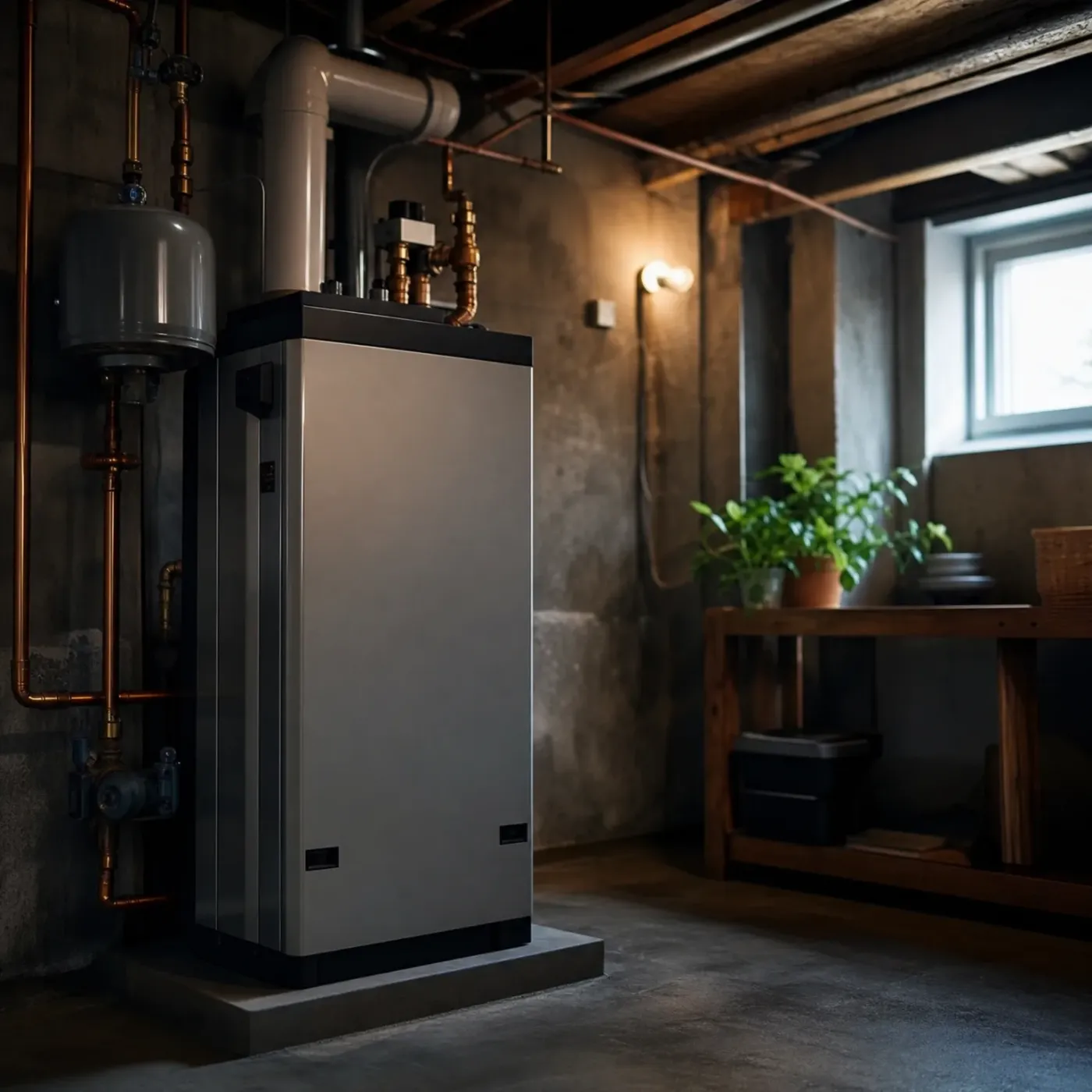






A floor-standing gray boiler unit on a concrete plinth in a basement, with copper pipes, an expansion tank, and a flue pipe above, a wall light, a small potted plant on a wooden shelf, and a window in the background.

Done looking for a boiler pro

Why your boiler runs out of hot water in Mississippi

Most houses here heat with electricity, so a boiler running short on hot water usually comes down to the boiler itself: a failing element, a thermostat out of calibration, mineral buildup, or a tank too small for what your house is asking of it. This page walks through what causes it. Send the form and the search for someone qualified to fix it is done.

Send it today

A boiler that runs out of hot water is almost always working harder than it should to make up for something failing inside it. Most homes in Mississippi heat water with electricity, so the heating element is doing all the work, and once it weakens or burns out partway, it can't bring a full tank up to temperature anymore. Sediment settling at the bottom of the tank does the same thing, insulating the element from the water it's supposed to heat. A thermostat that's drifted out of calibration will shut the element off before the water's actually hot. And sometimes the tank was simply sized for a smaller household than the one using it now. Each of these shows up the same way, a shower that turns cold too soon, but they call for different fixes, and running the wrong one wastes time without solving it.

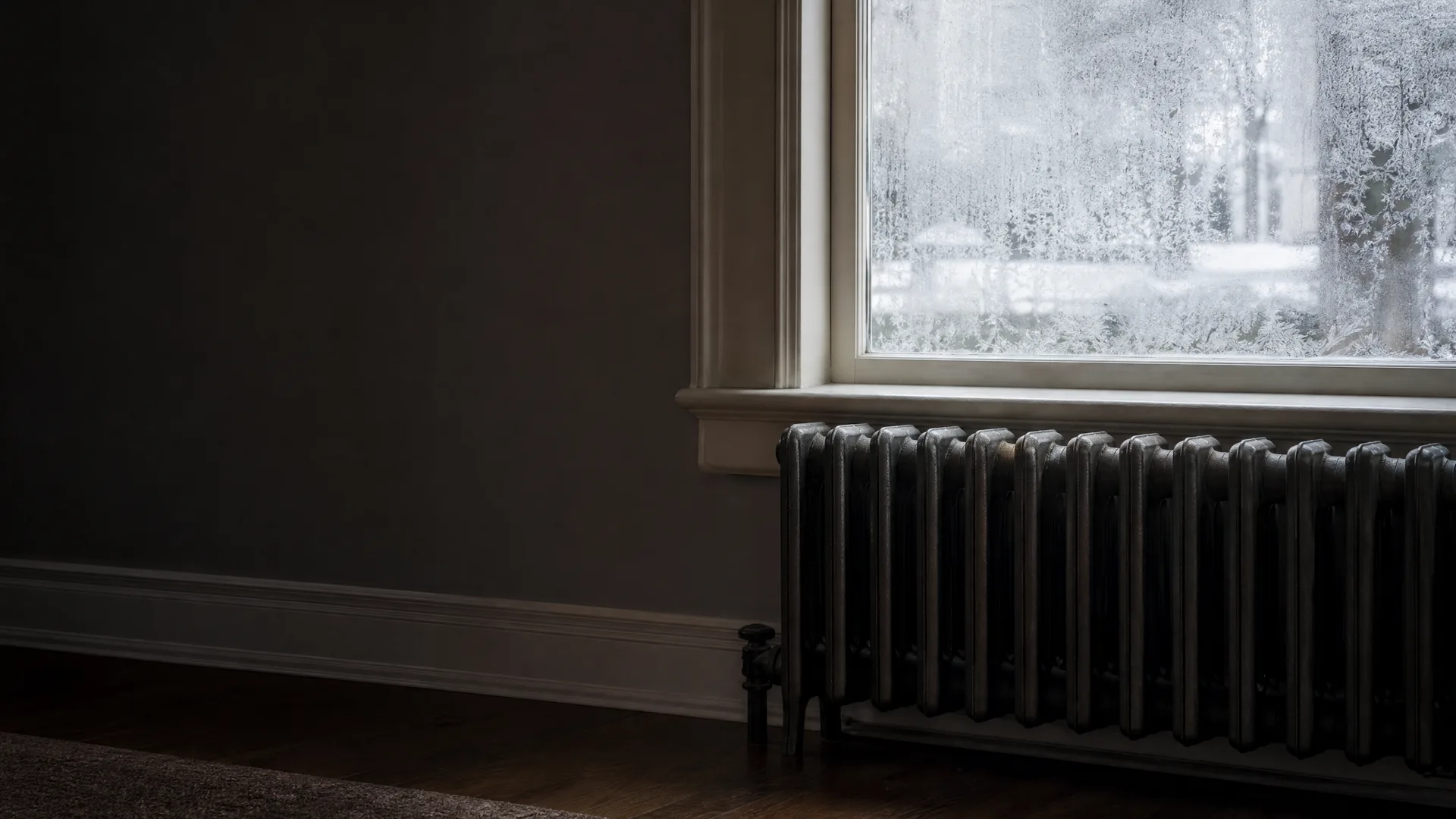
A cast iron column radiator with a valve stands beneath a window with a frosted pane showing snowy trees outside, in a dim room with dark walls and wood flooring.

You're up before the rest of the house, and the cold catches you off guard, the way it does on the handful of mornings Mississippi actually earns it. The radiator under the window ticks as it heats, and the glass above it has gone white with ice on the inside. You run the shower first, out of habit, and it turns cold inside a few minutes. Not lukewarm. Cold. You stand there a second longer than you need to, waiting to see if it comes back, and it doesn't. Outside the window, the ice hasn't moved.

Fix It Now or Keep Avoiding It

Call a repair

  • A new heating element or thermostat runs a fixed cost you can get quoted before work starts.
  • Fixing the actual cause stops the short cycle instead of just working around it.
  • Flushing mineral buildup out of the tank often brings back capacity that seemed lost for good.
  • A repair now catches a weak element before it fails outright and leaves you with no hot water at all.
  • Most of what causes a boiler to run short is one part, not the whole system.

Keep working around it

  • Spacing out showers or doing dishes at odd hours doesn't fix a weakening element, it just avoids it.
  • A boiler pulling more power to make less hot water is already costing you, even if nothing's failed yet.
  • Mineral buildup gets worse the longer it sits, so the fix on month six is bigger than the fix on month one.
  • A thermostat out of calibration will keep misreading the water temperature until it's recalibrated or replaced.
  • Waiting usually ends the same way, with the same repair, after more mornings of cold water.
A smiling man in a gray long-sleeved shirt stands in a kitchen looking to the side, with open shelves of dishes, a white mug on the counter, a potted plant, and a view through a doorway into a living room.
A smiling bearded man in a green sweater sits at a white marble kitchen island with a mug, potted plant and bowl of fruit, in a bright white interior with open shelving and an arched doorway.
A smiling man with dark curly hair and a beard, wearing a dark green knit sweater, stands at a white marble kitchen counter with a dark blue mug, with open shelving, pendant lights and a houseplant behind him.
A smiling man in a green ribbed sweater stands behind a wooden table holding a ceramic mug of coffee in a kitchen with white subway tile, shelves of potted plants, and a bowl of fruit.
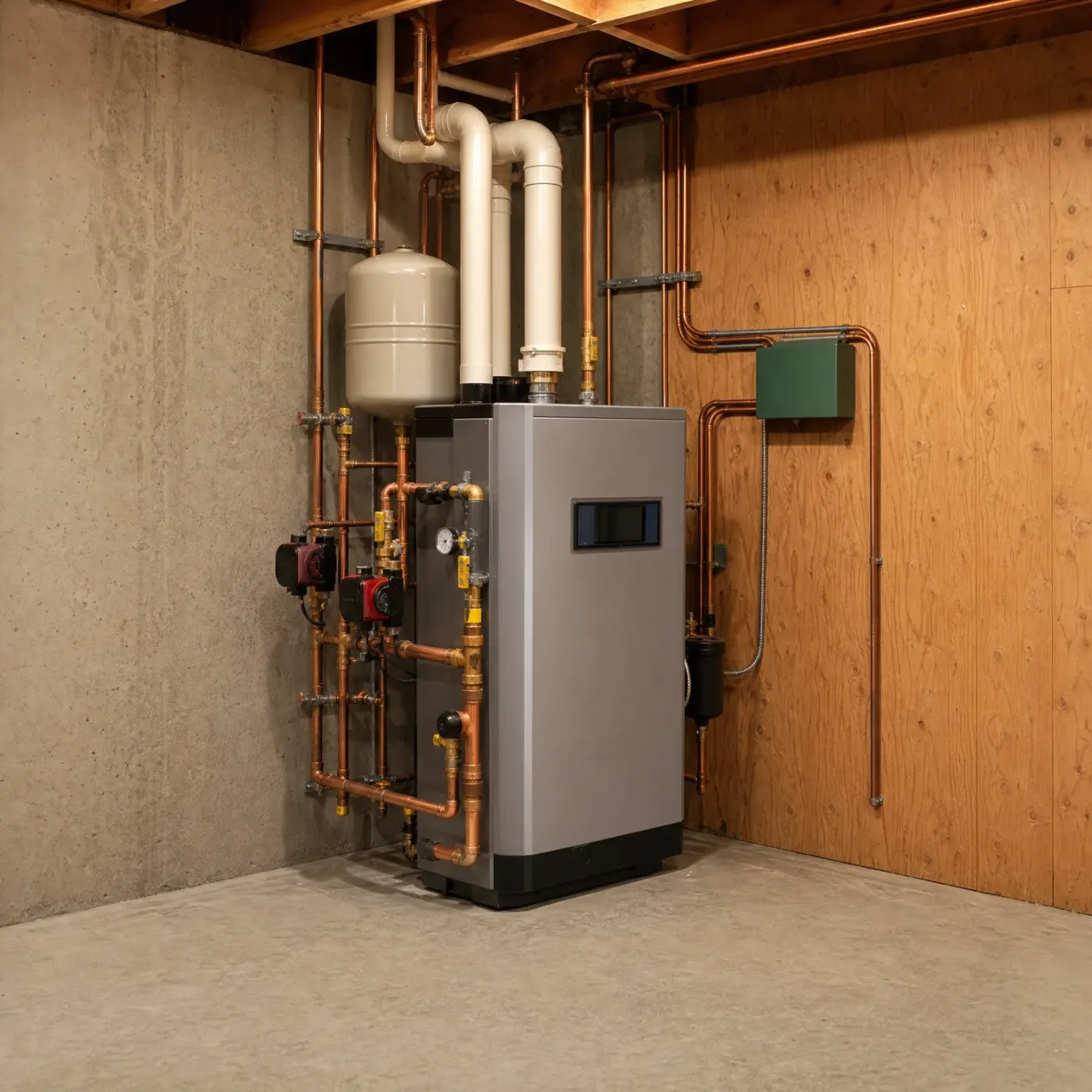
A gray floor-standing boiler in a basement corner with copper piping, two red circulator pumps, a beige expansion tank, white PVC vent pipes, concrete and plywood walls.
Clean copper lines, a steady pressure gauge, a tank sized to keep up with every tap in the house.
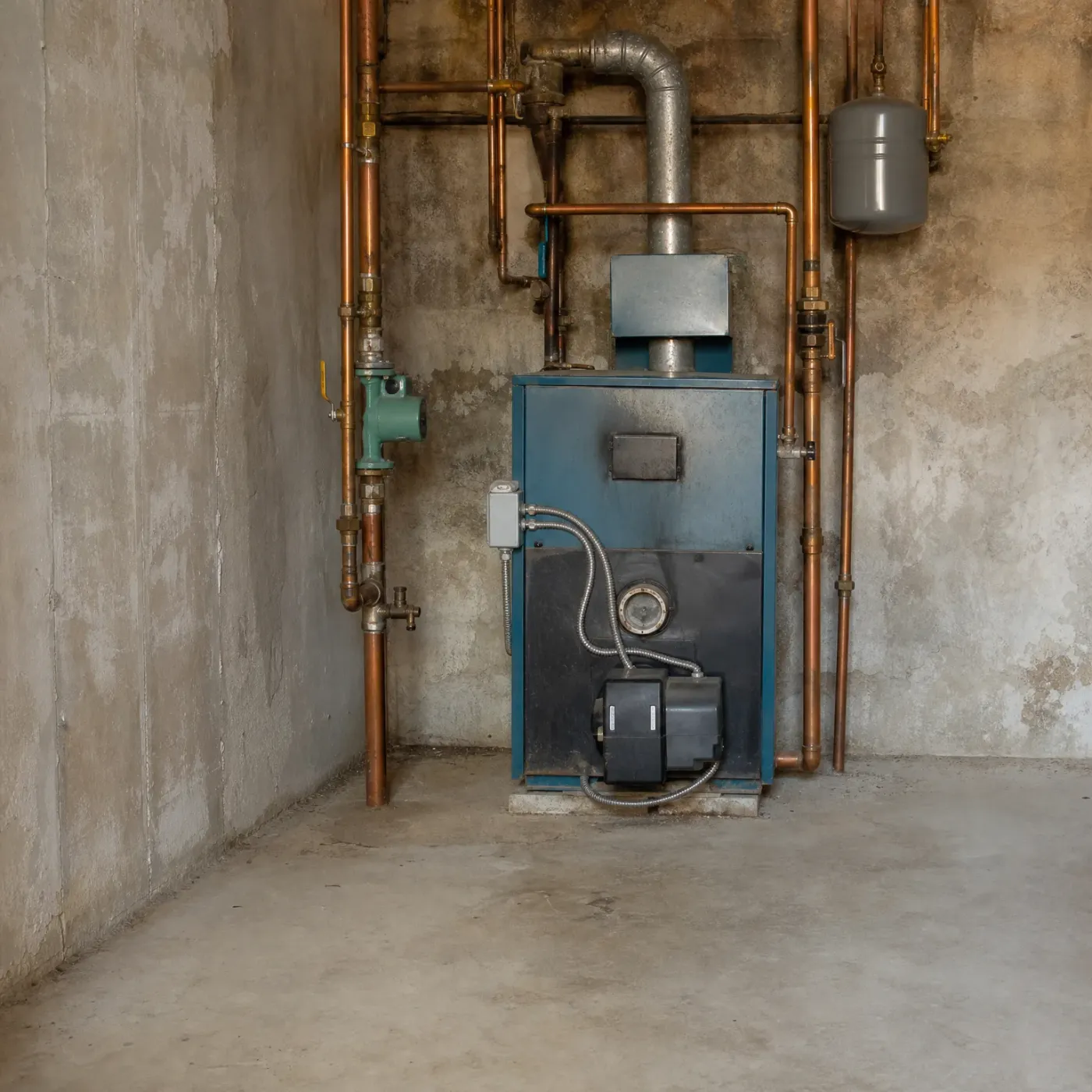
A blue residential boiler with a metal flue, pressure gauge and burner unit stands against a stained concrete basement wall, surrounded by copper pipes, a green circulator pump and a gray expansion tank.
A worn element or a scaled tank falls behind fast, and the burner runs longer for less hot water.
A smiling man with dark curly hair in a navy t-shirt sits on a gray couch indoors, with a large-leafed plant and a window in the background.
A bearded man in a plaid flannel shirt stands in a kitchen looking out a window toward snow-covered shrubs, with a steaming mug on the windowsill and potted plants on a shelf behind him.

Winter nights average 38°F statewide

38°F is a mild low by most standards, but it's enough to pull more hot water out of every tap, longer showers, more rinsing to feel warm. A boiler already running on a weak element or a scaled tank falls behind fast on nights like that.

NOAA nClimDiv 1991-2020 county normals weighted by homes

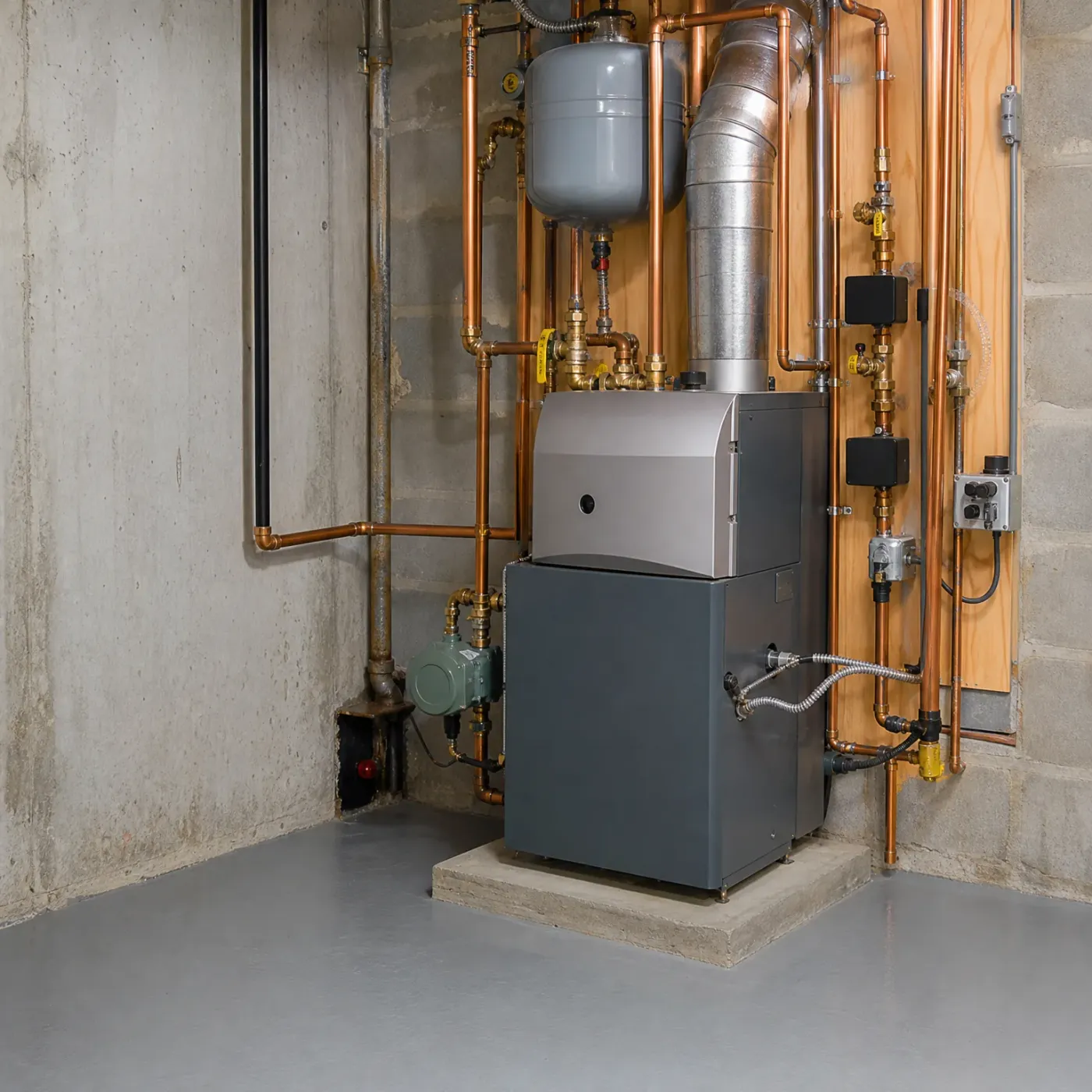
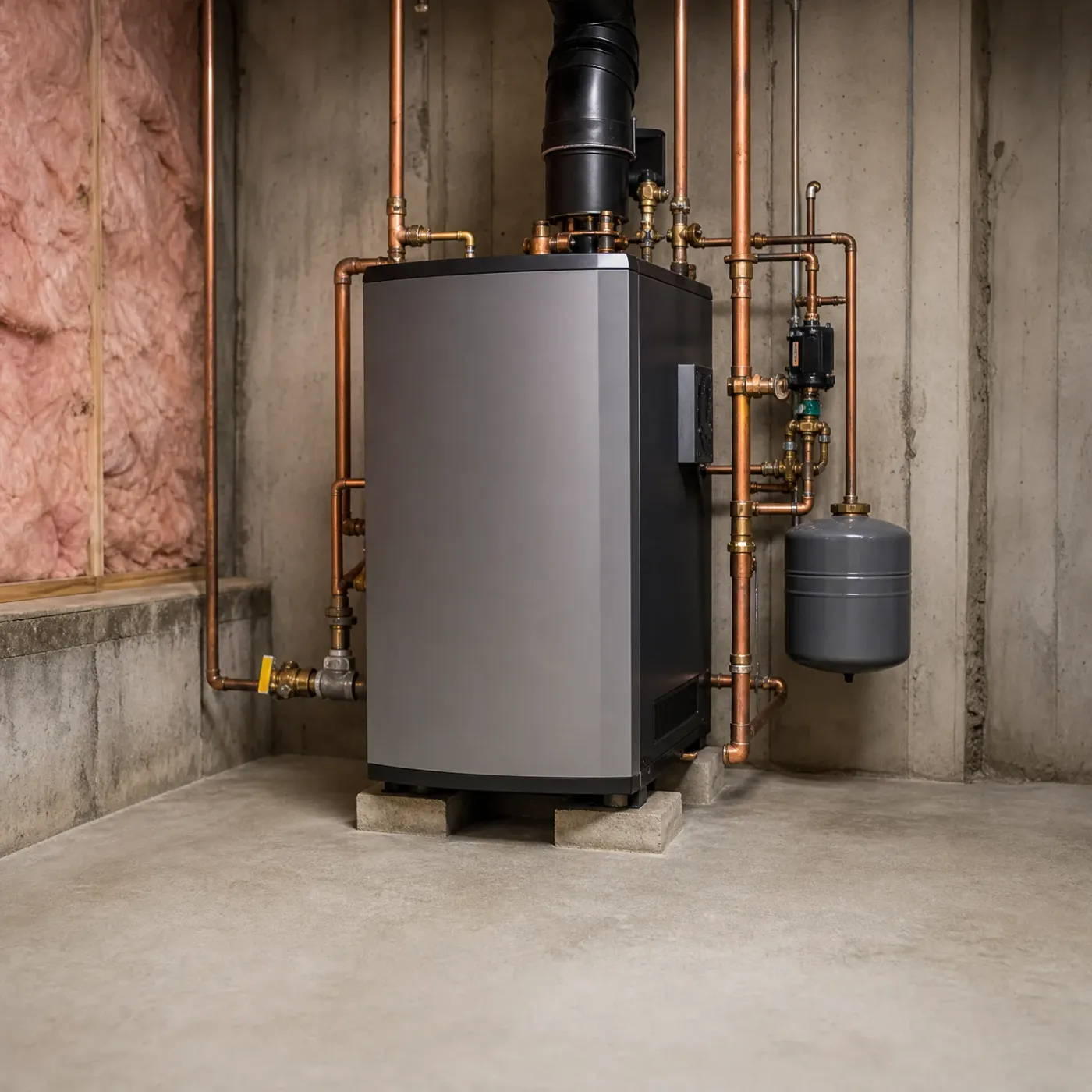
A gray and black boiler unit sits on concrete blocks in a basement corner, connected to copper piping, valves, a black flue duct, and a gray expansion tank, with bare concrete walls and exposed pink insulation at left.

Working the way it should

The copper lines run clean from the boiler to every fixture, and the circulator pump moves water through without strain. Pressure holds steady on the gauge. The expansion tank does its job quietly in the corner, and the unit cycles on, heats, and shuts off like it's supposed to.
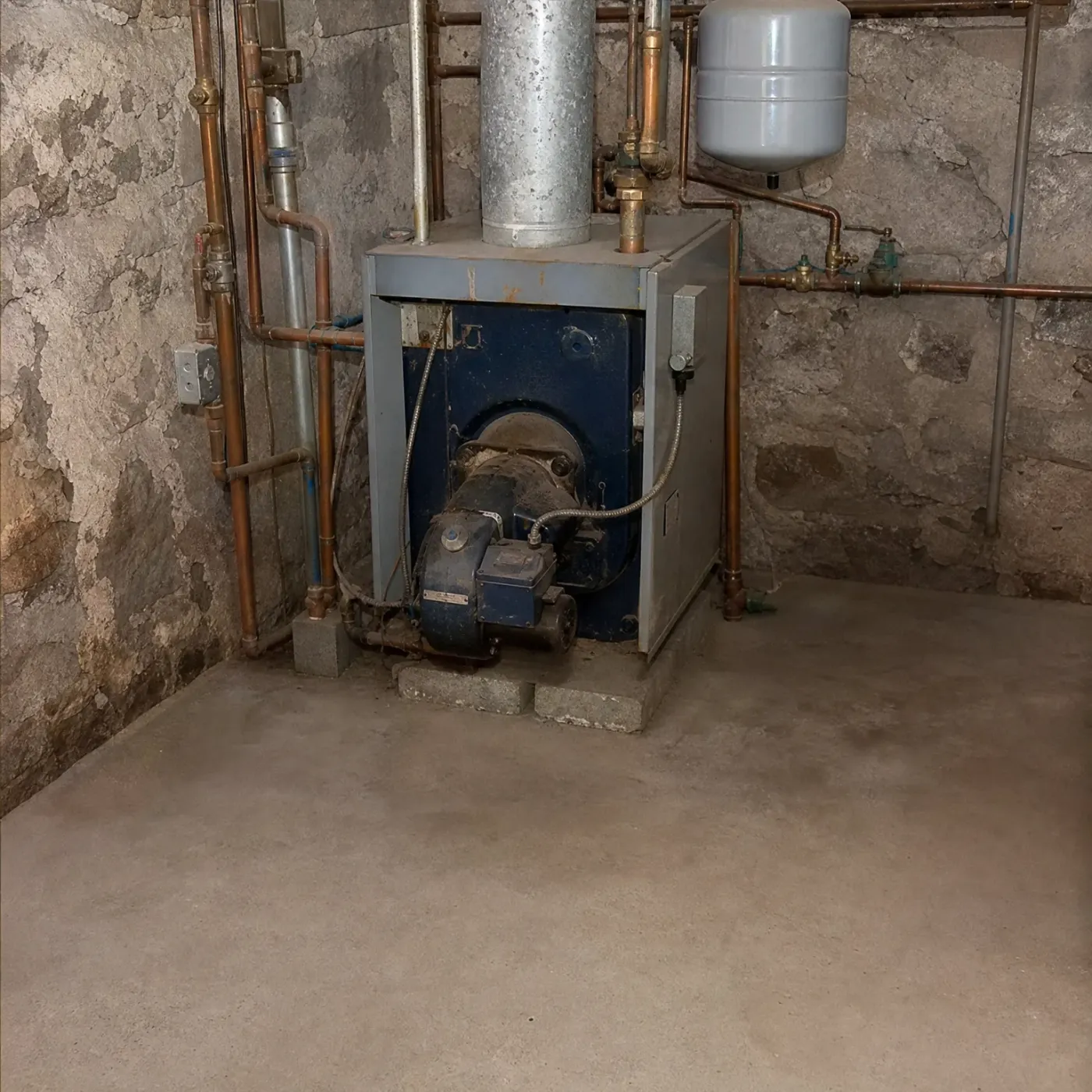
An oil-fired boiler with a blue and gray cabinet and burner sits on concrete blocks in a basement corner with stone walls, connected to copper pipes, a metal flue, and a wall-mounted expansion tank.

Falling behind

Set up on blocks in a stone-walled basement, this one is already asking more of itself than it should have to. A galvanized flue like that is older than you'd want it to be. When the element or the burner inside can't keep pace, the tank runs cold faster than the house empties it.

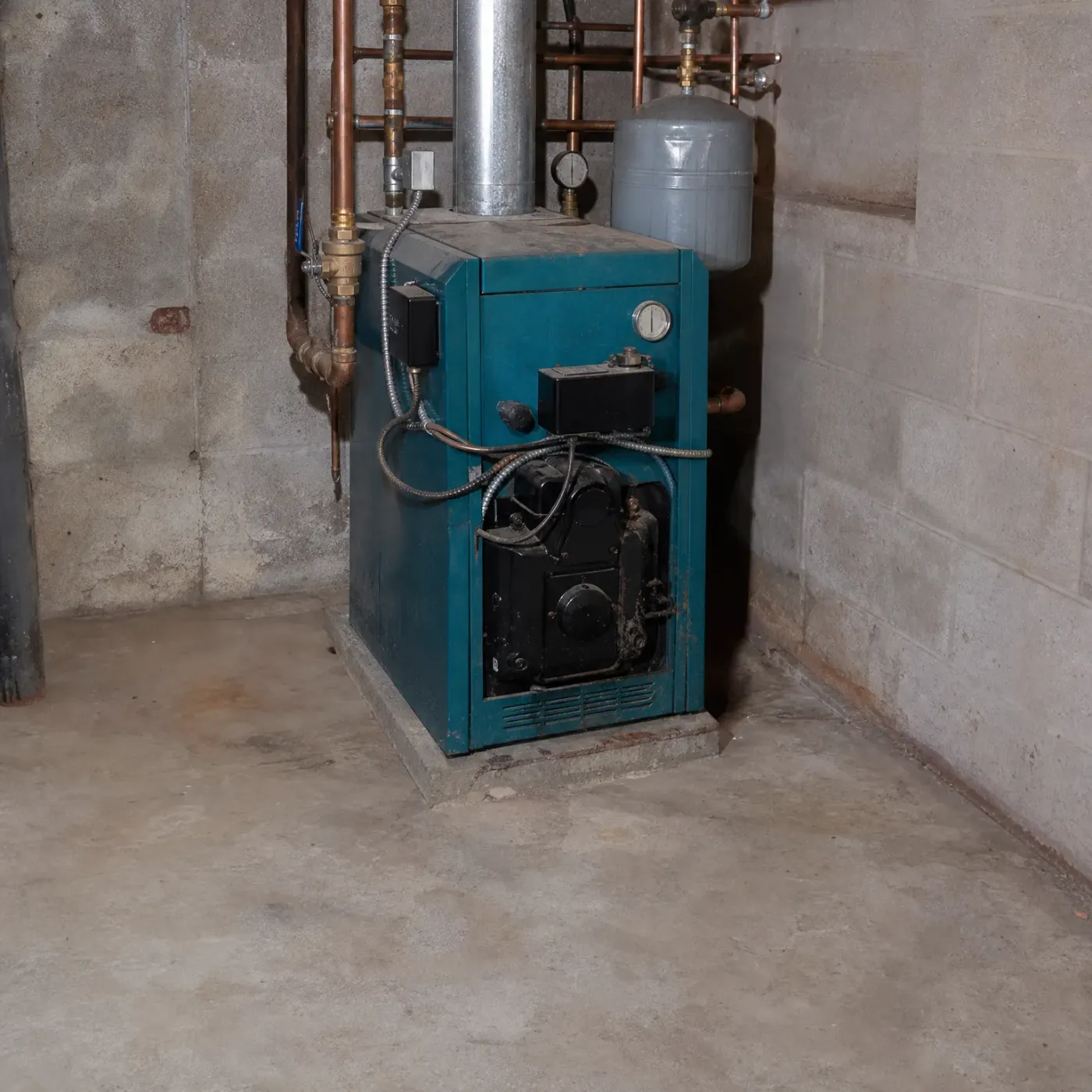
A teal boiler with a pressure gauge and black burner unit sits on a concrete pad in a basement corner, with copper pipes, a flue vent, and a gray expansion tank above against concrete block walls.
Before you get your boiler repair
A gray residential boiler on a concrete pad in a basement corner, connected to copper piping, an expansion tank, circulator pumps and insulated flue ducting against concrete and plywood walls.
After you get your boiler repair

It's off your list after this

You already know what's wrong, or close to it, from what you've read on this page. What you don't have is someone licensed to open the unit up, test the element, check the thermostat calibration, and tell you flat out what it'll take to fix. Finding that person usually means searching, calling a few numbers, explaining the same thing about your boiler and your hot water three or four times, then sitting with quotes that don't line up because nobody looked at the same problem the same way. That's the part this page takes off your plate. Mississippi summers already ask enough of you without spending an evening on the phone chasing down someone qualified to look at a boiler. Send the request and the search itself is done. What's left is the actual repair, the element or thermostat or whatever's been dragging your hot water down, getting looked at by someone who does this for a living.

Where This Leaves You

  • A boiler running short on hot water almost always points to one failing part, not the whole unit.
  • A weak heating element, a thermostat out of calibration, mineral buildup, or an undersized tank are the usual causes.
  • Electric heat is standard in Mississippi homes, so the element inside the boiler carries the full load of heating the water.
  • Finding and testing the actual cause stops the short cycle instead of just masking it for a few weeks.
  • Once you know which part is behind it, the fix is a known job with a known scope, not a guess.
  • Getting a licensed tech out to test it beats calling around and explaining the same problem to three different companies.

A boiler that keeps running out of hot water is telling you something specific, not something vague. It is almost never the whole unit. It is the element that heats the water, or the thermostat that is reading the temperature wrong, or scale built up inside the tank, or a tank that was never sized for what your house actually uses. Electric heat is the norm here, which means that element is doing all the work with nothing to share the load, so when it weakens, the whole system feels it fast. The point of sorting out which of these it is isn't curiosity. It changes what gets fixed and whether the fix holds. Patch around the wrong part and you're back to cold showers in a few weeks, no better off than before.

What changes once you send the form is what you're no longer doing yourself. You're not searching through listings trying to guess who actually works on boilers versus who just lists it on a website. You're not calling three or four companies, explaining the same short cycle and the same cold mornings each time, then trying to line up their quotes against each other to see who's telling you the truth. Someone licensed shows up, opens the unit, tests the element and the thermostat, and tells you what it'll take. That part of the work, the finding and the explaining and the comparing, is off your plate once you ask.

A single-story stucco house at dusk with a lit paver walkway lined by low path lights, desert plants and boulders in front, and distant mountains under an orange and blue sky.

Boiler Repair

Hand off the search today

Step 1 of 3: Equipment
  • A ceramic vase holding leafy green branches and a shallow wooden bowl sit on a wooden window ledge beside a sunlit window, with a cream upholstered chair and knit throw in the foreground.
    • Say what's going on with your boiler, and a pro who works on them reaches out.
    • A local pro who knows boilers gets your details and gets in touch.
  • Sunlit living room corner with a beige upholstered sofa, a round wooden side table holding a ceramic vase of olive branches, linen curtains at a window, a floor vent in the baseboard, and a woven jute rug on hardwood flooring.
    • Send the request and finding a pro stops being your problem.
    • After this form, you can stop searching for a boiler pro.
  • A wooden side table with a single drawer holds a shallow carved wood bowl and a white ceramic vase of green eucalyptus stems, beside a window and an upholstered chair draped with a cream knit throw.
    • Describe your boiler job once, to one pro.
    • Fill out one short form instead of calling around.
  • Corner of a house with horizontal siding, a white-framed window and stone veneer base, beside a covered entry with wooden steps, a potted plant, mulched beds of green shrubs and a flagstone path.
    • Your request goes to one pro, not a list of companies.
    • The pro who reaches out is licensed in Mississippi.