Why your boiler relief valve is leaking in Mississippi

Step 1 of 3: Equipment

A leaking relief valve usually means pressure or temperature inside the boiler is going higher than it should, and the valve is doing its job by letting water out before something worse happens. Most of the time the cause is a faulty valve that needs replacing, too much pressure in the system from a failed expansion tank, or the water inside running hotter than it's supposed to. Since most homes in Mississippi heat with electricity, that same boiler may be carrying the load through winter stretches when it runs longer than usual, and a buildup that would pass unnoticed in a mild month shows up as a drip or steady leak at the valve. A small drip left alone can turn into a steady one, and it usually points to a problem inside the system, not the valve itself. Either way, it needs a look from someone who can check the pressure, the tank and the valve together, not just swap a part and hope.

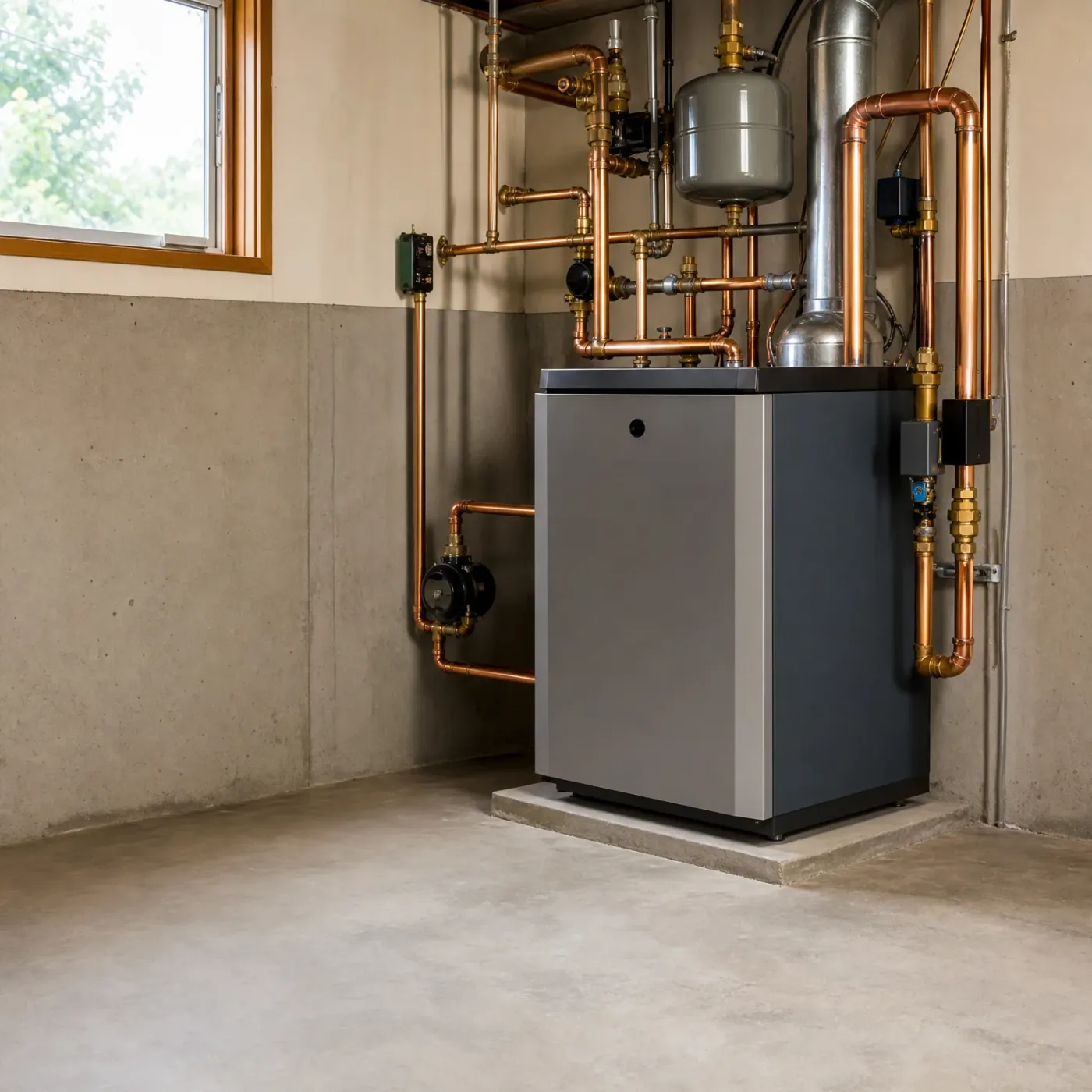
A gray floor-standing boiler on a concrete pad in a basement corner, connected to copper piping, brass valves, a circulator pump, an expansion tank, and a metal flue, with a window at upper left.

Pressure holding steady

A boiler running right keeps a steady pressure, usually somewhere around 12 to 15 PSI cold. The relief valve stays dry. Water moves through the copper lines, the circulator pump, and the expansion tank without ever needing to escape.

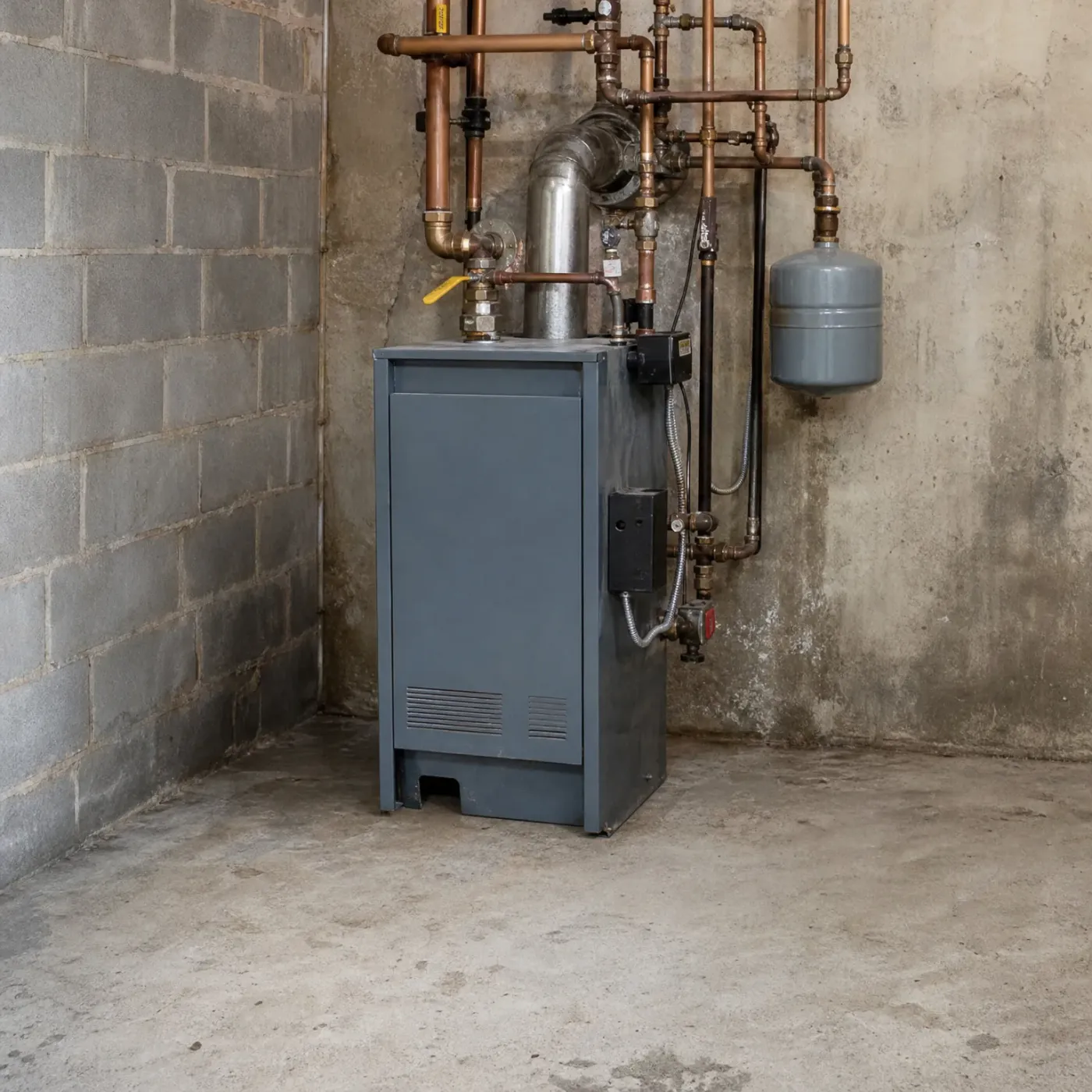
A gray floor-standing boiler in a basement corner with copper and black piping above it, a flue vent, and a gray expansion tank mounted on the concrete wall beside a concrete block wall.

Valve letting go

Water dripping from the relief valve means pressure or temperature climbed past what the system can hold. It might run down the side of the boiler or just show up as a puddle on the floor below the valve. Either way, something upstream pushed it there.

Bad Valve or Bad Pressure

Faulty valve

  • The valve itself has worn out and now opens at a lower pressure than it's rated for, even though the boiler is running fine.
  • Mineral buildup or sediment can keep the valve seat from sealing back down once it opens, so it drips even after pressure drops.
  • A valve that's old or was installed years ago can weep slowly at the seat without any other part of the system being at fault.
  • This is a direct repair: a licensed contractor swaps the valve and checks that it reseats properly under normal pressure.
  • Replacing the valve doesn't require touching the expansion tank, the circulator pump, or the gas controls.

Pressure building too high

  • If the expansion tank has lost its air charge or waterlogged, the system has nowhere for expanding water to go, so pressure climbs and the valve opens.
  • A fill valve stuck partly open keeps adding water to the system, pushing pressure past the point where the relief valve has to act.
  • An aquastat or limit control that's reading wrong can let the boiler run hotter than it should, raising pressure along with it.
  • In this case a new relief valve will leak again, because the valve was never the problem to begin with.
  • A contractor who checks pressure readings and the expansion tank can tell you which of these is actually driving it before any part gets replaced.
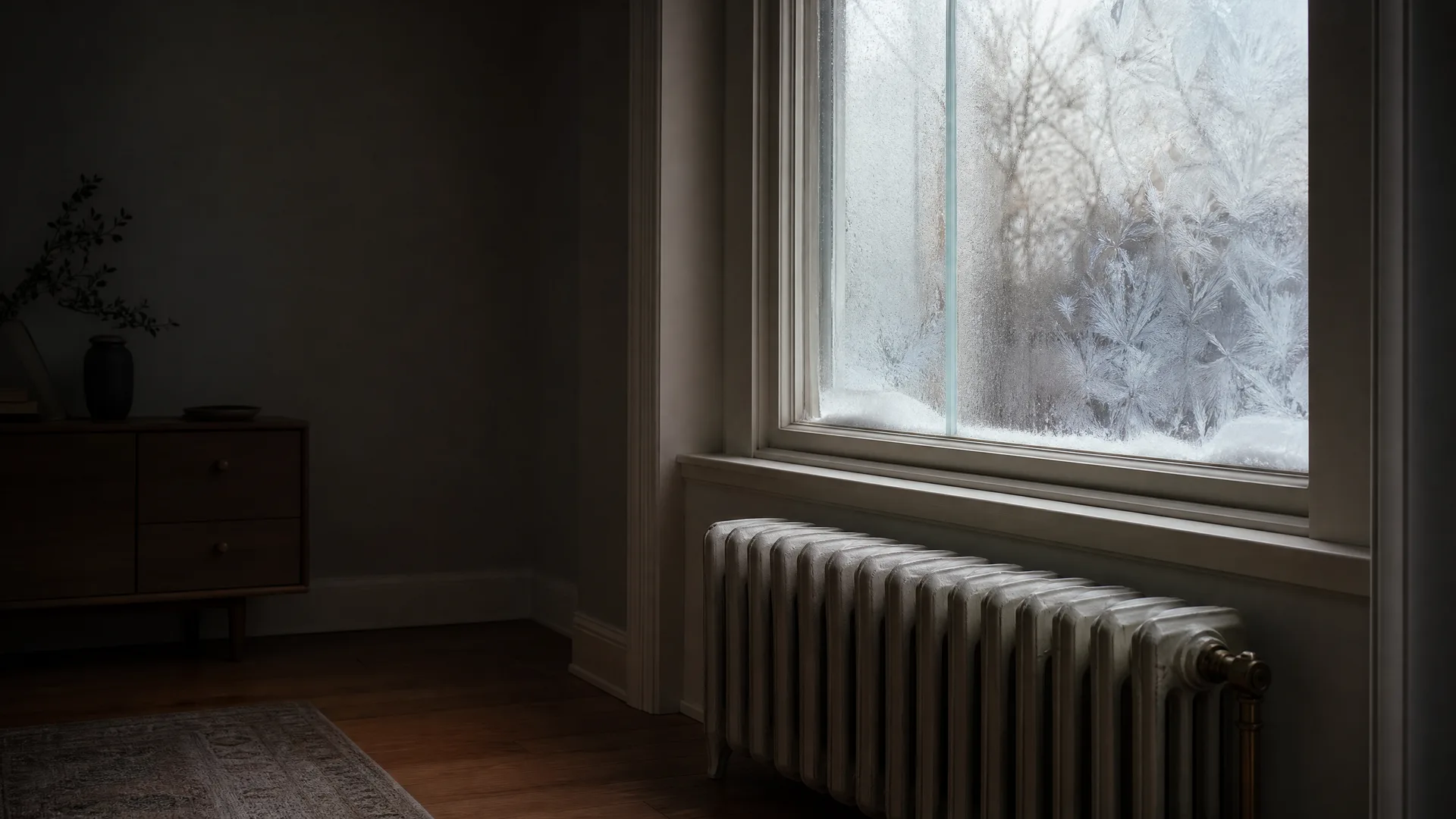
A cast-iron column radiator beneath a frost-covered window in a dim room, with a wooden sideboard, vase of dried branches, wood floor and rug on the left.

You're up before the rest of the house, and the cast-iron radiator under the living room window is ticking as it heats. The glass has fogged over, a thin line of ice along the inside edge where the cold pushes through. You go to check the boiler before work, like you've started doing most mornings now, and there it is again, a thin trail of water down the side of the tank, pooling at the base near the relief valve. The floor around it is damp. You put a towel down, same as yesterday, and wonder how long it's been doing this before you noticed.

A closed silver laptop and a glazed ceramic mug on a wooden table, with a blurred kitchen counter, potted plant, cutting board and window in the background.

What's happening inside the tank

The relief valve sits on top of the boiler, threaded into a fitting that connects straight to the tank. Inside it is a spring holding a small disc against a seat. When pressure or temperature climbs past the valve's rating, the spring gives way, the disc lifts, and water escapes down the discharge pipe. Once pressure drops back below that threshold, the spring is supposed to pull the disc back down tight. A valve that leaks is either opening too early because the spring has weakened, or it opened once and the seat didn't reseal, often because a bit of mineral debris got caught under the disc on the way back down.

Sorting out which one it is means draining pressure, watching how the gauge behaves, and sometimes pulling the valve to look at the seat itself. That's not a call you want to make a few times to a few different companies before someone gets it right. A contractor working near you who handles boilers through the winter has likely seen this exact valve fail this exact way more than once, and knows what to check first instead of guessing.

Interior corner of a dining room with a round wooden table, a ceramic vase holding olive branches, a dark spindle-back chair near a curtained window, and a sideboard with a lamp against beige walls.
A gray-haired man in a dark long-sleeve shirt sits on a gray sofa in a living room, looking toward a sunlit window with sheer curtains.
A gray-haired man in a dark green sweatshirt sits on a sofa in a living room, looking toward a bright window, with a houseplant, lamp, fireplace and framed art behind him.
A gray-haired bearded man in a dark green collared sweater sits on a sofa in a living room with a window, houseplant, floor lamp and bookshelves, looking off to the side.
A gray-haired man in a dark green sweater sits on a sofa in a sunlit living room, looking off to the side, with a framed landscape painting, dining table and shelving behind him.

Skip the calls to every shop

Your request stays with one local pro.

You're not committing to anything by asking.

A relief valve rated at 30 PSI is supposed to stay shut at anything below that. Once it opens, it rarely reseals on its own, even after pressure drops back to normal.

That's why a drip that started during a pressure spike can keep going long after the spike is gone. The valve itself has to be replaced, not just waited out.

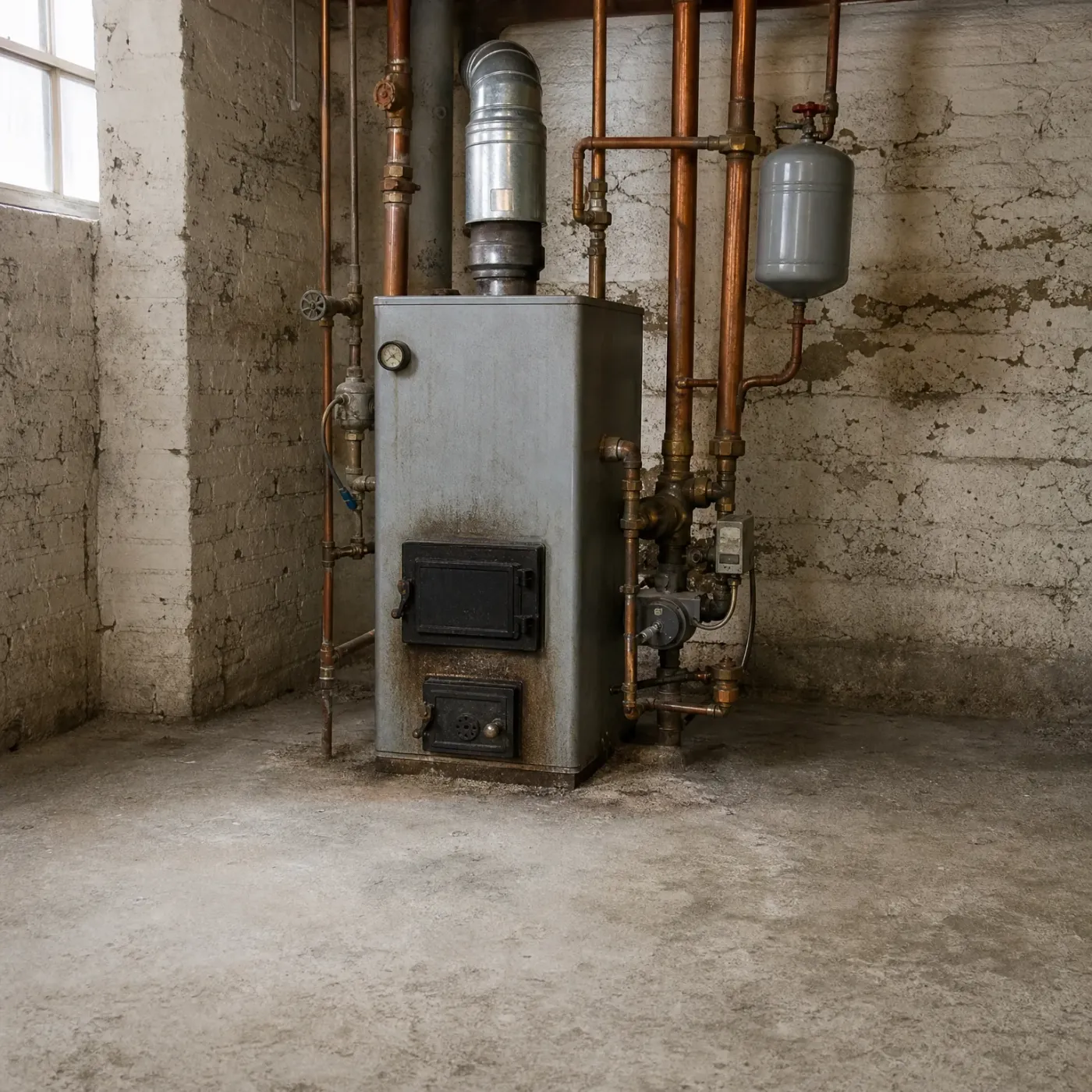
An old gray boiler with copper piping, a flue duct, pressure gauge and an expansion tank stands in the corner of a basement with painted masonry walls and a bare concrete floor.
Before you get your boiler repair
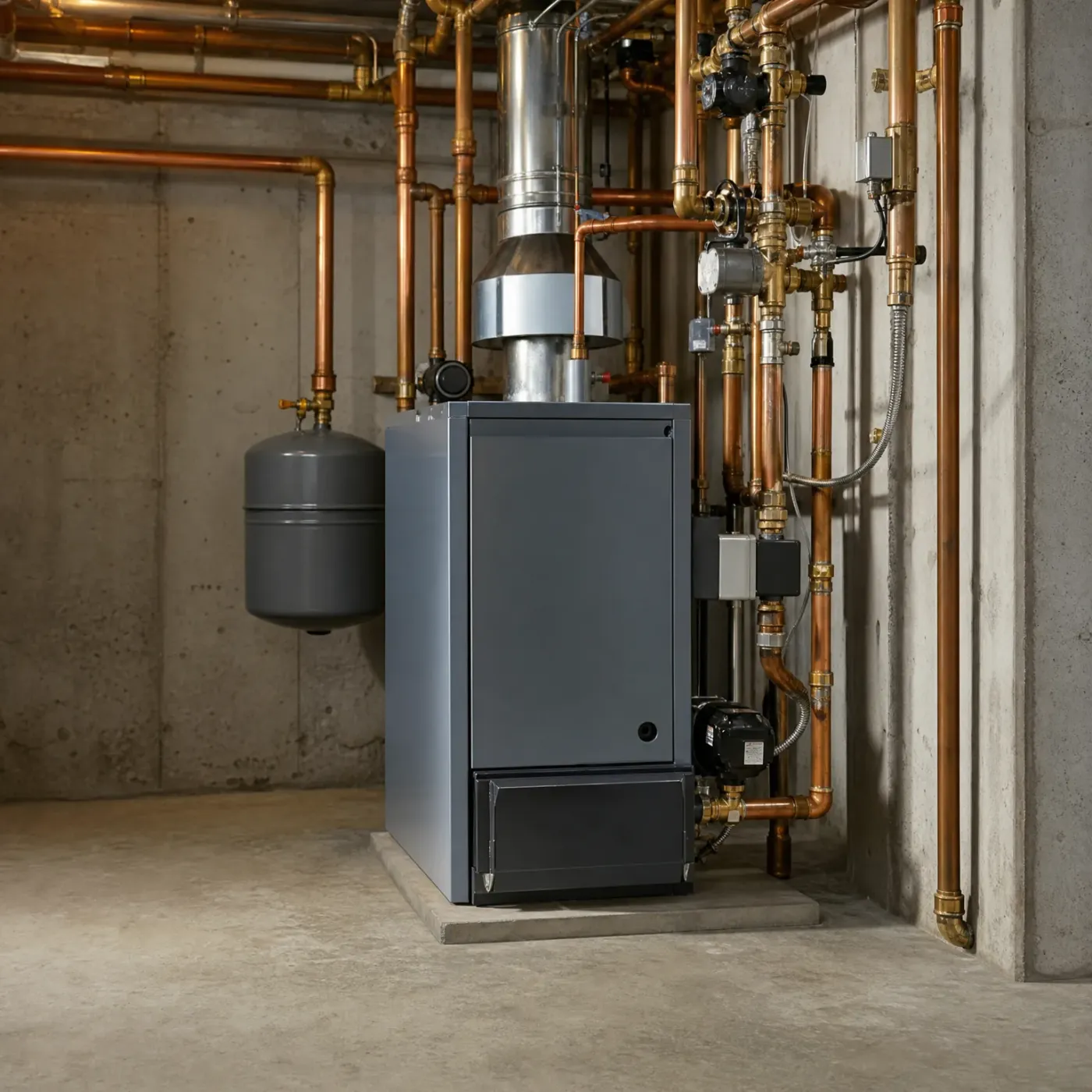
A gray boiler on a concrete pad in a basement, connected to copper piping, valves, circulator pumps, a metal flue, and a wall-mounted expansion tank.
After you get your boiler repair
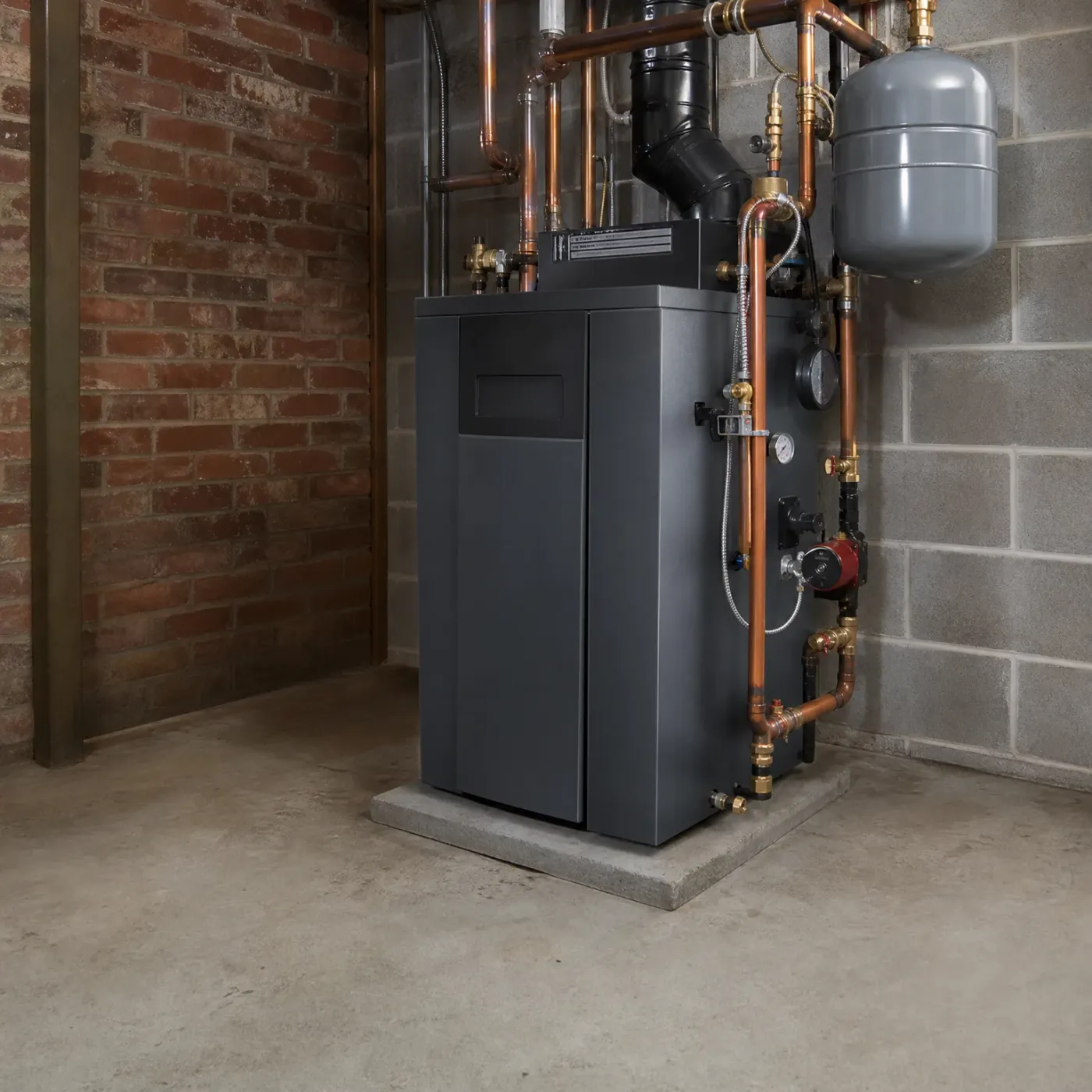
A dark gray floor-standing boiler on a concrete pad in a basement, connected to copper piping, valves, a circulator pump, a gauge, a black flue pipe, and a gray expansion tank, with a brick wall on the left and concrete block wall behind.

Running the way it should

The gauges read steady, the pipes stay dry, and the expansion tank is doing its job. Water moves through the system and back without a drop finding its way out through the relief valve.

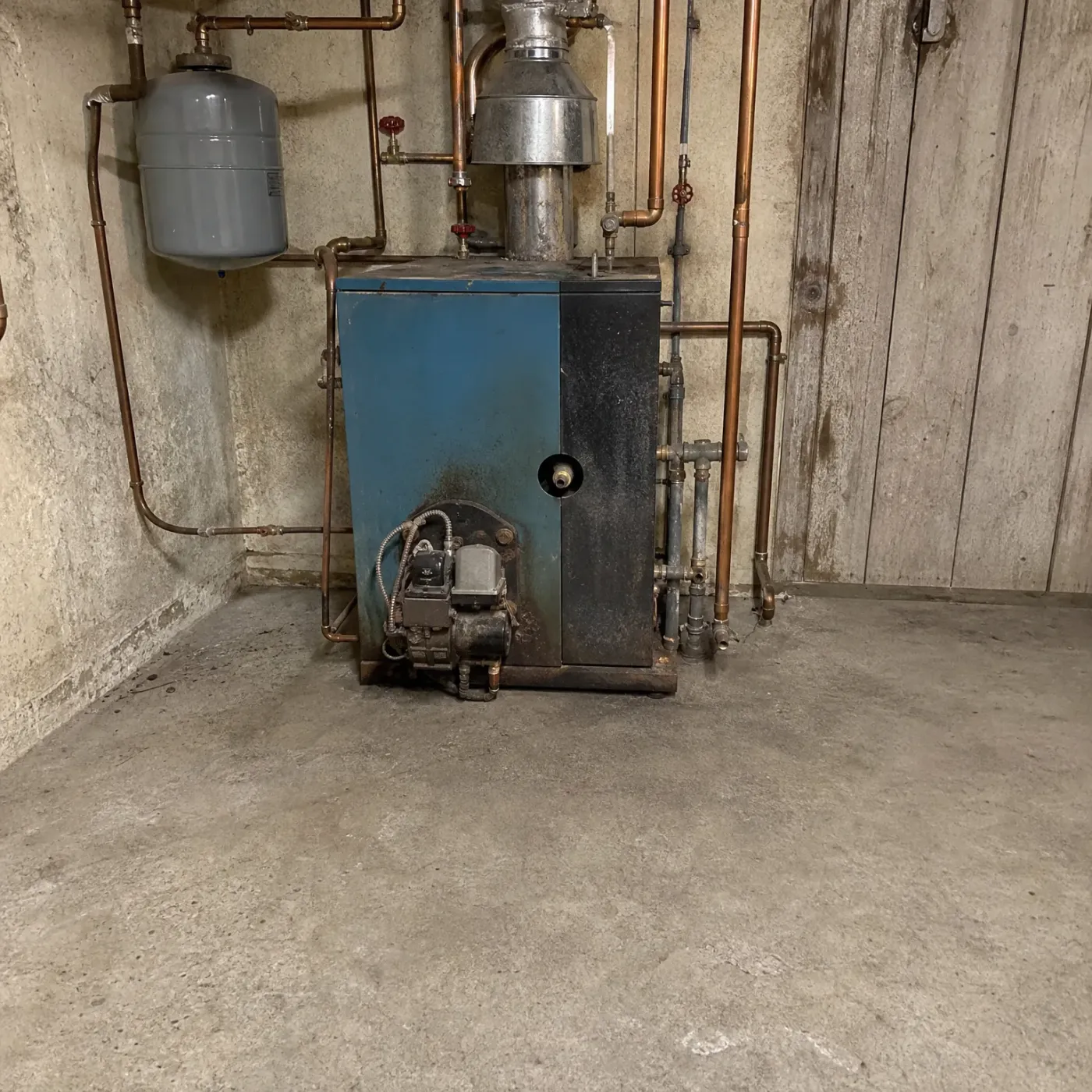
A blue and black boiler with a burner unit, flue, expansion tank and copper and steel piping stands on a concrete basement floor against a concrete wall and wooden plank partition.

A valve that won't stop dripping

This boiler has been letting water escape for a while, and nobody's looked at why. Left alone, that drip can mean a valve that needs replacing or a pressure problem feeding it.

A woman with shoulder-length dark brown hair in a cream knit cardigan sits in an upholstered armchair beside a window, looking off to the side, with a white bookshelf and potted plant blurred behind her.
A woman and a child wrapped together in a thick knitted blanket on a sofa, both with eyes closed, with a lit table lamp and houseplant in the dim background.

Fix the valve now

A plumber replaces the valve or clears whatever's keeping it from sealing, and the drip stops. Pressure holds where it should.

Skip calling around

Leave it dripping

Water keeps finding its way out, the fitting corrodes, and whatever caused the pressure to spike in the first place is still there, unaddressed.

Skip calling around

Winter nights average 38°F statewide

Winter nights here average 38°F, so your boiler isn't working anywhere near its limit most of the season. If the relief valve is dripping on a mild night like that, pressure is building for a reason other than weather, and that points back to the valve or the system itself.

NOAA nClimDiv 1991-2020 county normals weighted by homes

What the drip tells you

  • A dripping relief valve means pressure or heat is going past what it's rated for, and the valve is most likely worn or fouled, not the boiler itself.
  • Winter nights here average 38°F, mild enough that a steady drip points to the valve or your system's pressure, not the cold.
  • Left alone, the drip keeps corroding the fitting and the boiler keeps running under conditions it isn't built for.
  • A plumber who works on boilers all season knows which valves fail first and whether sediment or a bad seat is the real cause.
  • One local, licensed plumber takes the job, so you're not fielding calls from several companies trying to sort out the same leak.
  • Once the valve is replaced or cleared, pressure holds where it should and the drip stops for good.

A relief valve that won't stop dripping is telling you something simple. Pressure or heat in the boiler is going past what the valve is rated to hold, and the valve itself has worn out or gotten fouled enough that it won't reseal. On a 38°F night, which is an easy one for a boiler running in Mississippi, that drip isn't the weather talking. It's the valve or the pressure behind it.

Left alone, it doesn't fix itself. The fitting underneath keeps corroding, and the boiler keeps cycling under pressure it wasn't built to hold. That's wear accumulating in a spot you can't see until the fitting fails outright.

What ends it is someone who knows which valves on these boilers fail first, whether sediment is holding the seat open or the valve itself is just worn past its rating, and who can tell the two apart by looking rather than guessing. That's the kind of call a plumber who works on boilers all winter makes without much thought, because they've already seen it a dozen times this season.

You're matched with one plumber for this, local and licensed, who takes the job as their own rather than one more lead in a pile. No juggling calls from three companies trying to figure out who's actually coming. Once the valve is replaced or cleared and whatever caused the pressure to climb is addressed, the gauge holds where it should and the drip stops. That's the whole fix: a dry valve and a boiler running the way it's supposed to.

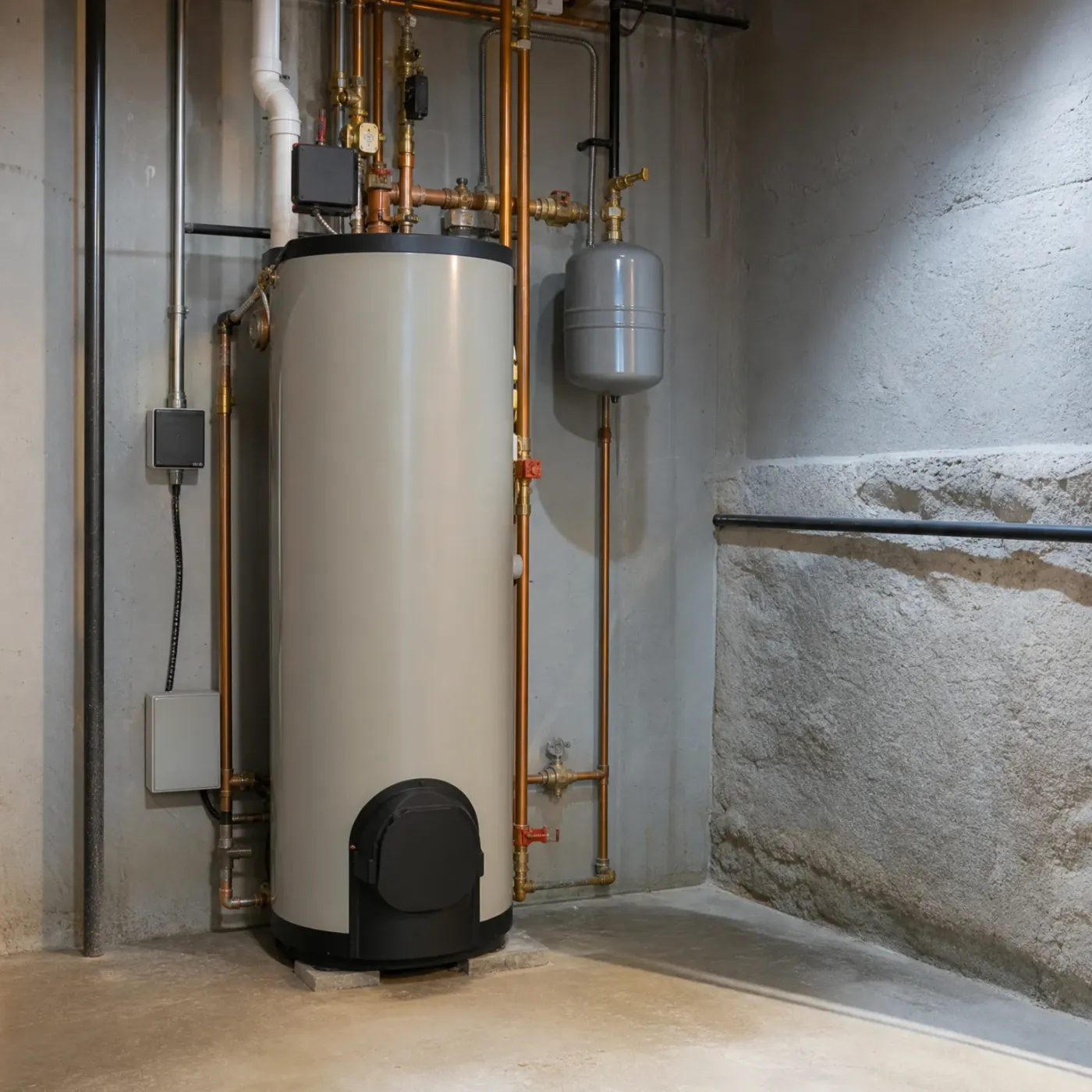
A tall cylindrical boiler or water heater with a black burner cover stands in a concrete-walled basement corner, surrounded by copper pipes, valves, electrical boxes, and a gray wall-mounted expansion tank.

Describe it once

Fill out one form

The pro who reaches out is licensed in Mississippi.

No charge to send it. You decide if you hire them.