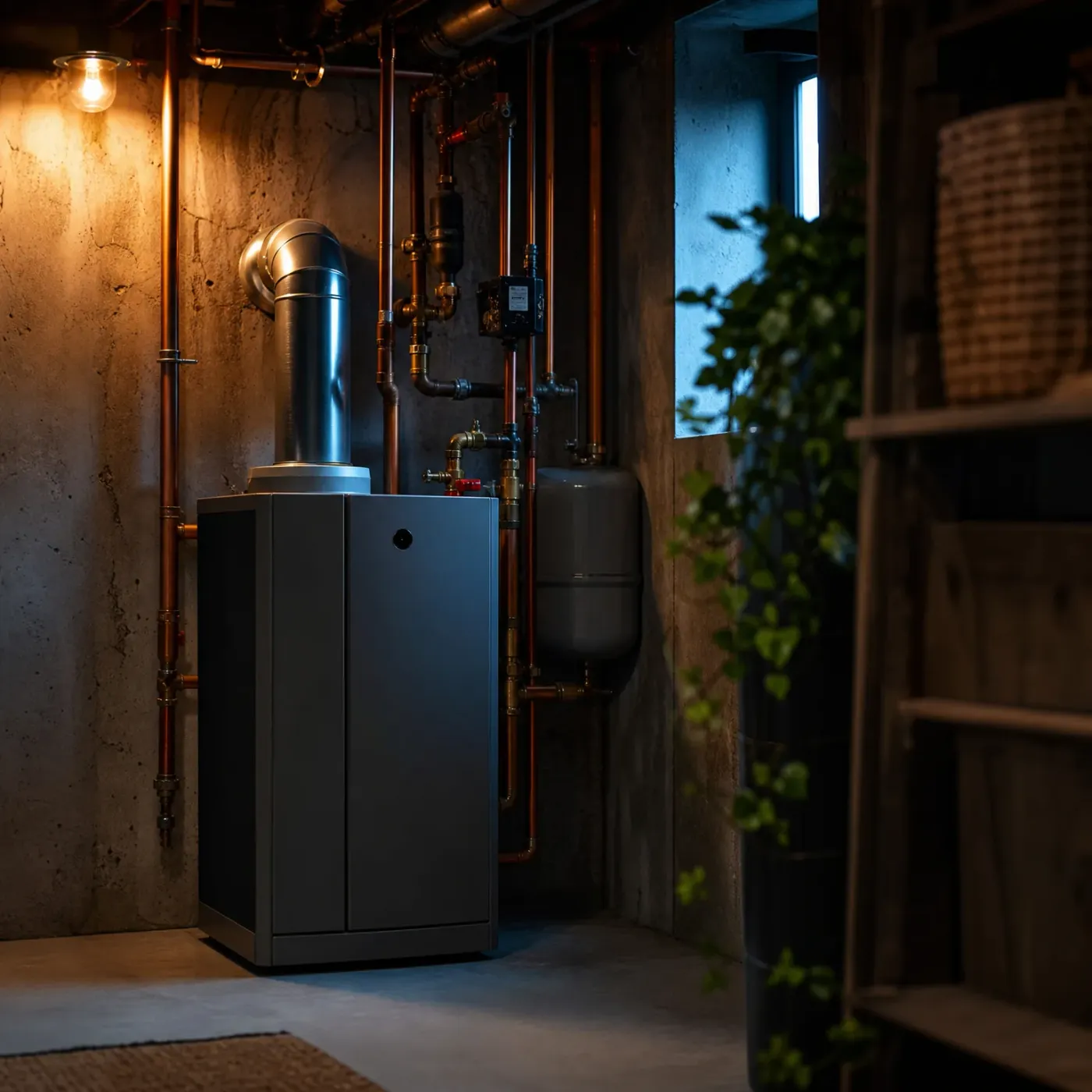
A dark grey floor-standing boiler with a metal flue stands against a concrete basement wall, surrounded by copper pipework, valves and a wall-mounted expansion tank, with ivy and a shelving unit at right.

Hand off the boiler problem

Why your boiler makes a banging noise in Mississippi

Banging in a boiler usually means a part of the system is fighting against trapped air, built-up scale, or water hitting a surface it shouldn't. Not every bang means the same thing, and the fix depends on which one it is. Fill out the form and stop trying to track down who in Mississippi can come take a look.

I'm done searching

That banging is usually water, not metal. When a boiler has air trapped in the pipes or a radiator, water slams into the pocket of air as it moves through, and you hear it as a knock or a bang, sometimes right when the system fires up. Scale buildup on the heat exchanger does something similar: water trapped under a layer of mineral deposit flashes to steam and collapses with a bang you can hear through the walls. In Mississippi, most homes heat with electricity, so a boiler here is less common than it is up north, and that also means fewer people nearby have heard this exact noise and can tell you offhand what it is. The sound itself does not tell you which of these is happening. It means something in the system needs attention before it gets worse, not that the boiler is about to fail tonight.

A woman in a dark gray sweater reclines on a light sofa with eyes closed and a slight smile, under a textured gray blanket with an open book resting on her lap, with a lit table lamp and plant in the background.
A smiling bearded man in a navy crewneck sweater sits at a dinner table with a glass of red wine, plates and glasses in the foreground, in a dimly lit room with a lamp and framed picture behind him.

Boilers run on electric heat throughout most Mississippi homes, but the banging comes from the boiler itself, not the power behind it. The noise points to what's happening inside the tank and pipes.

Air works its way out through a vent or bleed valve. Scale doesn't. Once it coats the bottom of the tank, that banging stays until someone removes it or flushes the system clean.

A smiling man in a dark navy sweater sits on a light sofa in a living room, with a glass bowl of popcorn on a wooden coffee table and bookshelves behind him.
A smiling man in a dark green sweater sits on a tan leather sofa in a dimly lit living room, with a bowl of popcorn in the foreground and a kitchen area blurred behind him.
A smiling middle-aged man in a dark shirt sits on a gray sofa in a living room, with a bowl of popcorn on a side table and shelves, a window and kitchen area behind him.
A smiling bearded man in a dark gray t-shirt sits on a gray couch in a living room, with a large glass bowl of popcorn on a wooden table in the foreground.

Most of these causes come down to water meeting a surface it shouldn't, at the wrong temperature or in the wrong amount. A cold fill hitting the hot heat exchanger turns to steam for a moment, and when that steam collapses it makes the bang you hear. Low water does something similar from the other direction, leaving part of the heat exchanger dry and letting it overheat until the metal cracks and pops. Scale works the same way over time, building up on the bottom of the tank and trapping a film of water underneath that boils against the metal. Some of the noise has nothing to do with the water itself. A valve that's partly closed forces water through a tighter space, and the pressure change as it squeezes through knocks. Pipes that move when they heat up will rattle against a stud or joist if they weren't strapped down tight to begin with. And a circulator pump that's starting to fail can pull in air pockets that collapse as they pass through, which sounds a lot like the boiler itself banging.

What's Actually Happening Inside

  • Cold water entering the boiler after a cold fill hits the hot heat exchanger and flashes to steam, and that collapsing steam makes the bang.
  • A low water level exposes part of the heat exchanger to air, so the metal overheats and cracks the pop you hear.
  • Scale baked onto the bottom of the heat exchanger traps a thin layer of water under it, and that trapped water boils and pops against the metal.
  • A clogged or partly closed valve forces water through a narrower path, and the pressure change as it squeezes through makes a knocking sound.
  • Pipes that were not strapped down tight enough move slightly when the water inside them heats up, and that movement knocks against a stud or joist.
  • A failing circulator pump can cavitate, pulling in tiny air pockets that collapse with a rattling or banging noise as they pass through the pump.
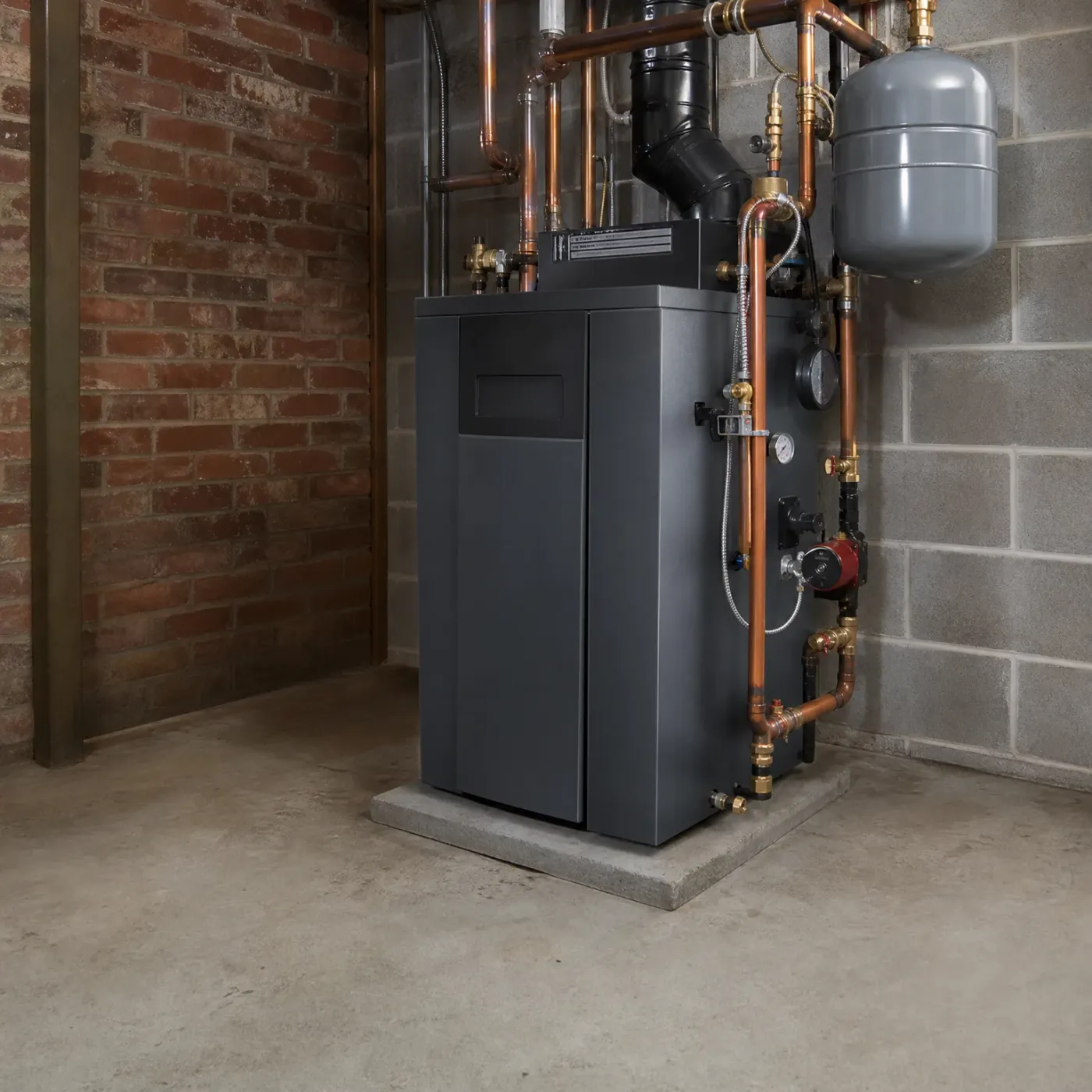
A dark gray floor-standing boiler on a concrete pad in a basement, connected to copper piping, valves, a circulator pump, a gauge, a black flue pipe, and a gray expansion tank, with a brick wall on the left and concrete block wall behind.
Pipes, valves, and gauges all connected with nothing knocking: water moves through quiet, with no trapped air or scale to slam into.
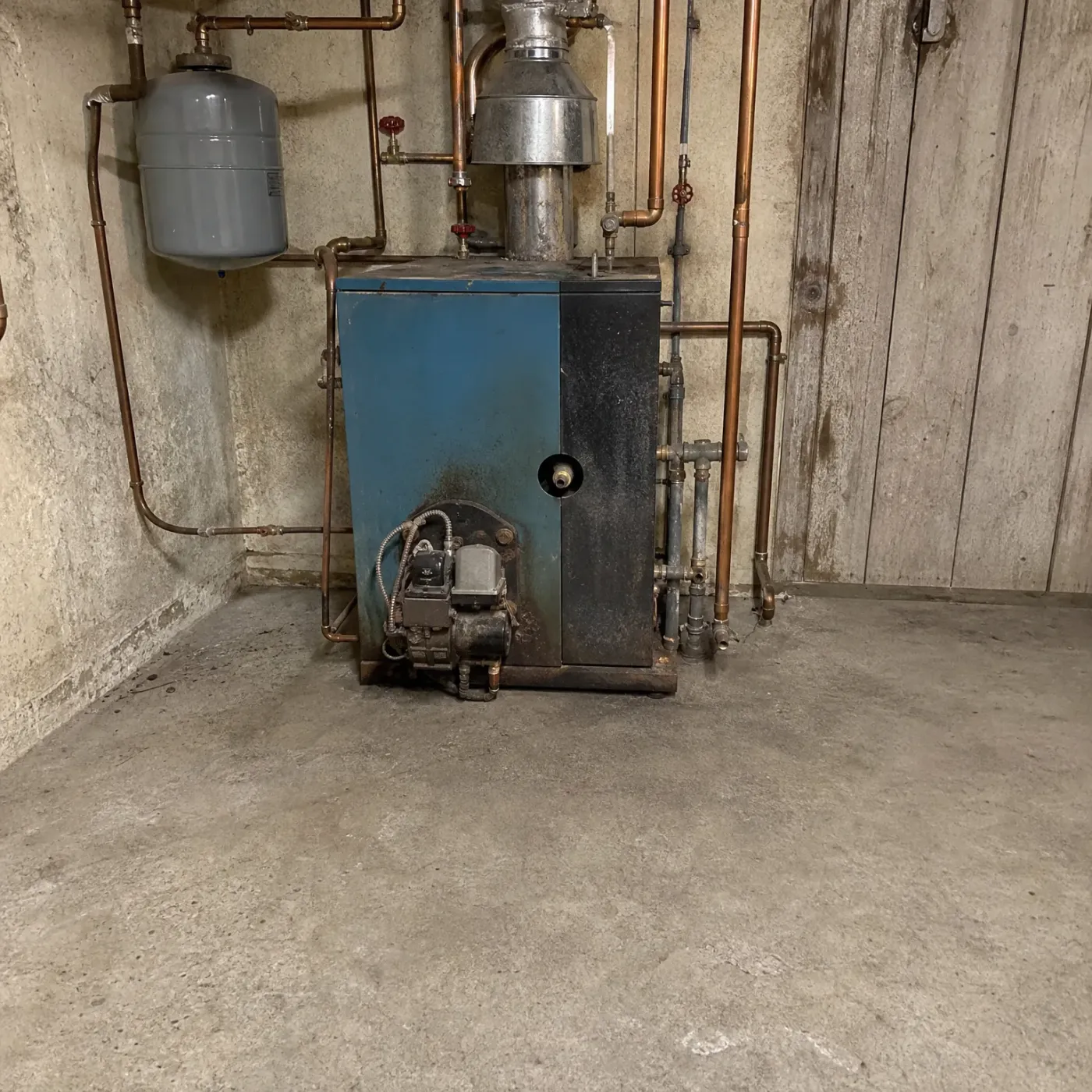
A blue and black boiler with a burner unit, flue, expansion tank and copper and steel piping stands on a concrete basement floor against a concrete wall and wooden plank partition.
This old boiler bangs because something inside it, trapped air, scale, or a cracking heat exchanger, needs a hand before it gets worse.
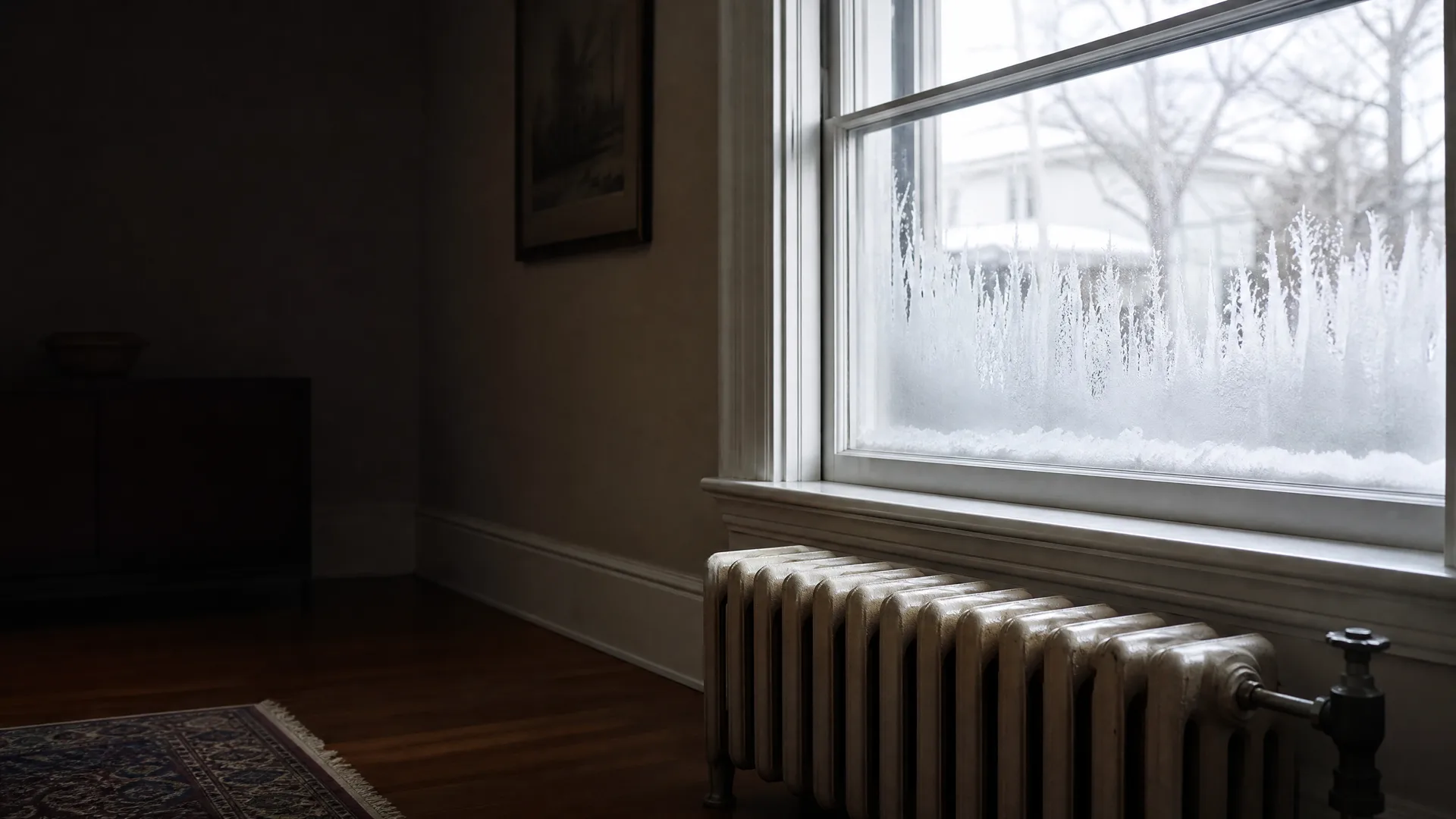
A cast-iron radiator with a valve sits beneath a frost-covered window in a dim room with dark wood floor, a patterned rug, a framed picture, and a low cabinet.

Ice crosses the inside of the window glass, and you still have your coat on in your own living room. It's just past six, barely light out, and the boiler fires under the floor. Then the bang comes, sharp enough that you look up from your coffee toward the radiator like it might have moved. It settles, ticks twice, and fires again a minute later, same bang. You've stopped jumping at it the way you did in November. You just stand there by the radiator, waiting to see if this is the morning it does it three times instead of one, watching your breath while the pipes argue with themselves under the window.

Let someone else find the pro

A banging boiler is not a sound you want to sit with through a Mississippi winter, even with most of the house running on electric heat. You already know what it is to find someone for this kind of work. You look up a few names, call around, explain the banging to each one, wait on a callback, then try to compare what they quoted when none of them looked at the same thing. That's hours you don't get back, and the boiler keeps banging the whole time. Sending this form hands that off. One contractor gets your request and looks at what's actually going on, whether it's trapped air, scale on the heat exchanger, or water hitting a surface it shouldn't. You stop being the one who has to track it down. The noise is a sign something inside the system needs attention, and the search for who does that work is the part you no longer have to carry.

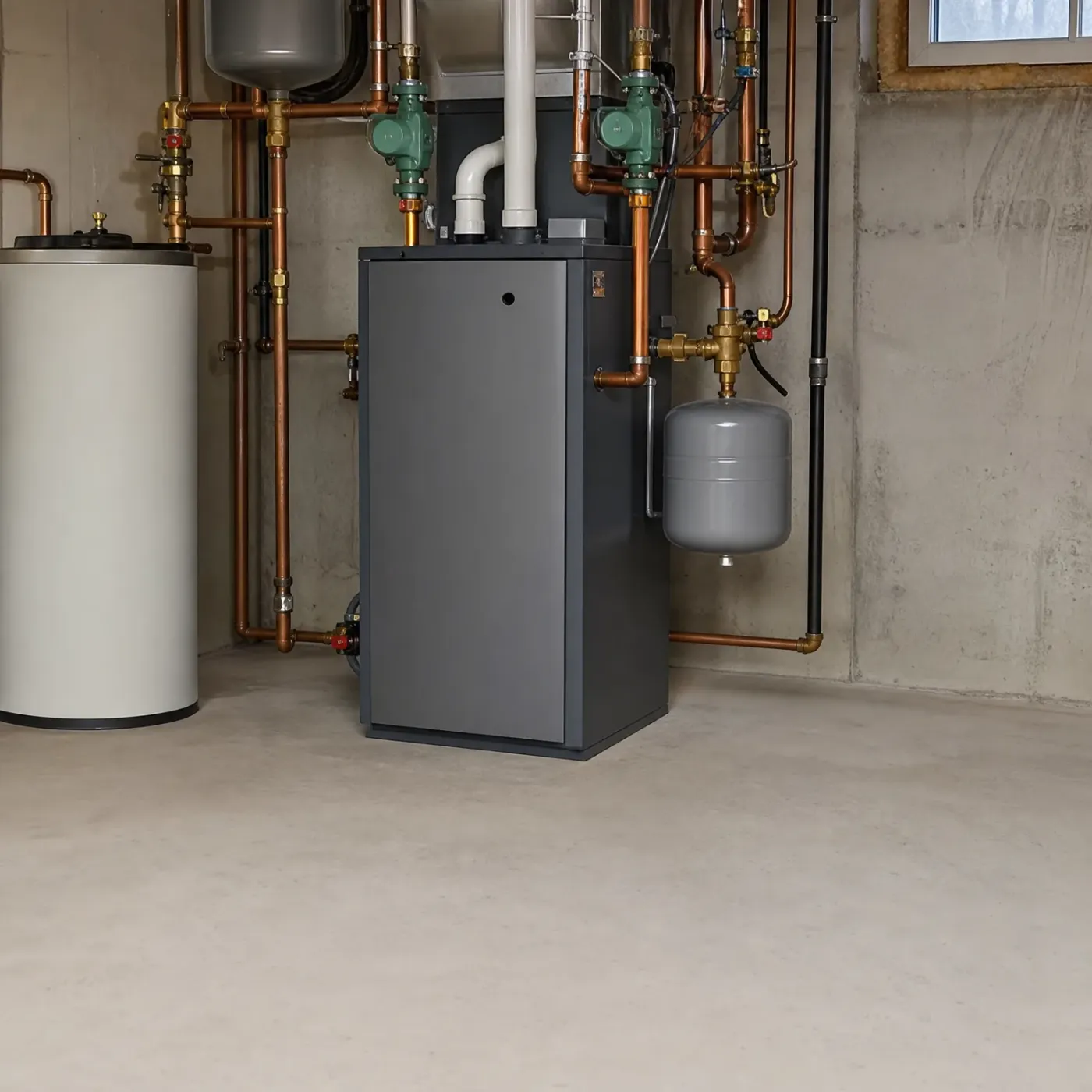
A dark gray floor-standing boiler in a concrete-walled basement, connected to copper piping, circulator pumps, a gray expansion tank, and a cream-colored storage tank to the left.

Quiet system, water moving where it should

The copper lines and fittings here carry water through the boiler and back out to the house without a sound. No trapped air pocket to slam into, no scale built up on the heat exchanger to make it crack and pop. Just a pump doing its job.

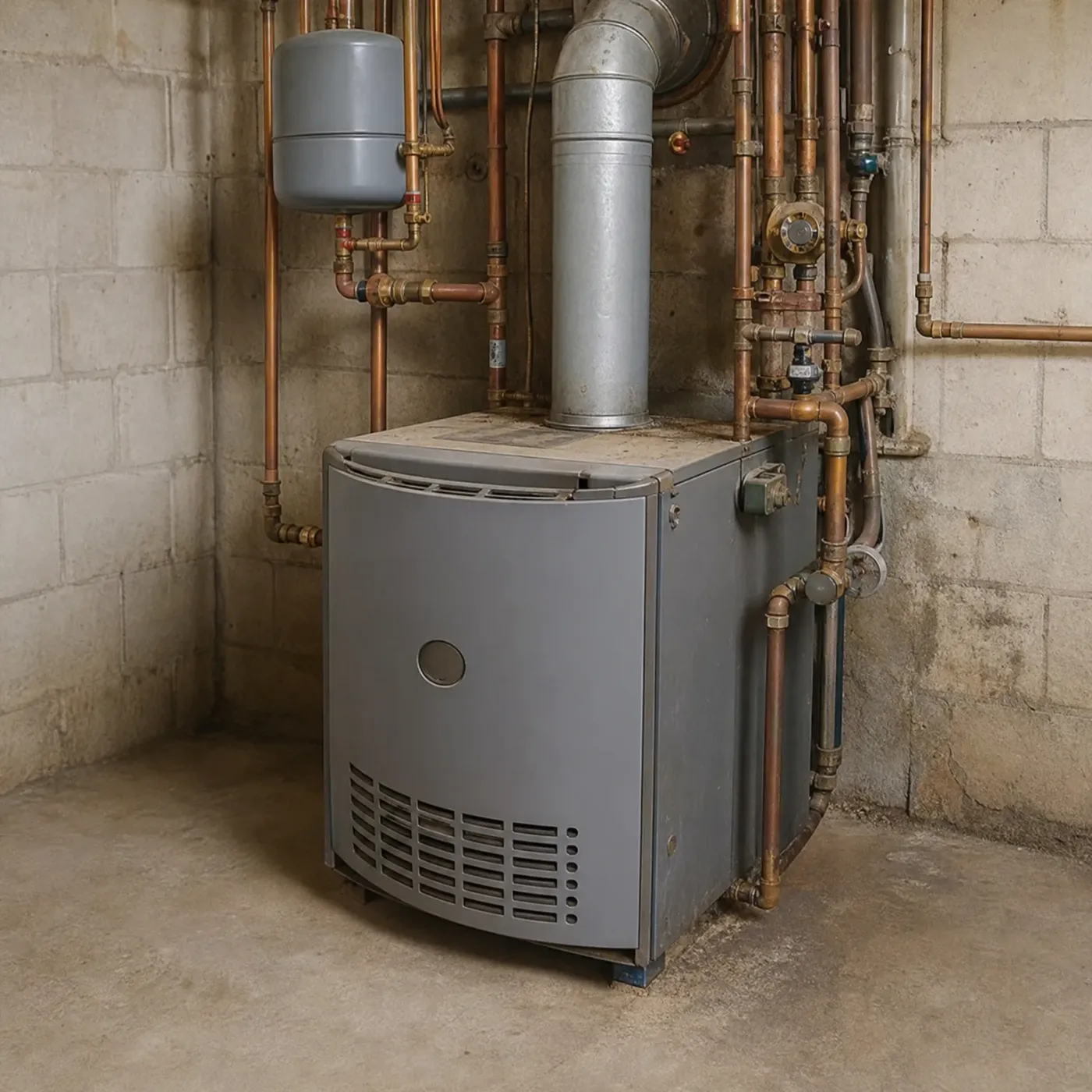
A gray residential boiler with a metal flue pipe stands in a concrete-block basement corner, surrounded by copper piping, valves and a gray expansion tank.

Something inside is fighting the water

Same kind of pipework, same boiler in the corner, but the bang means trapped air, scale on the heat exchanger, or a water level low enough to expose metal that should stay covered. Left alone, it gets worse, not better.

Winter nights average 38°F statewide

At 38°F on a winter night, your boiler is firing on and off for hours, not just once. Every one of those cycles pushes water past whatever air or scale is already in there, and that's when you hear the bang. More cycles mean more chances for it to happen.

NOAA nClimDiv 1991-2020 county normals weighted by homes

  1. The boiler fires and pushes water into the pipes

  2. Trapped air pockets get shoved along with it

  3. Water slams into the air and makes the bang

  4. A technician bleeds the air through the valve

A closed laptop and a cream mug of coffee on a coaster sit on a dark wooden table, with a potted plant at left and a kitchen counter, tiled backsplash and shelf of ceramics in the background.

The bang has a cause, and it's one a technician can find

Trapped air, scale on the heat exchanger, or water hitting a surface it shouldn't. That's the full list. A technician who opens up your boiler can tell which one it is and bleed the air, descale the exchanger, or check the water level, whichever the noise points to.

Finding that technician is the part you can skip. No looking up names, no calling three places to see who answers, no explaining the banging and when it happens to each one, no sitting with quotes trying to guess who's right. Send the form once and that search is off your plate. The boiler still needs the work. You just don't have to go find who does it.

A living room corner with a light beige sofa holding a textured taupe cushion, a large ceramic vase of olive branches by a window, a framed neutral artwork on the wall, and a dark bowl with stacked books in the foreground.
At dusk, a dark board-and-batten house with a standing-seam metal roof and lit entry walkway of stone pavers, with two large outdoor heat pump units on a stone-walled pad at right and trees and hills in the background.

Boiler Repair

One request and it's handed off

Step 1 of 3: Equipment
  • A dimly lit living room corner with a beige upholstered sofa holding a dark green cushion and a chunky knit throw, beside a wooden sideboard with a lit ceramic table lamp, a small potted plant, and a wooden bowl, with a framed artwork on the wall and a mug on a book in the foreground.
    • Tell a local repair pro what your boiler is doing.
    • Say what's going on with your boiler, and a pro who works on them reaches out.
  • A round wooden coffee table holding a round stone vase of green foliage, a lit candle in a glass container, and a small dark bowl, with a beige sofa, cushions and knit throw behind and a window at left.
    • Send the request today and let a boiler pro reach out to you.
    • Get the boiler repair search off your mind today.
  • Sunlit living room with a wooden coffee table holding a ceramic vase of leafy branches and a carved wooden tray with two stacked books, in front of a beige sofa with tan and green cushions and a potted plant near a window.
    • Describe your boiler job once, to one pro.
    • Fill out one short form instead of calling around.
  • Interior corner with a lit ceramic table lamp and wooden bowl on a wood sideboard, a framed picture and branch-filled vase behind, a knit throw over an upholstered chair, and a lit candle in a glass holder, stoneware mug and round planter of green foliage on a wooden table in the foreground.
    • Your request stays with one local pro.
    • Your request goes to one pro, not a list of companies.