Say what's going on with your boiler, and a pro who works on them reaches out.
A boiler that shuts off on its own is telling you something specific. It could be a pressure switch, a blocked flue, low water pressure, or a flame sensor that's lost its read on the pilot. Most boilers in Mississippi homes aren't the main heat source, since electric heat runs most houses here, so when a boiler is in the picture, it's usually doing real work, maybe heat for part of the house, maybe hot water, and when it keeps cutting out, you notice fast.
Boilers aren't common here, which means not every contractor who shows up with a van full of parts has worked on one recently. You need someone who actually services boilers, not someone who'll take a look and figure it out as they go.
That's the part that takes the time. Finding a contractor who knows boilers, calling them, explaining what the unit is doing, waiting to hear back, then doing it again with the next name on the list because the first one doesn't do boiler work or can't get to it this week. Comparing quotes from people you're not sure are qualified in the first place.
This page skips that. Tell it what your boiler is doing and where you are, and it matches you with a contractor who works on boilers and handles this kind of shutdown, someone suited to your situation specifically, not a general dispatch. That contractor follows up with you directly.
No cold calls to make, no explaining the problem five times, no sorting through quotes from people who may or may not know what they're looking at. One step, and the right kind of help is on its way to you.
What happens once that contractor is in your house, how they diagnose it and what they find, is the next part. But getting to that point, the part where you're standing in front of someone who actually knows boilers, is what happens when you use the button below.
Why does my boiler keep shutting off?
Since most homes in Mississippi heat with electricity, the boiler sitting in your house is probably backup heat, running only on the coldest days. When it shuts off partway through a cycle, you still need it working for those stretches, and a boiler that quits every time it kicks on is hard to trust when you actually need it.
A safety switch is cutting power before the boiler can finish its cycle
A boiler that keeps shutting off is almost always being stopped by one of its own safety switches, not failing on its own. Low water pressure, a blocked flue, or a flame sensor that can't see the pilot anymore will all make the boiler cut out rather than run through a fault. Since a boiler here likely only runs a handful of weeks a year, these switches can sit untouched for months, which gives pressure a chance to drop or a sensor a chance to drift out of adjustment before anyone notices. The boiler isn't being unreliable. It's doing what it was built to do, which is refuse to run when something downstream isn't right.
1
A safety switch senses a fault and cuts power to the burner.
2
Low water pressure or a blocked flue trips that switch first.
3
The flame sensor checks for a pilot flame within seconds of ignition.
4
No flame signal shuts the gas valve and stops the cycle.
Is your boiler shutting off before the house warms up?
You'll notice it on the coldest nights, when you need it most. You turn the thermostat up, hear the burner fire, and a few minutes later it goes quiet again. The room that was starting to warm stays cold. Maybe you hear a click from the unit right before it cuts out, or you catch a faint gas smell for a second when it tries to relight. If this is your backup heat and it won't stay running, you're left without a way to warm the house when the electric system can't keep up on its own.
Winter nights average 38°F statewide
Nights in Mississippi average 38°F through December, January and February, based on weather records for the state. That's not deep cold, but it's enough to call on the boiler most nights that whole stretch. If it keeps cutting out, someone in the house is cold at the times you need it least.
NOAA nClimDiv 1991-2020 county normals weighted by homes
A boiler that shuts off partway through a cycle doesn't fix itself by the next cold night. You can keep resetting the switch or bumping the thermostat, but the pressure, the flue, or the flame sensor that's causing it stays broken until someone who knows boilers looks at it. Chasing that down yourself means finding a contractor who works on boilers specifically, not just furnaces or heat pumps, which is its own search in a state where most homes don't rely on one day to day. Then there's the calling around, explaining what the boiler is doing, asking what it might be, and sitting with quotes that are hard to compare because every contractor describes the problem differently. Handing in your information once gets a boiler contractor who serves your area reaching out to you directly, so you can describe what's happening a single time and get a straight answer about what's cutting it off before the next cold snap puts it to the test again.
What's Actually Tripping the Switch
A pressure switch reads the difference between two sides of a diaphragm to confirm the inducer fan is pulling air through the flue.
If water pressure drops below about 12 psi, the low-water cutoff opens the circuit before the burner can fire.
The flame sensor is a thin metal rod that sits in the pilot flame and carries a microamp signal back to the control board.
A sensor reading under roughly 2 microamps tells the board the flame isn't real, even if you can see it burning.
Condensate lines on newer boilers can back up and trip a float switch that stops the burner the same way a pressure fault does.
Each of these shutdowns is the control board doing its job, not a random failure.
A boiler doesn't shut off for no reason. It shuts off because a switch or sensor read something outside the range it's built to accept, and the control board did exactly what it's supposed to do. The inducer fan has to pull air through the flue before the burner is allowed to fire, and a pressure switch checks for that draw by reading the difference across a small diaphragm. If the flue is blocked or the fan is weak, that switch never closes, and the burner doesn't light. Water pressure gets checked too. Drop below about 12 psi and the low-water cutoff opens the circuit before any flame starts, since a burner firing without enough water in the system can crack a heat exchanger. Once the burner is lit, the job shifts to a flame sensor, a thin rod sitting right in the pilot flame. It's not checking for heat or light. It's reading a tiny electrical signal, measured in microamps, that only exists when the flame is actually touching the rod and completing a circuit back to the board. Let that reading fall under roughly 2 microamps and the board shuts the gas valve, even with flame visible to your eye. Newer boilers add one more point of failure: a condensate line that can back up and trip a float switch, stopping the burner the same way a pressure fault would. Different parts, same outcome, the board protecting the system from running on bad information.
Before you get your boiler repairAfter you get your boiler repair
Boiler running right
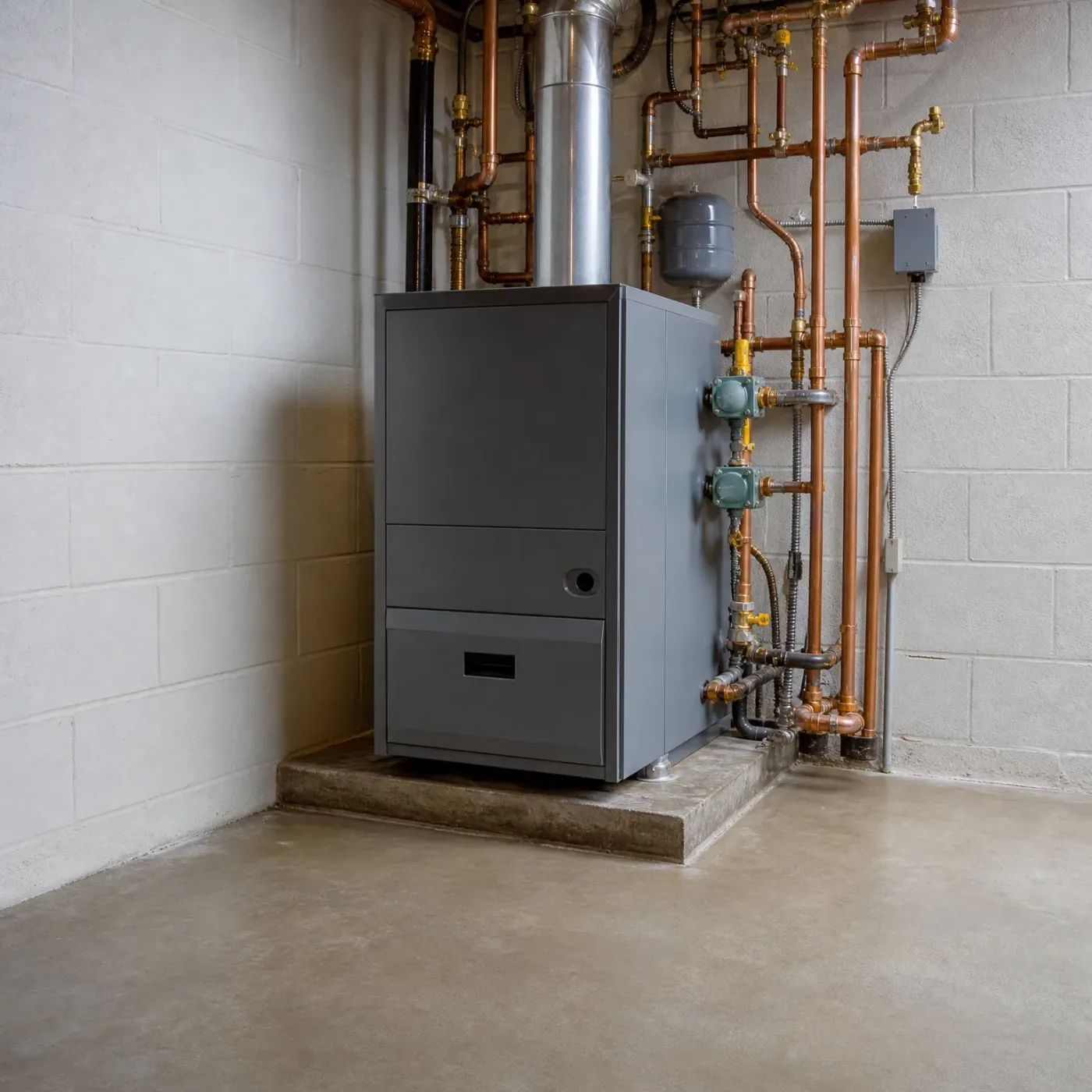
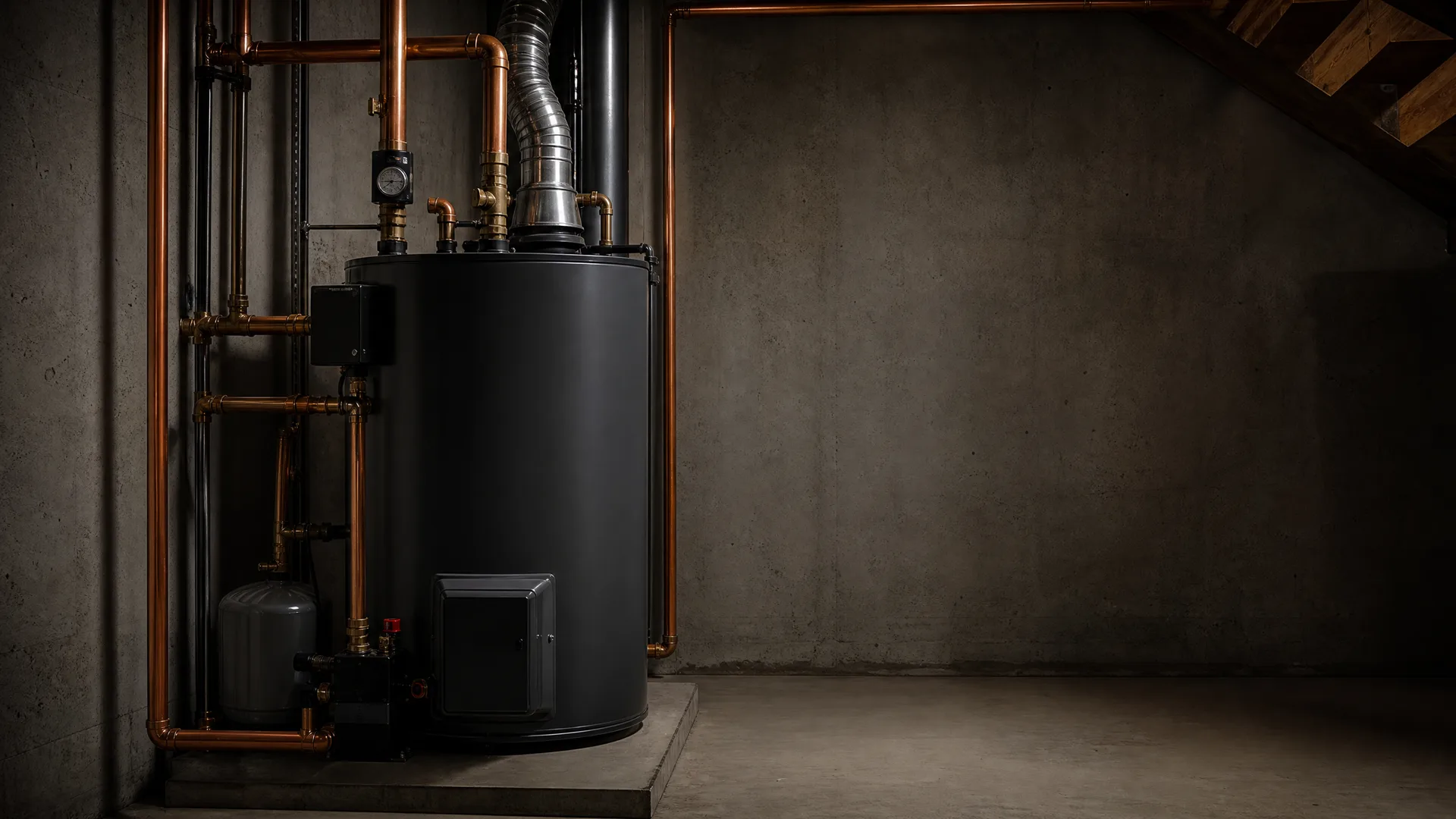
This is what a boiler looks like when it's not fighting itself. The pressure holds steady, the flue draws clean, and the zone valves open and close the way they're supposed to. It fires when the thermostat calls and stays lit until the room is warm.
Boiler cutting out
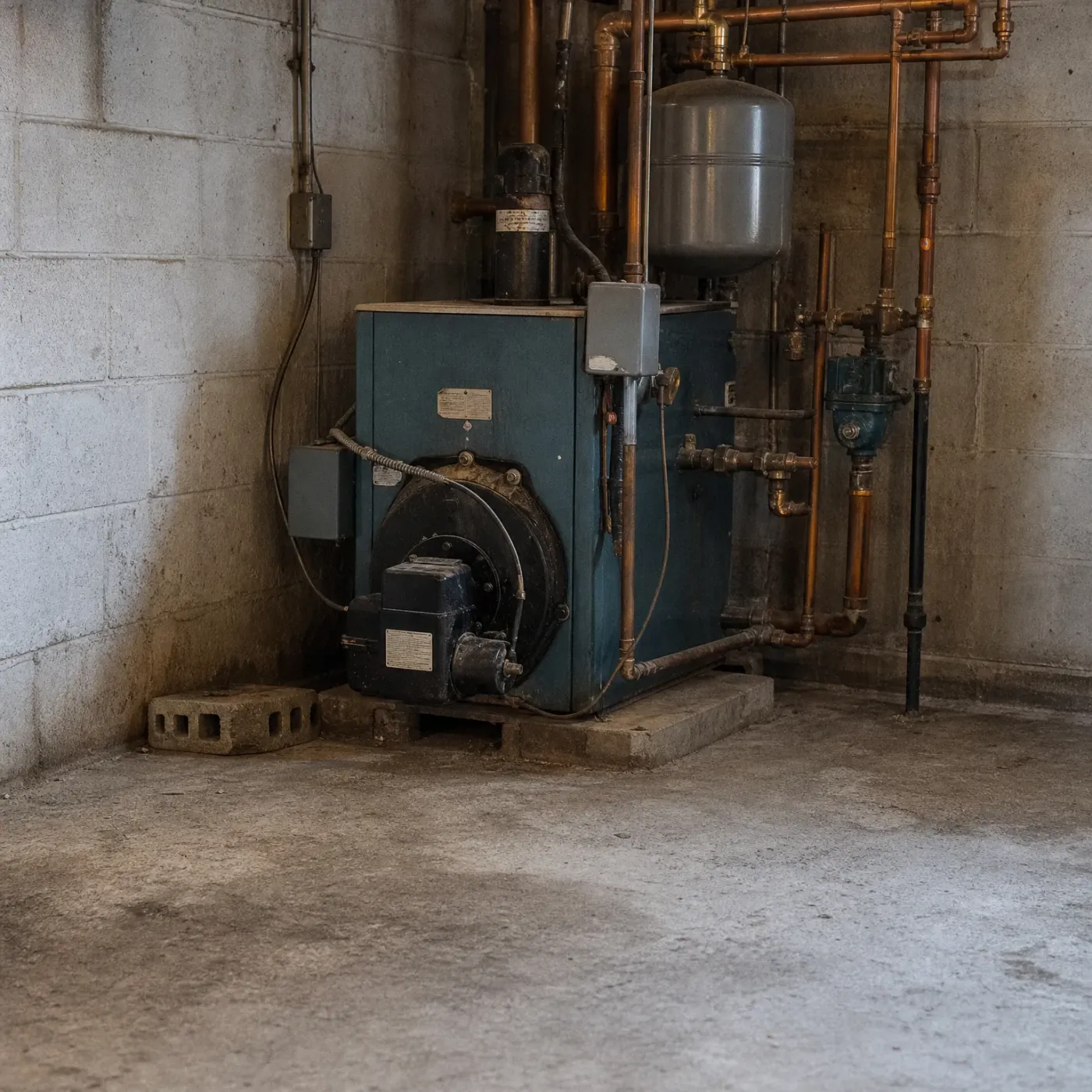
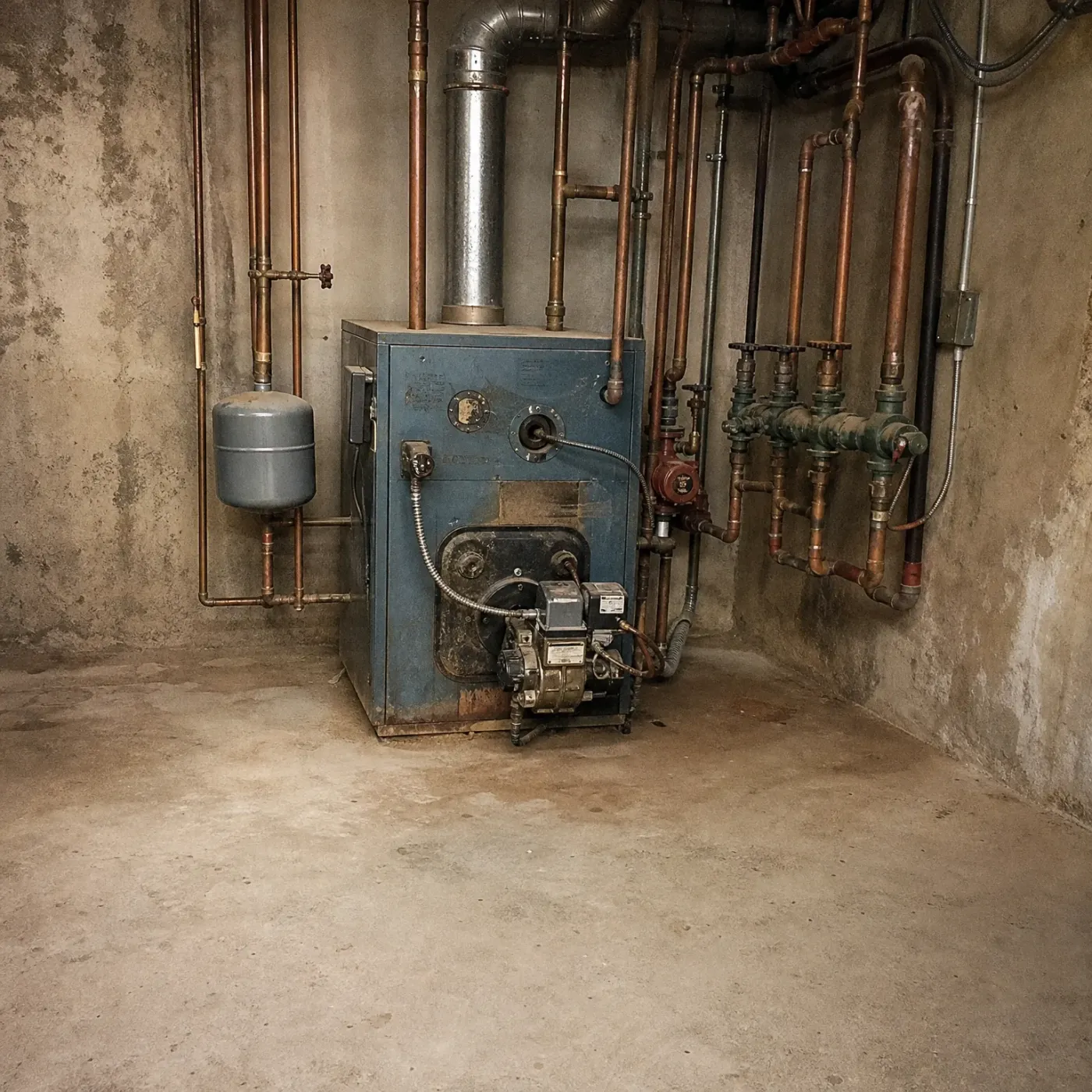
This is the kind of setup where a boiler starts tripping out partway through a cycle. Old piping, aging zone valves and a flue that's been venting for years all put extra strain on the safety switches. Any one of them can be enough to shut the burner down early.
A boiler that shuts off partway through a cycle has a reason, and it's one a licensed tech can find and fix: a pressure switch, low water pressure, a blocked flue, a flame sensor that's not reading right. On a 38 degree night, that's the difference between a warm house and one where everyone's in sweaters waiting on heat that keeps quitting. You don't have to be the one who figures out which part it is. You also don't have to spend your evening searching for boiler repair companies, calling a few, explaining the short-cycling and the reset button and the cold bedrooms all over again to each one, then sitting with quotes trying to guess who's worth calling back. Getting matched with a contractor who works on boilers in your area skips all of that. You explain it once, to someone qualified to actually do something about it.
The right pro for this job
One form replaces the calls you'd make to find a boiler pro.