Why your boiler is gurgling in Mississippi

Step 1 of 3: Equipment

Why is my boiler making a gurgling noise?

A boiler that gurgles usually catches your attention when the house is quiet, maybe late at night while everyone else is asleep. You are not trying to become a boiler expert, you just want to know if this is something that needs attention now or something that can wait until morning. With electric heat keeping most Mississippi homes warm, a boiler still gurgling at you is worth figuring out fast.

Air or sludge trapped in the system, most likely

Gurgling almost always means there's air where there shouldn't be, or buildup sitting in the bottom of the system. Air gets trapped in the pipes or the radiator and makes noise as it moves through water trying to circulate. Sludge forms over time from minerals and bits of rust and settles where water flow is slowest, and it rattles and gurgles as the boiler heats around it. Neither one fixes itself. The noise will keep coming back each time the boiler fires, and left alone, trapped air or sludge buildup can wear on the heat exchanger and make the system work harder to heat the same rooms. A contractor can bleed the air out or flush the system to clear it.

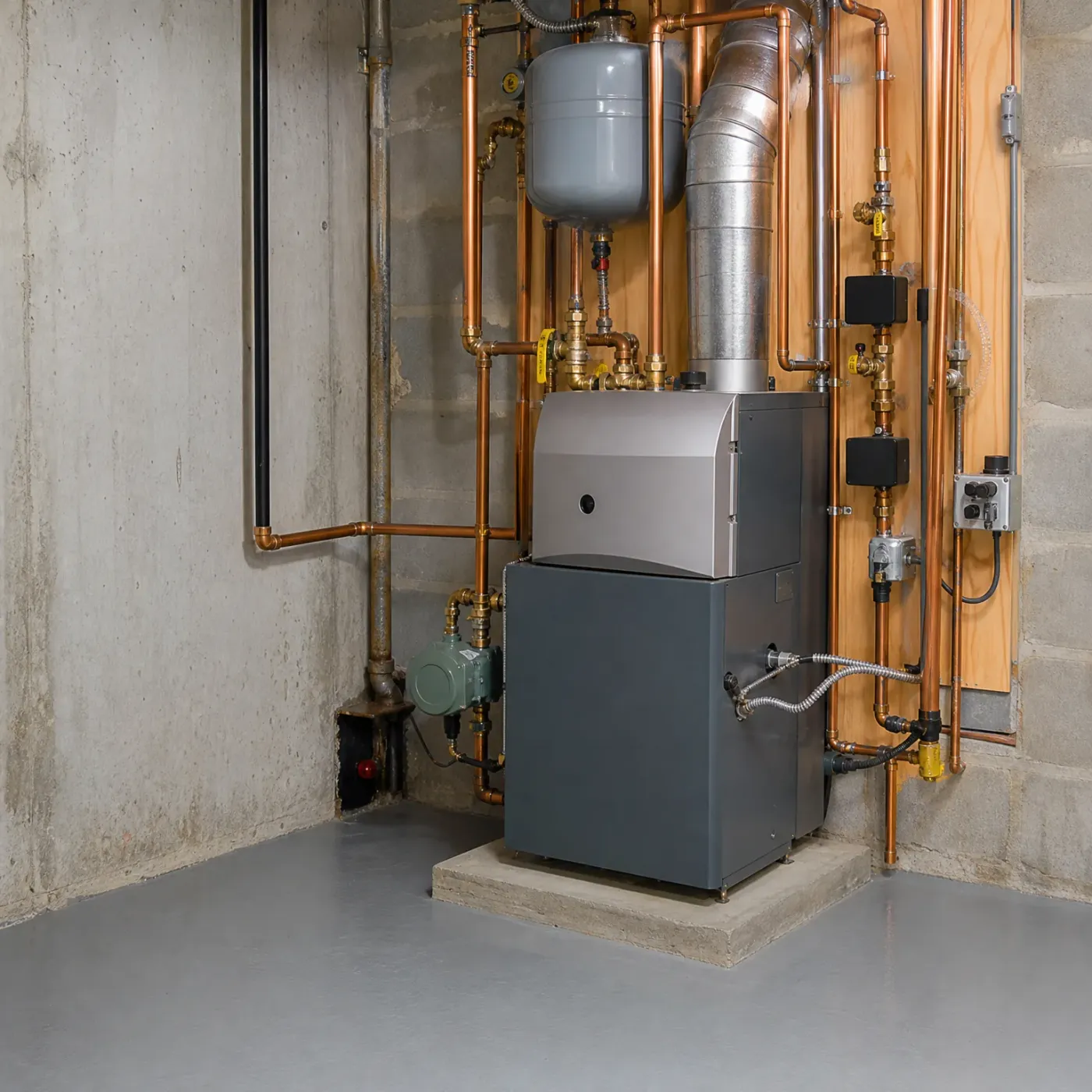
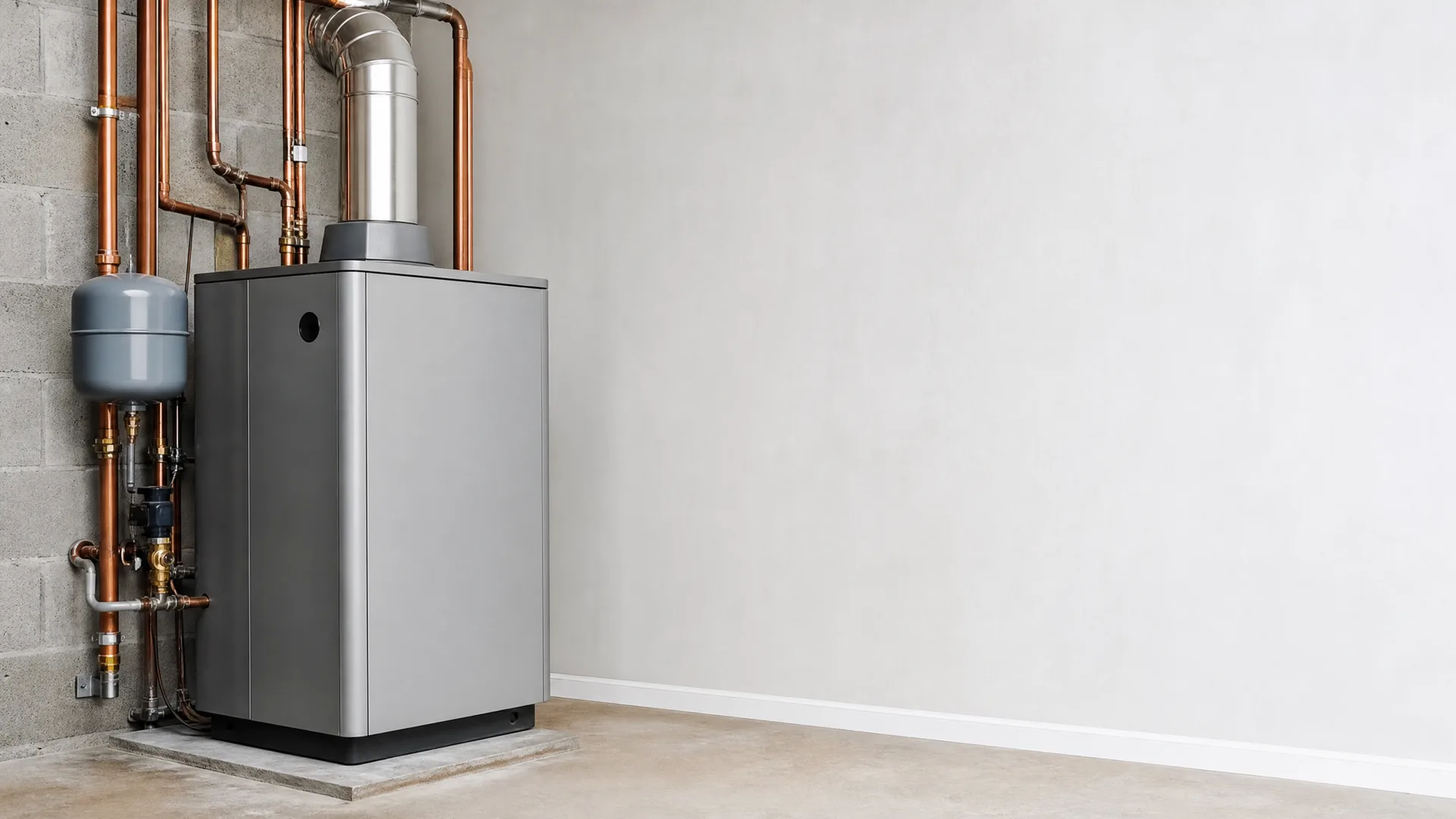
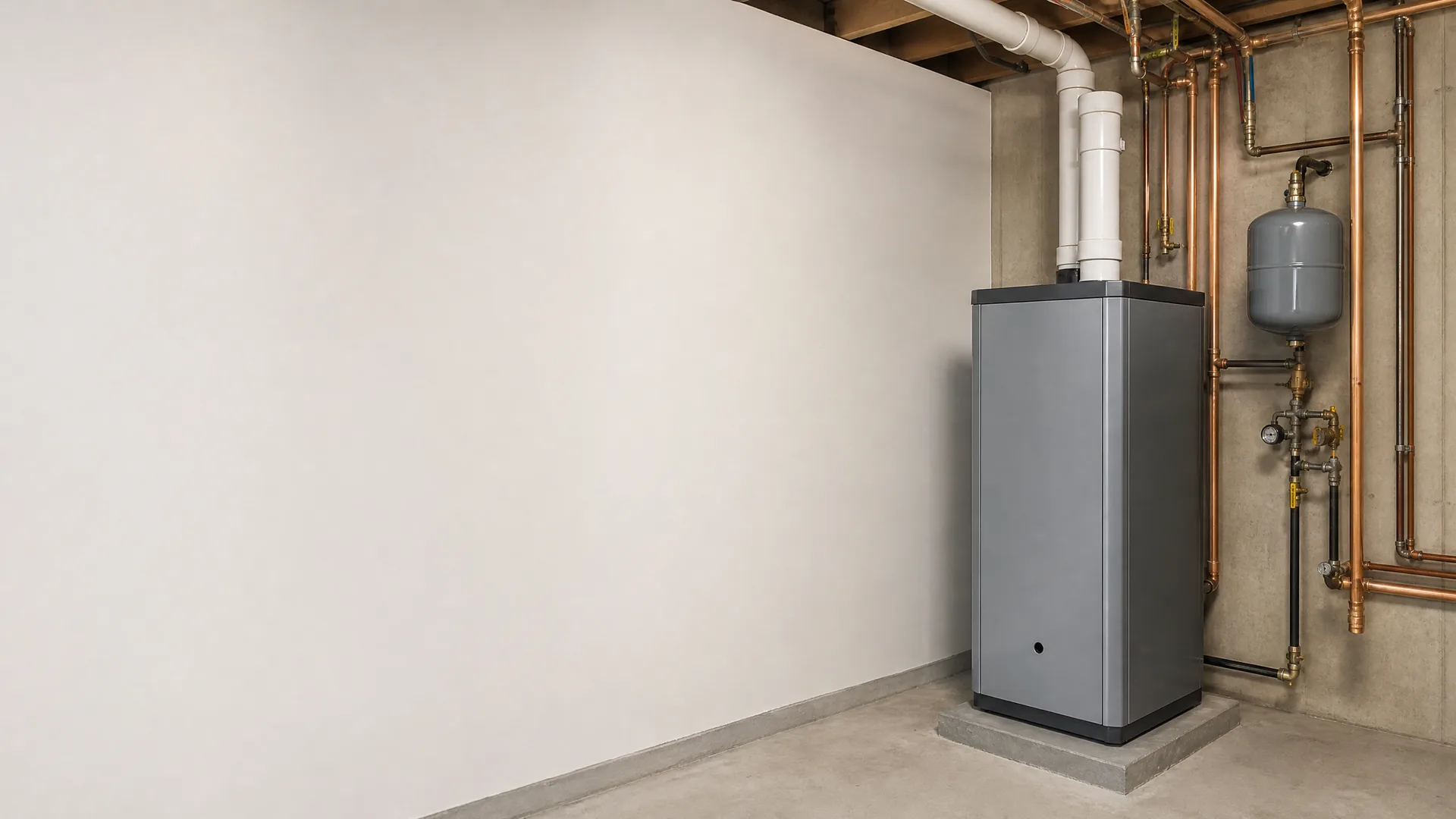
A grey floor-standing boiler with a metal flue and copper pipework and an expansion vessel stands against a concrete block wall beside a plain light-coloured wall.

Air trapped in the lines

Water moving through a line that still has air in it makes that gurgle you're hearing. Boilers push hot water through pipes to get heat where it needs to go, and any air pocket in those pipes gets shoved along with the water. When it reaches a bend or a radiator, it bubbles through and you hear it. Most systems have a bleed valve built in for exactly this. Left alone, the trapped air can also keep a radiator from heating evenly.

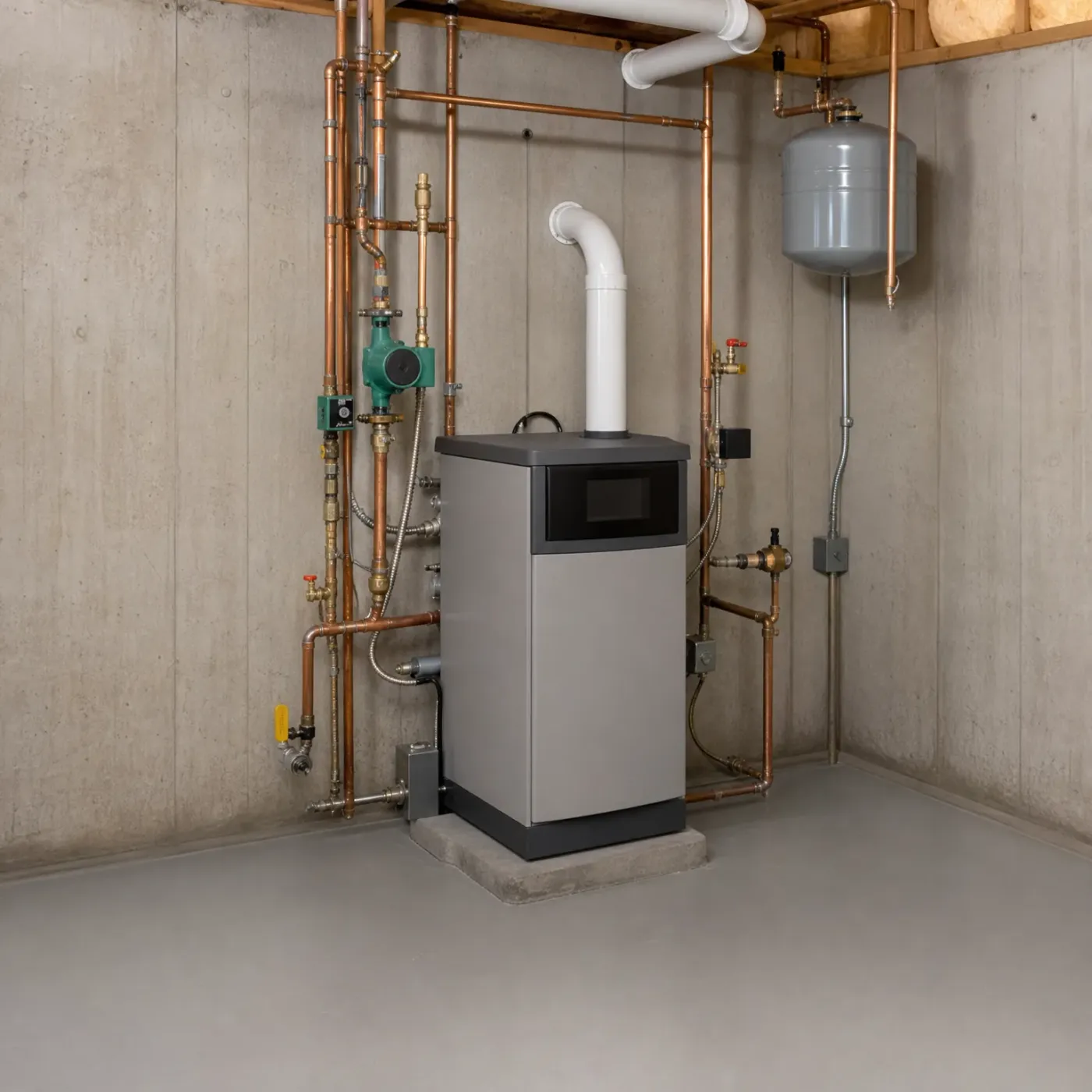
A gray boiler unit on a concrete pad in a basement corner, with white PVC flue pipes, copper piping, and a gray expansion tank on the wall behind it.

A sign the water level dropped

Boilers need a certain water level to run quietly and correctly. If that level drops low, the pump can pull in air along with water, and that mix moving through the system makes noise. A low water cutoff on most boilers is there to shut things down before this becomes a bigger problem. If your boiler keeps losing water over weeks instead of staying steady, something is letting it out, and a contractor can find where.

Bleed It Yourself or Call for Repair

Bleed It Yourself

  • Air trapped near the top of a radiator or baseboard loop is something a bleed key can fix in a few minutes.
  • You shut the boiler off first, then open the bleed valve slowly until water comes out steady with no more hissing.
  • This only clears air that made it into the finished loops, not air or sediment sitting in the boiler itself.
  • If the gurgling comes back within a week or two, something is feeding air back into the system and bleeding again won't stop it.
  • A low water level in the boiler can mimic the same noise, and bleeding a radiator does nothing for that.
  • Opening the wrong valve on a pressurized system can create a bigger problem than the one you started with.

Have It Looked At

  • A contractor can tell you if the noise is air, a failing circulator pump, or sediment built up low in the boiler.
  • Repeated air in the lines often points to a slow leak or a feed valve that needs adjusting, both worth catching early.
  • Low water pressure in the boiler itself is a repair job, not something a homeowner bleed valve touches.
  • A technician can check and correct water pressure and expansion tank function at the same visit.
  • If the gurgling comes with banging or popping, that can mean sediment coating the heat exchanger, which a bleed valve won't reach.
  • Getting it checked now means you are not troubleshooting the same noise again in the middle of winter.
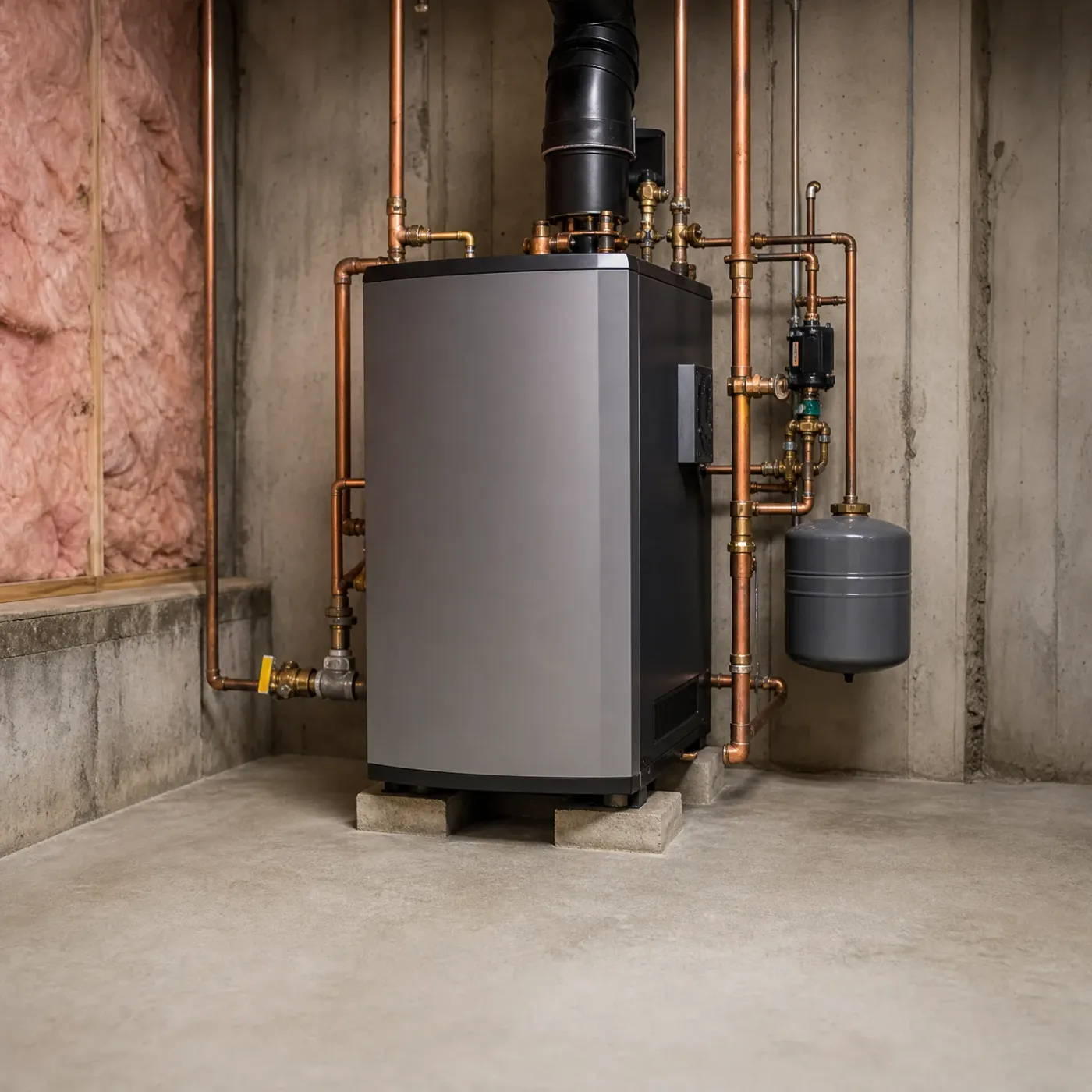
A gray and black boiler unit sits on concrete blocks in a basement corner, connected to copper piping, valves, a black flue duct, and a gray expansion tank, with bare concrete walls and exposed pink insulation at left.

Running quiet

This is what a boiler sounds like when the water moves freely. The pipes stay full, the circulator pump keeps a steady flow, and the expansion tank holds the pressure where it belongs. No air, no knocking, just heat getting where it's supposed to go.
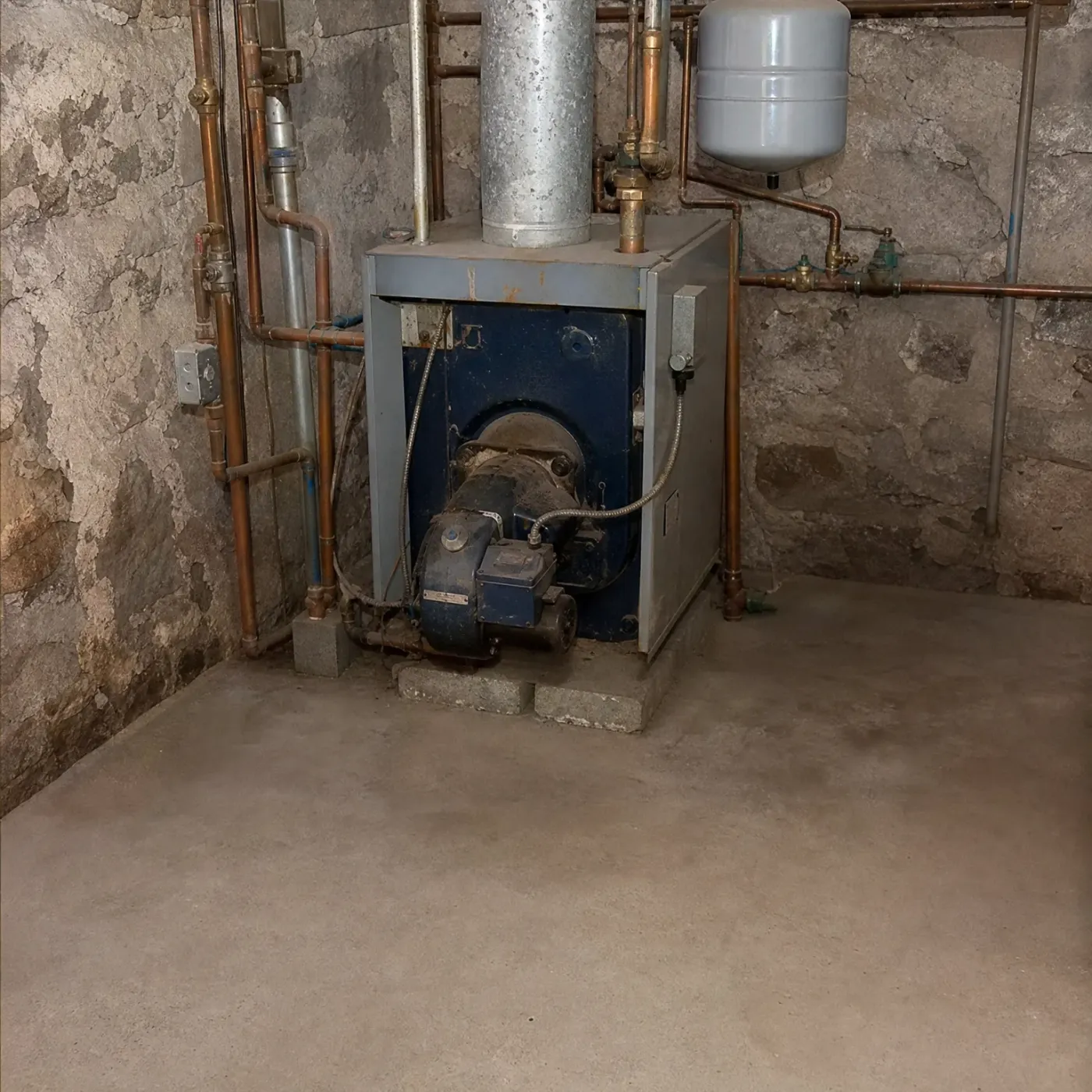
An oil-fired boiler with a blue and gray cabinet and burner sits on concrete blocks in a basement corner with stone walls, connected to copper pipes, a metal flue, and a wall-mounted expansion tank.

Something's wrong here

This one is on blocks, which tells you the basement floods or has before. If the boiler has tilted even slightly off level, air can collect at the high point and water hammers through it every time the pump kicks on. That's a gurgle with a cause behind it.

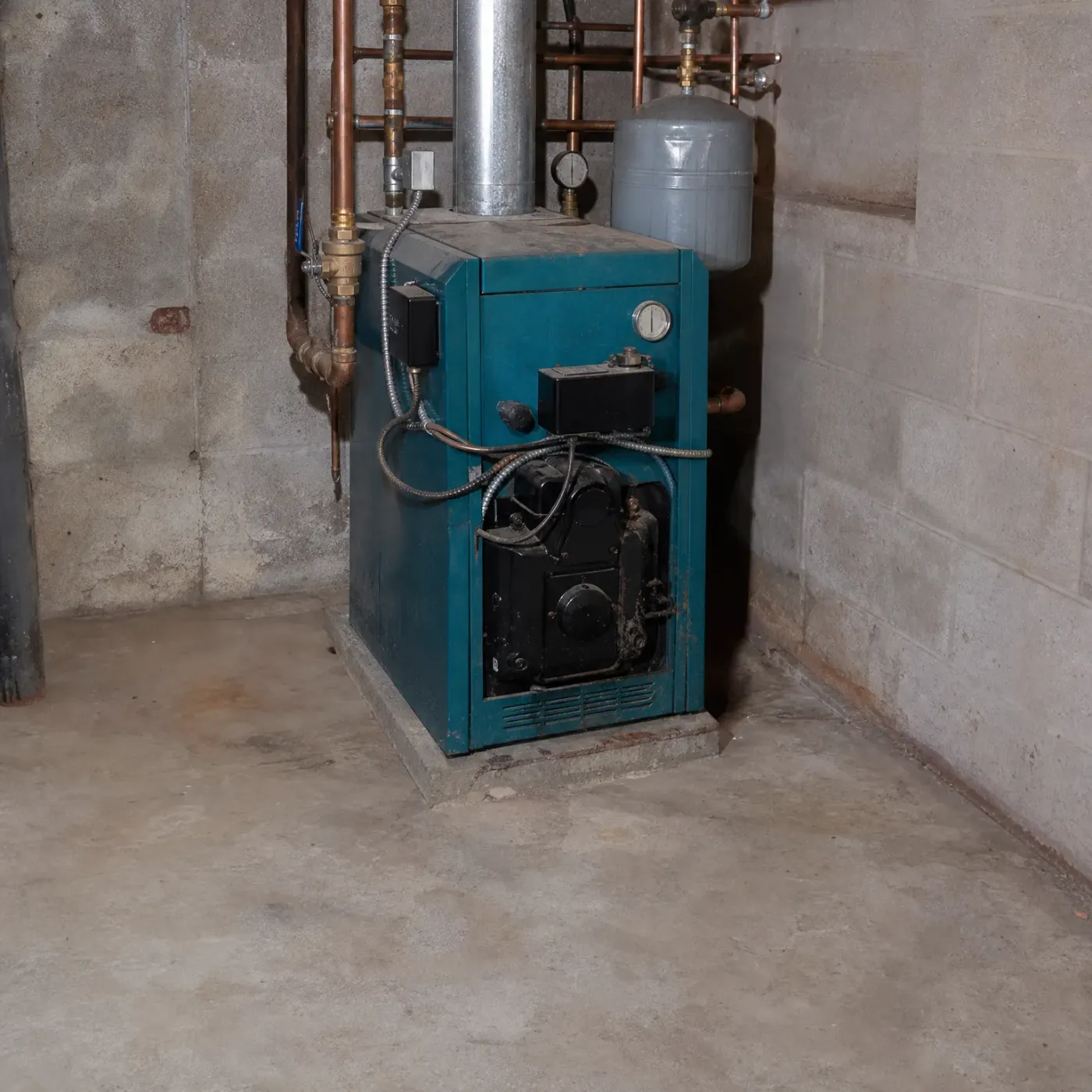
A teal boiler with a pressure gauge and black burner unit sits on a concrete pad in a basement corner, with copper pipes, a flue vent, and a gray expansion tank above against concrete block walls.
Before you get your boiler repair
A gray residential boiler on a concrete pad in a basement corner, connected to copper piping, an expansion tank, circulator pumps and insulated flue ducting against concrete and plywood walls.
After you get your boiler repair

The right pro for this job

After this form, you can stop searching for a boiler pro.

It costs nothing to send, and you don't have to hire anyone.

What's Actually Causing the Noise

  • A failing circulator pump loses its ability to push water hard enough to clear air through the system.
  • Low water pressure lets air pockets form inside the loop instead of getting carried to the expansion tank.
  • Mineral buildup inside older pipes narrows the path water takes, forcing it through in surges that sound like gurgling.
  • A kettling boiler, where scale coats the heat exchanger, makes water boil in spots and produce a rumbling or gurgling sound.
  • A stuck or failing automatic air vent stops trapped air from escaping, so it keeps cycling back through the pipes.
  • The expansion tank losing its air charge lets pressure swing instead of staying steady, which shows up as noise in the lines.

The gurgling traces back to one of a few working parts, and the sound itself gives clues about which one. A circulator pump that's losing strength can't push water fast enough to carry air through the loop and out to the expansion tank, so the air sits and sputters as water moves past it. Low pressure does something similar from a different angle. Instead of staying dissolved or moving along, air breaks out into pockets inside the pipe, and those pockets are what you're hearing knock around. In older systems, scale and mineral buildup narrow the inside of the pipes themselves, so water that used to flow steady now has to push through in surges, and each surge makes noise. Kettling is a separate problem worth knowing by name. Scale coats the heat exchanger, water boils in small pockets against that coating instead of heating evenly, and the result is a rumbling or gurgling that can sound like a kettle right before it whistles. An automatic air vent that's stuck or failing can't release the air it's supposed to, so instead of escaping, that air keeps getting pulled back through the pipes on every cycle. And the expansion tank itself can fail quietly, losing its air charge over time, which lets pressure swing up and down instead of holding steady. Any one of these turns a system that should run silent into one you can hear from another room.

A woman in a mustard knit sweater sits on a light-colored sofa indoors, looking toward a bright window, with a potted fiddle-leaf fig plant behind her.
A woman with long brown hair in a cream knit turtleneck sweater sits on a light sofa indoors, looking off to the side, with a shelf of plants and pottery blurred behind her.
A woman with long brown hair in a dark red knit sweater sits on a gray couch with cushions, smiling and looking off to the side, with a window and indoor plant behind her.
A woman with long dark hair in a cream knit sweater sits on a sofa indoors, smiling and looking off to the side, with a blurred room, hanging light bulb and window behind her.

A boiler that keeps gurgling through the night is one more thing pulling at you when everyone else in the house is already asleep and you still have to be up early to keep things running for them.

Left alone, trapped air and low pressure put more strain on the circulator pump, and a pump that fails can leave you without heat on a cold night, not just a noise to put up with.

A smiling older woman with gray shoulder-length hair in a cream cable-knit turtleneck sweater stands behind a wooden board holding a round loaf of bread, in a warmly lit kitchen with a dark window and shelves behind her.
A woman with dark hair in a bun sits on a sofa with a child resting his head on her shoulder, both wrapped in a cream knit blanket, with a lit lamp and bookshelf in the dim background.
A gray floor-standing boiler on a concrete pad in a basement corner, with copper piping, a circulator pump, a white PVC flue, and a gray expansion tank mounted on the wall.
A boiler that still has even pressure and clear water moves heat through the pipes without a sound worth noticing.
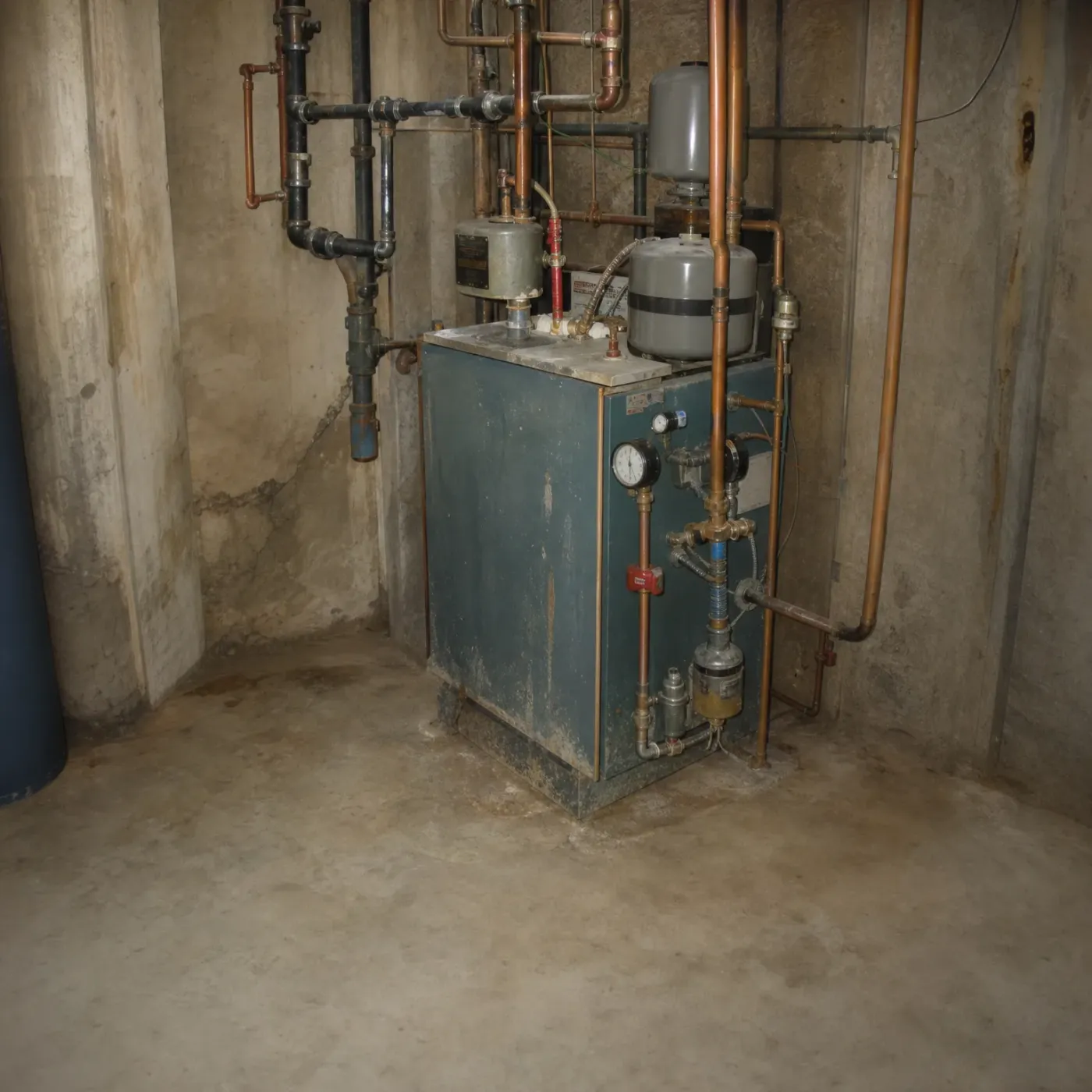
A green metal boiler with pressure gauge stands in a concrete basement corner, surrounded by copper and black iron pipes and two tank-shaped vessels.
A cast-iron boiler with scaled pipes and a gauge in the red is already working harder than it should to heat the house.
  1. Air enters the loop through a fitting or the expansion tank

  2. Trapped air rises and collects at high points in the pipes

  3. Water pushes past the pockets and makes the gurgle you hear

  4. A technician bleeds the air and checks pressure at the boiler

Winter nights average 38°F statewide

At 38°F on a winter night here, your boiler is running long stretches to keep up. That's more hours for air to work loose in the lines and collect at the high points, which is when the gurgling shows up.

NOAA nClimDiv 1991-2020 county normals weighted by homes

A gurgling boiler usually comes down to air in the lines or pressure that has drifted low, and both of those are things a technician checks in the first few minutes of a visit. Neither one gets better by waiting through another cold night listening for it. You already know your house, you know when the noise started and whether it's gotten louder, and that's enough to go on. You don't have to figure out whether it's the circulator pump or the expansion tank before you ask for help, that part isn't your job. Once you send the request, it stops being something you have to track down on your own. Someone who works on boilers for a living takes it from there, and you can go back to the parts of keeping this house running that actually need you. The noise has an answer. Getting it looked at is what turns that answer into quiet nights again.

A living room corner with a beige upholstered sofa, cushion and knit throw, a potted green plant in a woven basket, a framed botanical print on a taupe wall, and a window with foliage outside.
Sunlit room corner with a paned window, sheer cream curtain, a leafy plant in a woven basket on a wood floor, and a textured jute rug.
Sunlit room corner with a white-framed window overlooking green foliage, a wicker basket holding a cream knit blanket on a wood floor, and a woven rug in the foreground.
A woven basket holding folded cream blankets sits in a corner on a wood floor beside a linen curtain and window, with window-frame shadows cast on the beige wall.
Sunlit room corner with a potted variegated plant in a woven basket on a wood floor, a linen curtain beside a multi-pane window showing green trees, a framed artwork at upper left, and a jute rug in the foreground.

Matched to your boiler job

One request and the search for a pro is handled.

Get a boiler pro

No charge to send it. You decide if you hire them.