Profile view of a bearded man wearing a dark baseball cap and a dark gray T-shirt against a plain off-white background.

Why one radiator stays cold in a Mississippi winter

Step 1 of 3: Equipment

Why is one radiator on my boiler system staying cold?

You've checked the room twice now and the radiator still has no heat in it while the rest of the house is warm. It's one of the colder stretches of the year and you'd rather sort this out before it turns into a bigger repair. You keep the bleed key in a drawer for exactly this kind of thing, so you want to know what's actually wrong before you go reaching for it.

Trapped air or a stuck valve is keeping hot water out of that radiator

A cold radiator with the rest of the house heating fine almost always means hot water isn't reaching it. Air pockets collect in radiators over time and float to the top, pushing the water out of the way, so the radiator fills with air instead of heat. The other common cause is a valve that's stuck shut or a balancing valve that's closed too far, cutting off flow to that one room. Either way the boiler itself is working, it's just that one radiator isn't getting its share. Bleeding the radiator fixes the air problem. If bleeding doesn't bring water to the valve or the radiator warms at the bottom but not the top, the valve or the pipe feeding it needs a closer look.

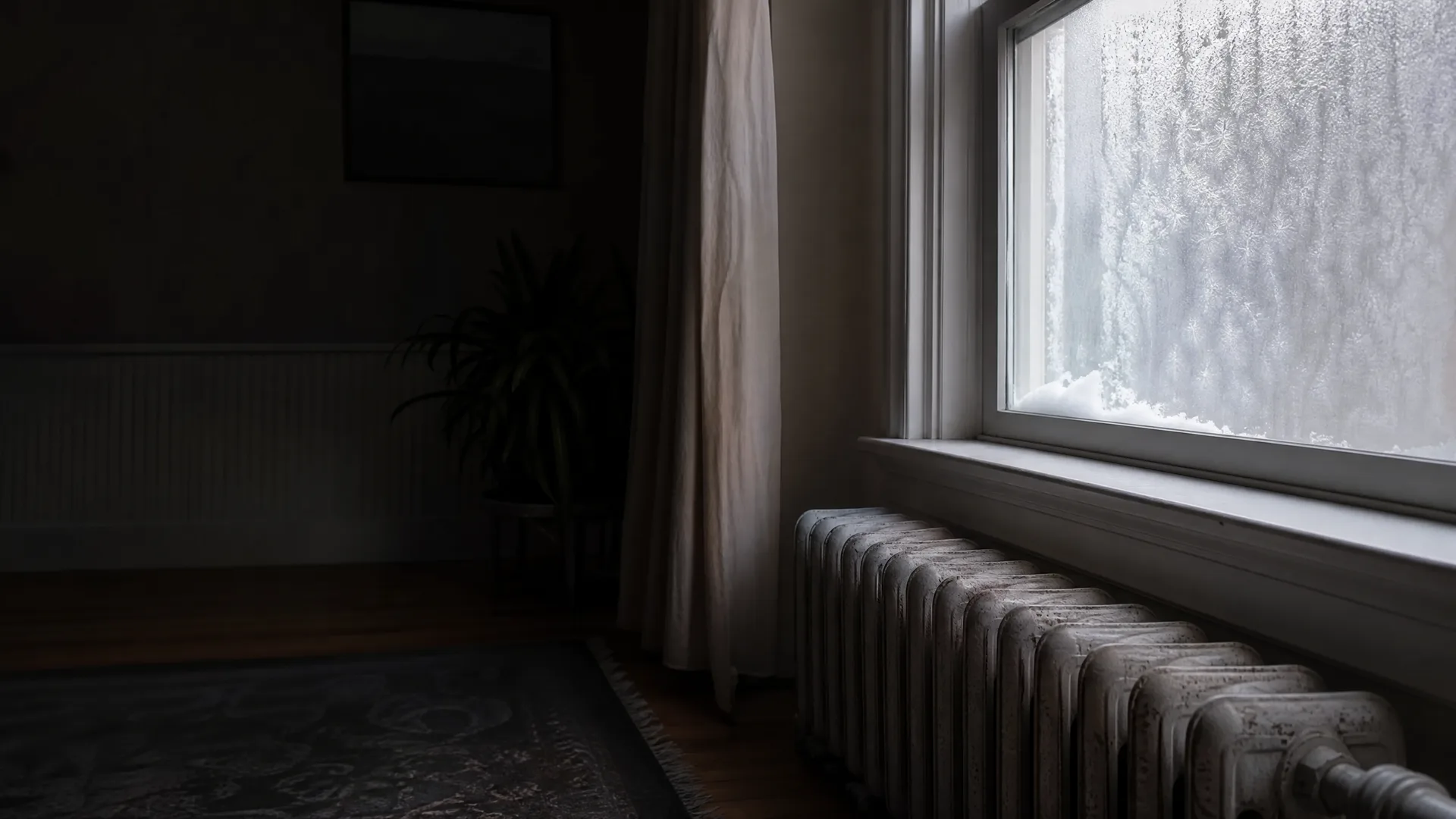
A dimly lit room with a cast-iron column radiator beneath a wide window covered in frost and snow, with a pale curtain, a potted plant, and a patterned rug on a wood floor.

You're up early, before the rest of the house. The living room window has ice laced across the inside of the glass, a thin white film in the corner where the cold sits worst. The radiator under it should be ticking and warm by now. You put a hand flat on the metal and it's cold all the way down, top to bottom. Everywhere else in the house the air feels fine, even a little close. Outside, the Mississippi morning is doing what it does a few weeks a year, sharp enough to see your breath on the porch. You crouch down and check the valve at the bottom, then the bleed screw up top, like you did yesterday. Still nothing. The room holds its chill while the rest of the house moves on without it.

Is it just that one room, or does it spread?

Right now it's one radiator, one cold room, and you notice because you walk past it every day. The valve might be fine to the touch, or the pipe near the floor might feel warm while the radiator body stays dead cold. You might hear a faint gurgle when you bleed it, or nothing at all. Left alone, the trapped air or the stuck valve causing it doesn't fix itself, and the rest of the system has to run longer to keep the house comfortable, which shows up on the bill before it shows up anywhere else. A boiler that's always compensating for one dead zone is working harder than it needs to.

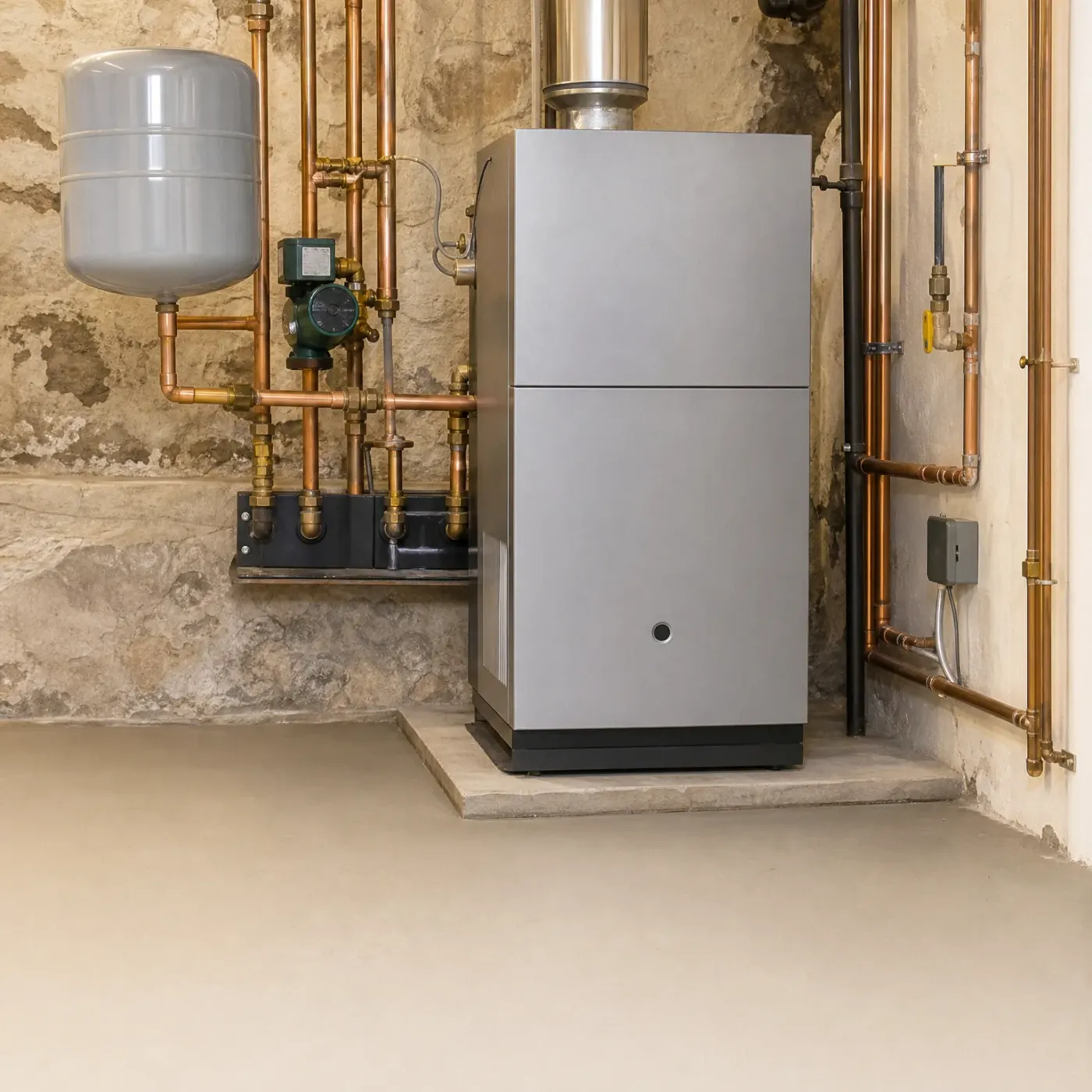
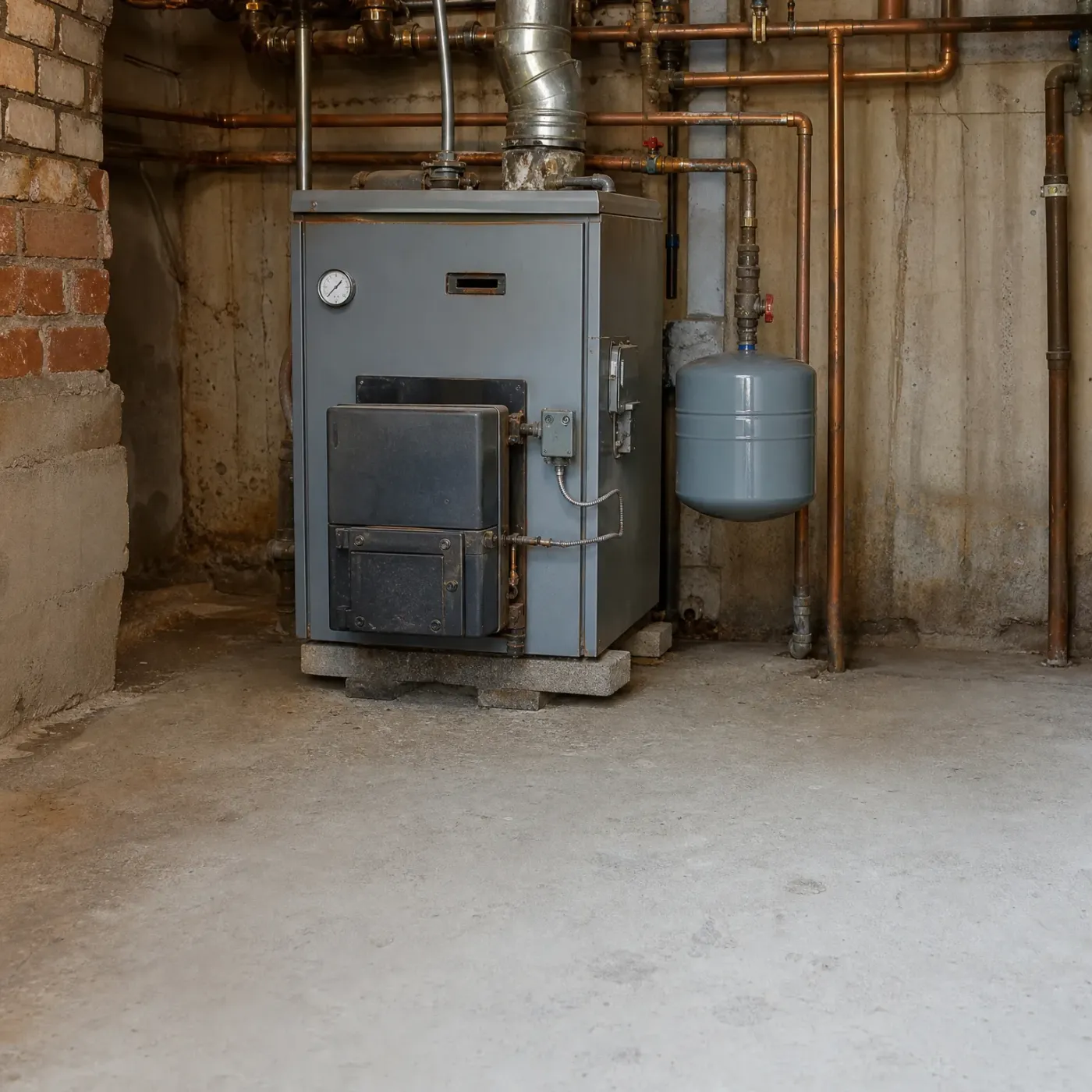
A gray boiler unit with a flue pipe stands on a concrete pad in a basement, surrounded by copper piping, a circulator pump, an expansion tank mounted on a stone wall, and an electrical outlet.

Boiler circulating properly

This is what a boiler system looks like when every radiator gets its share. Water moves through the pump and out to each line, and the whole loop stays balanced from one end of the house to the other. No single room gets left out in the cold.

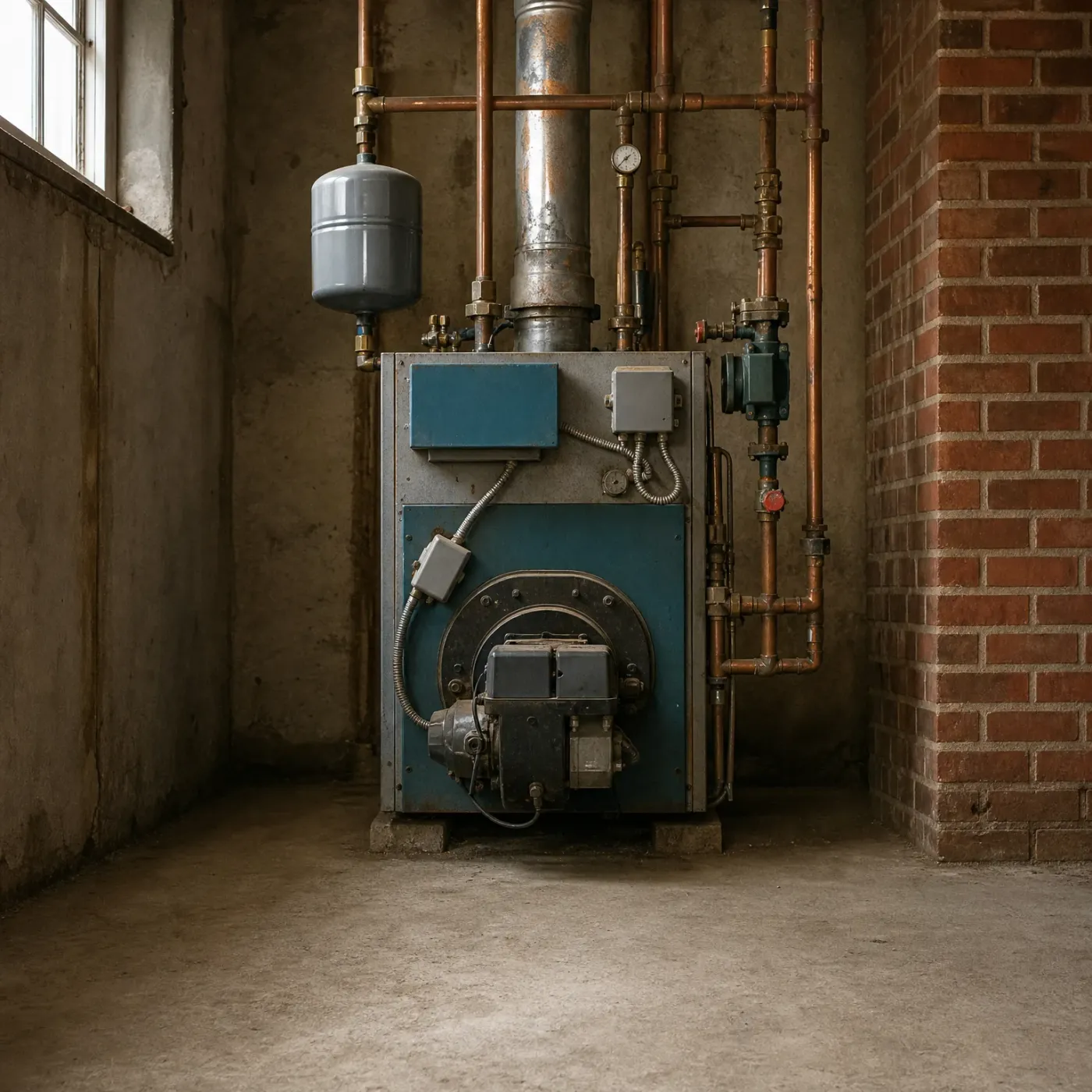
A blue cast-iron boiler with a burner unit, gauges and copper piping stands in a concrete-floored basement room beside a red brick pillar and a window.

Trapped air or a stuck valve

One radiator cold while the rest run warm usually comes down to air caught in that line or a valve that stopped opening all the way. The pipe can feel warm right up to the radiator and then stop, which points straight at it instead of the boiler itself.

A smiling man in a navy long-sleeve shirt sits at a wooden table in a kitchen and dining area, with a ceramic mug, a potted plant, and a sliding glass door behind him.
A smiling bearded man in a green henley shirt stands at a kitchen island with a gray mug, looking off to the side, with a dining area and shelves blurred behind him.
A smiling bearded man in a navy sweater sits at a white kitchen island with a ceramic mug, with open shelves, potted plants and a range hood behind him.
A smiling man in a dark olive long-sleeve shirt sits in a kitchen beside a counter with a dark mug, with a dining table, sideboard and hallway visible in the blurred background.
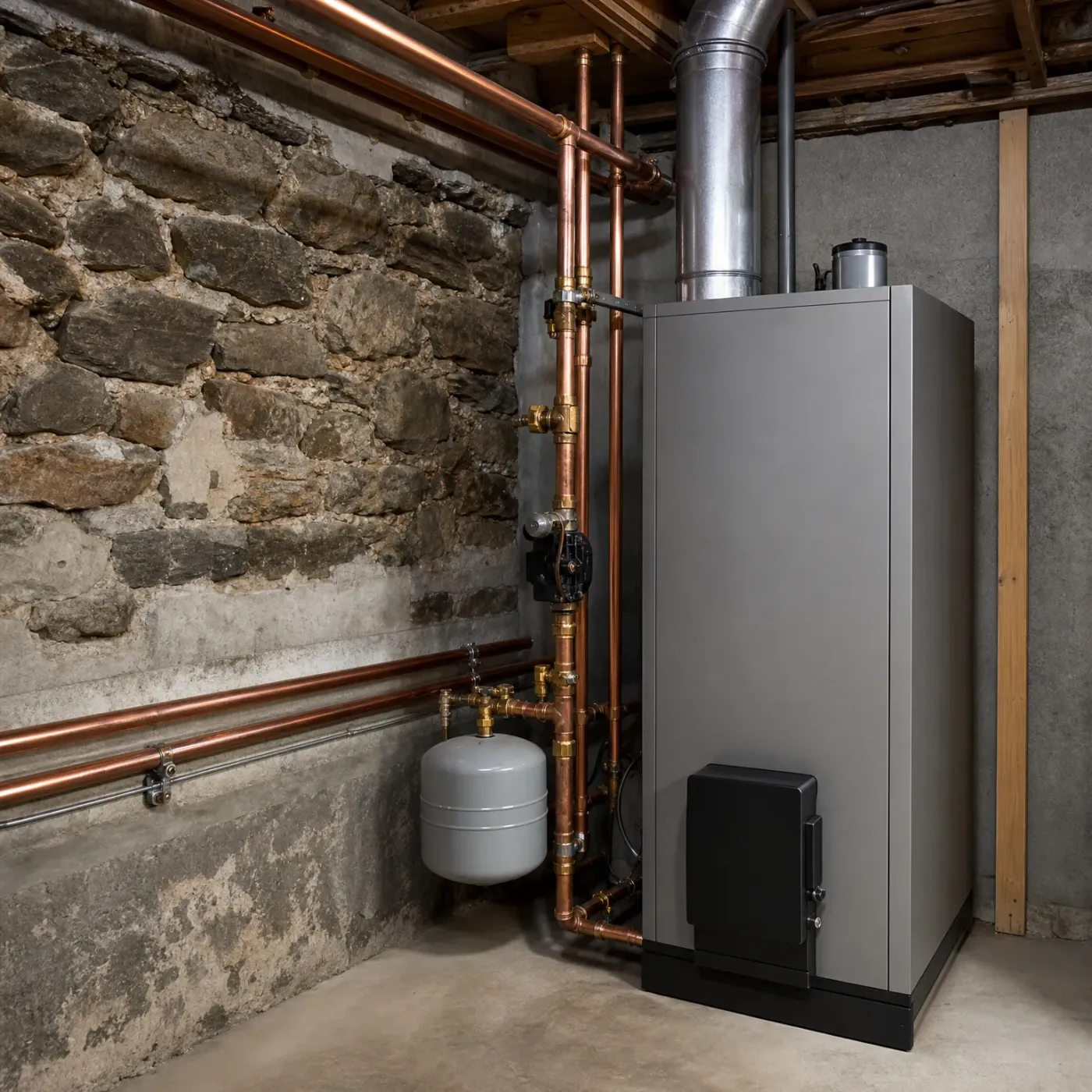
A gray boiler unit with a metal flue stands in a basement beside copper piping, valves and a small expansion tank, against a stone and concrete wall with wooden joists overhead.

Stop chasing a boiler pro

Only one pro gets your request, so you hear from one company.

Get the boiler repair search off your mind today.

Find a licensed pro

You're not committing to anything by asking.

Bleed It Yourself or Call It In

Bleed it yourself

  • A radiator cold at the top and warm at the bottom usually has air trapped inside it, and the bleed valve lets that air out.
  • You need a radiator key, a cloth, and a few minutes before the boiler kicks on again for its next cycle.
  • Turn the valve slow and you'll hear the hiss first, then water, and that's when you close it back up.
  • This works on one radiator with one straightforward problem, not on a radiator that's cold straight through or a system with more than one cold room.
  • If the valve is seized or rounded off from age, forcing it can crack the fitting and turn a small fix into a leak.

Have it looked at

  • A radiator that's cold end to end, or cold even after bleeding, points to a blocked line or a valve that isn't opening, and that's a job for someone who works on these systems.
  • A local contractor who services boilers all winter has seen which valves in older systems stick and which lines tend to sludge up first.
  • One contractor means one visit and one diagnosis, not three different opinions from three different companies.
  • Once you send the request, you're not the one tracking down who's available and who isn't.
  • Catching a stuck valve or a partial blockage now is the kind of small problem that's easier to deal with before it spreads to the rest of the loop.
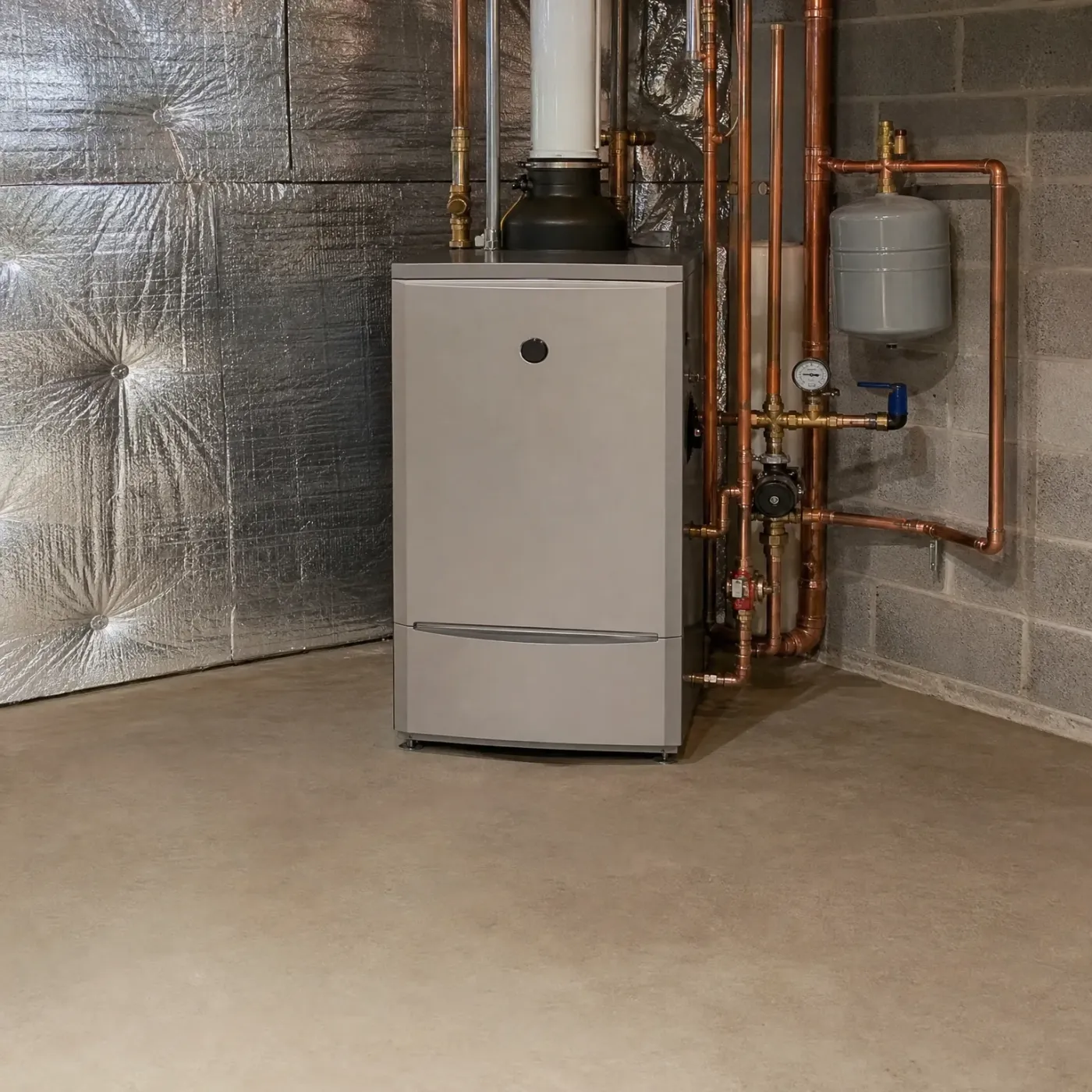
A gray residential boiler in a basement corner with copper piping, a circulator pump, pressure gauge, blue-handled valve and gray expansion tank against a concrete block wall, next to a foil-insulated wall.
Every radiator in the loop gets hot water on schedule, none of them lagging behind the others.
A gray boiler on a concrete block base in a basement, with copper piping, a metal flue, and a gray expansion tank mounted beside it against a concrete wall.
Once one radiator stops pulling its share, the valve or the line feeding it is usually to blame.

What's actually stopping the heat

  • A cold radiator usually comes down to one of three things: trapped air, a stuck valve, or a clogged line feeding it.
  • The lockshield valve on the far side of the radiator sets how much water it gets compared to every other radiator on the loop.
  • If that lockshield has drifted shut or was never balanced right, water takes the easier path through the rest of the system instead.
  • Sludge and rust build up inside a boiler loop over years and settle in the lowest or farthest radiator first.
  • A pump running fine can still leave one radiator cold if the loop itself is out of balance room to room.
  • The fix depends on which of these it is, and that's not always obvious from touching the radiator alone.

Water moves through a boiler loop under pressure, pushed by the pump toward every radiator in the house. Each radiator has two valves, one on each side. The one you turn by hand controls flow in and out. The other, the lockshield, has a cap over it and usually never gets touched after the system was first set up. That valve is what decides how much of the pump's output actually reaches that radiator compared to the others on the same loop. If it's been closed down, bumped, or just never adjusted right to begin with, water finds less resistance somewhere else and goes there instead, leaving the room at the end of that run shorter on heat than it should get.

Air works differently. It collects at the top of the radiator and blocks water from filling that space, which is why bleeding a radiator fixes it sometimes and does nothing other times. Sludge is the third cause, and it builds slowly, flaking off the inside of iron pipes and old radiators over years, then settling wherever the water moves slowest. That's usually the radiator furthest from the boiler or the one set lowest in the house.

None of these three show the same symptom. A radiator cold at the top points to air. Cold at the bottom points to sludge sitting in the base. Cold all over with a warm pipe leading into it points to the valve. Touching the radiator tells you where the cold is, not why.

Winter nights average 38°F statewide

38°F is about what your boiler is working against most nights from December through February. It has to push hot water out to every radiator in the house to keep up with that, including the one that's gone cold. A stuck valve or an air pocket makes that job harder on a night like this than on a milder one.

NOAA nClimDiv 1991-2020 county normals weighted by homes

One cold radiator while the rest of the house stays warm almost always comes down to trapped air, a stuck valve, or a lockshield that's out of balance with the rest of the loop. None of those fix themselves, and left alone, the pipe feeding that radiator can scale up or seize further, turning a bleed job into a valve replacement. A boiler working against 38°F nights doesn't have room to spare for one room not pulling its share. A licensed local contractor who works on boilers all winter can look at that radiator, the valve, and the line feeding it, and tell you in one visit which of the three it is. You've already caught this before it spread to a second room. The next step is just getting the right person to look at the one that's cold.

A man in a blue T-shirt sits on a light gray sofa, laughing while looking at an open laptop in the foreground, with a framed picture, lamp and potted plant behind him.
A bearded man in a blue and brown plaid flannel shirt stands indoors looking out a window at snow-covered trees, with a ceramic mug on the windowsill.

Hand off the boiler problem

A cold radiator in a Mississippi winter is a small job for someone who works on boilers all season and knows whether it's the valve, the air, or the lockshield before they walk in. Send the request and a licensed contractor local to you picks it up, not a stack of companies competing for the callback. That's one person who knows this system, not five voicemails to sort through. From there it's off your plate.

Find a local pro

Your request stays with one local pro.

It costs nothing to send, and you don't have to hire anyone.