

Running right
A gauge sitting between 12 and 15 psi, cold, means the system has enough water in it and the pump can push it through every pipe and radiator. No knocking in the pipes, no cold spots upstairs while the basement stays warm.
Send the form, and lining up the boiler tune-up stops being yours to chase.
Let a pro reach outYour boiler has a pressure gauge with a needle, and you want to know if it's sitting where it should. Maybe it looks low, maybe it looks high, or maybe you just noticed it for the first time and have no idea what's normal. Most boilers run fine for years without anyone checking this, until the pressure drifts and the system starts acting up before a cold snap sets in.
Most residential boilers are built to run between 1 and 1.5 bar cold, and you'll find the correct range marked right on the gauge, often in a green band. Once the heat is running and water in the system warms up, the needle climbs a bit, usually up to around 2 bar, and that's normal too. If the needle sits below 1 bar, the system has lost water somewhere, through a small leak or from bleeding a radiator, and it needs topping up through the filling loop. If it sits well above 2 bar, that's too much pressure on the system, and it's worth having someone look at it before it causes a problem. Since most homes in Mississippi heat with electric systems, boilers are less common here, but the ones in use still follow this same range.
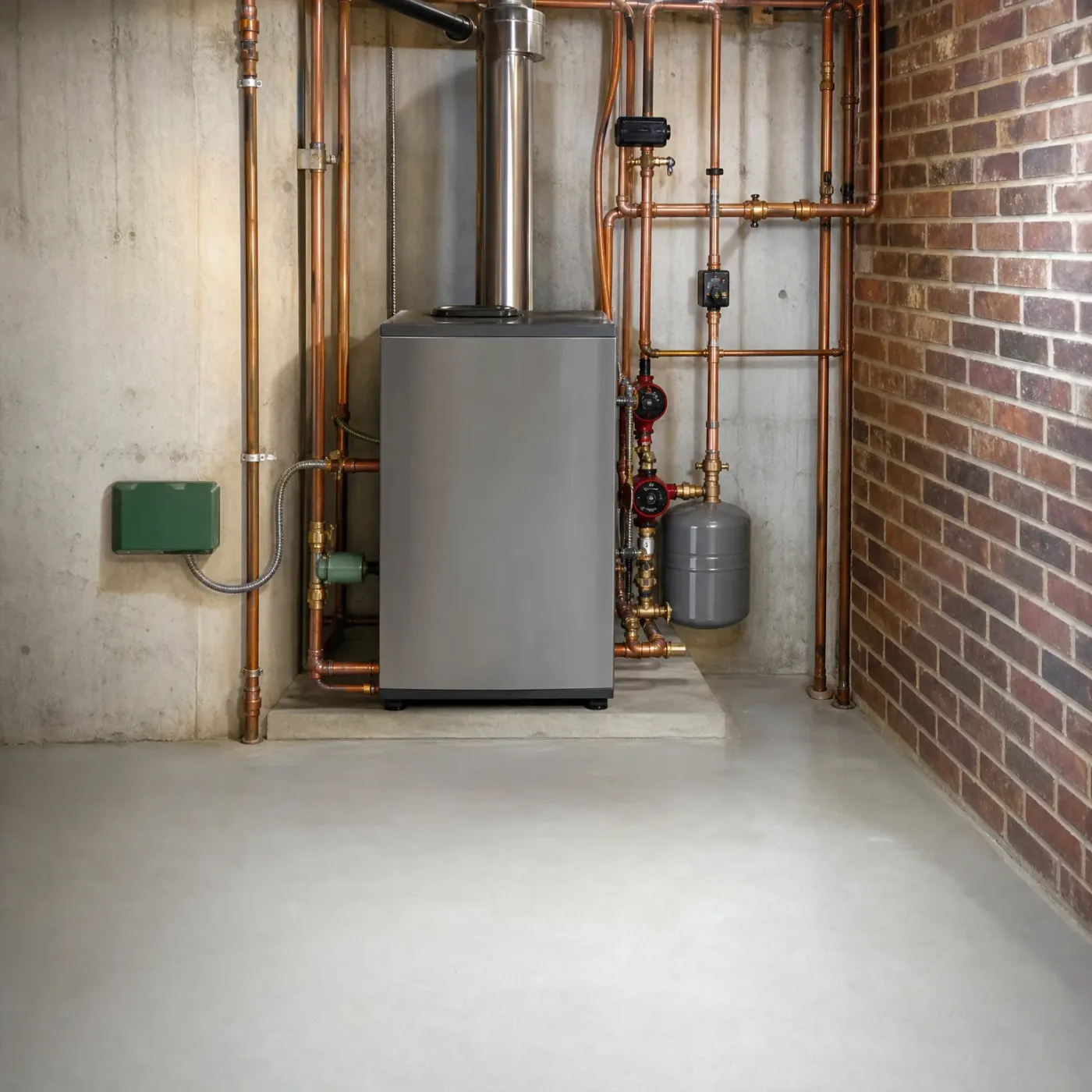
A gauge sitting between 12 and 15 psi, cold, means the system has enough water in it and the pump can push it through every pipe and radiator. No knocking in the pipes, no cold spots upstairs while the basement stays warm.
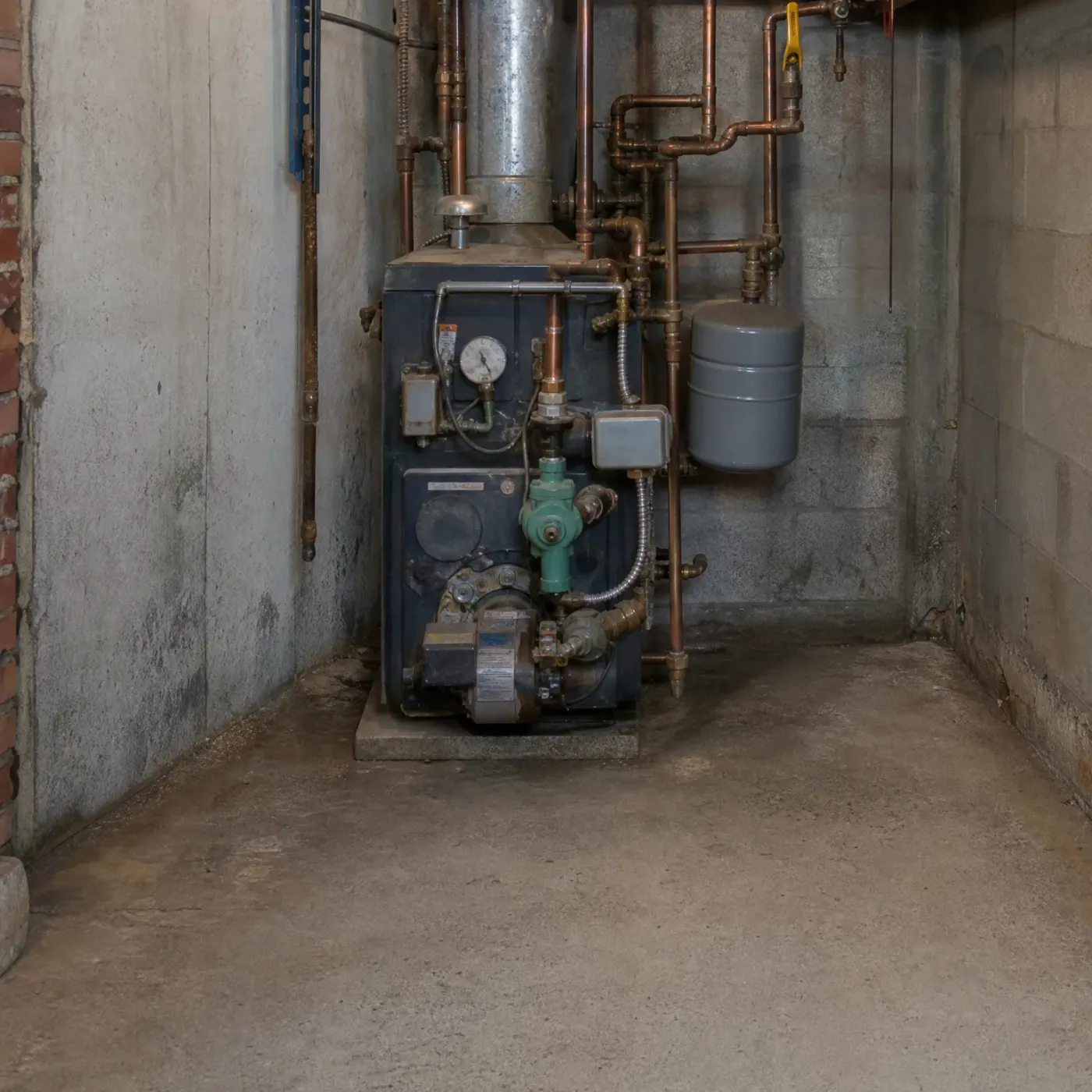
When the needle drops under 12 psi, water has left the system somewhere, through a valve, a fitting, or the expansion tank going bad. Heat gets patchy, the pump can run dry at spots, and the boiler may shut itself off until someone adds water back or finds the leak.


A boiler running low on pressure shows up as cold spots in whatever room sits farthest from it, usually a back bedroom or an upstairs you rarely heat with the thermostat alone. You might hear gurgling in the pipes before you notice the temperature. Let it sit too low and the pump can start pulling air instead of water, which wears it out faster than it should. Too high, and the relief valve may start weeping water near the boiler, a small puddle or a drip that stains the floor underneath it. Neither one breaks the system overnight. But a boiler that runs through a Mississippi winter season after season at the wrong pressure is a boiler that needs a part replaced sooner than it should. A yearly check before the cold sets in catches a slow leak or a stuck valve while it is still a five-minute fix, not a cold morning with no heat and a repair call you did not plan for.




A boiler that most homes around you don't even have is a different animal to diagnose. Most houses in Mississippi heat with electricity, so a boiler here is less common, and finding someone who services them regularly matters more than it would somewhere colder. A gauge reading wrong is easy to see. Knowing whether that's a bad pressure relief valve, a waterlogged expansion tank, or just needing the loop bled takes someone who works on these systems every season, not once a year. One contractor gets your request, someone local who already knows what tends to fail in a boiler that's run through Mississippi summers and the handful of cold snaps each winter brings. You won't be sorting through calls from five companies trying to figure out who actually knows this equipment. Send the request and let someone who does this for a living take the gauge reading from here.

Water expands when it heats up. That's why the pressure reading you get cold is different from what you'd see with the system running, and why the number only means something if you check it cold. The expansion tank absorbs that swing, giving the extra volume somewhere to go instead of pushing against the pipes. If that tank is waterlogged or undersized, the gauge will climb higher than it should every time the burner fires, even with the right amount of water in the system.
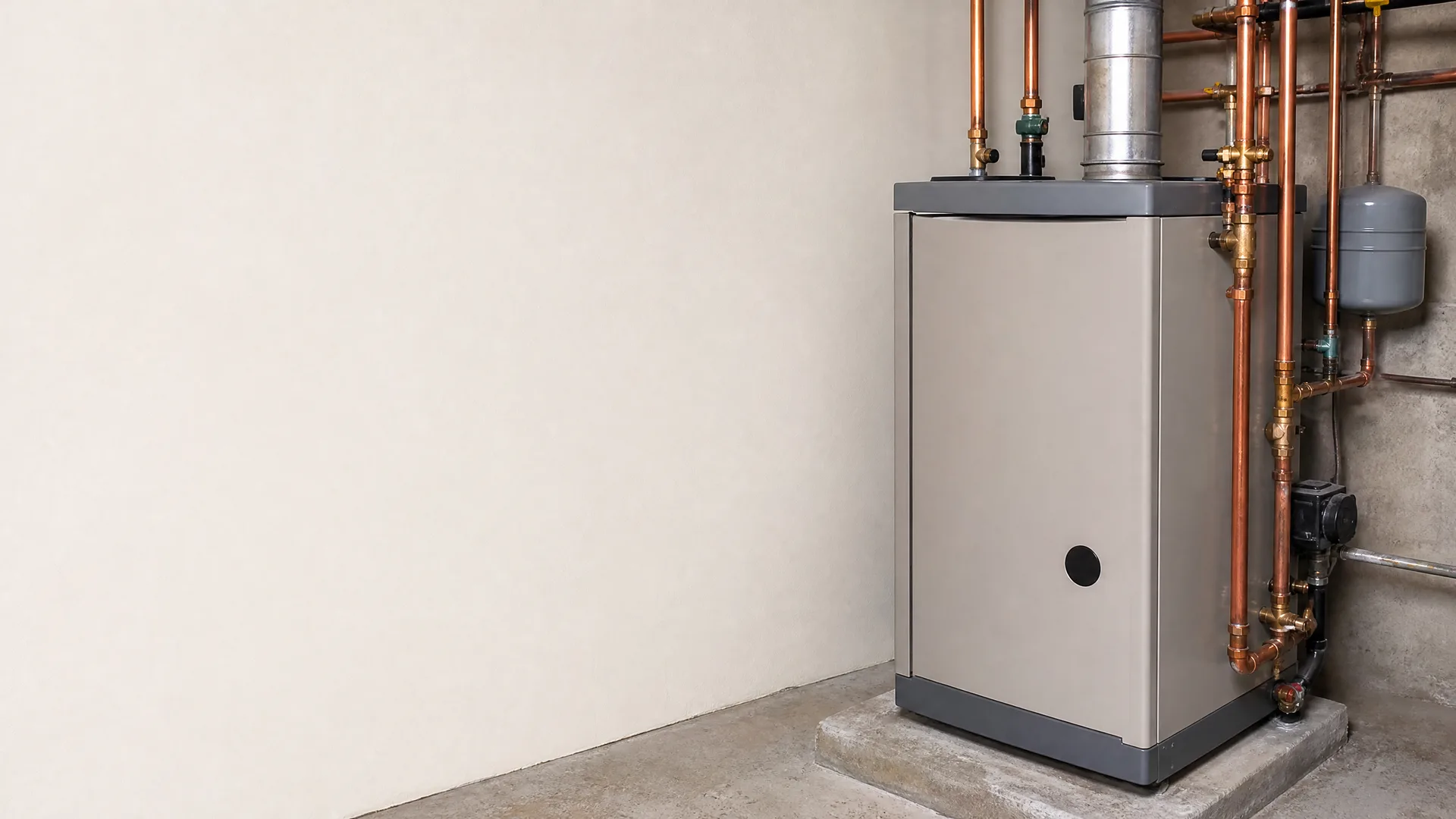
Every boiler has a pressure relief valve set to open around 30 psi, built to dump water before the tank or a fitting gives way under the strain. It's not something that should ever need to fire during normal operation. If you've found water near the base of the boiler, or the valve shows signs of having let water out before, that's the system telling you it ran past where it should have, and a contractor who services boilers regularly will check why before refilling it.
A 38°F overnight low doesn't ask much of a boiler. It'll cycle on through the night but won't be straining to catch up by morning the way it would somewhere colder. Keeping pressure steady matters more over a mild winter like this, since a slow leak can go unnoticed when the system isn't working hard enough to make the symptoms obvious.
NOAA nClimDiv 1991-2020 county normals weighted by homes
Twelve to fifteen psi, cold, is the number that matters. Everything else about your boiler, how long it runs, whether the radiators heat evenly, whether you hear knocking in the pipes, traces back to whether that needle sits where it should. A mild Mississippi winter doesn't change the target. Your boiler isn't working against the kind of cold that pushes a system hard, so when the pressure drifts, it's rarely the weather asking too much of it. It's usually water finding a way out, or the expansion tank not doing its job, or a fill valve that's stuck open or shut.
Either direction tells you something you can act on. Low pressure means a leak somewhere, even a slow one you won't see without checking the gauge yourself. High pressure points to the expansion tank or the fill valve, parts most homeowners never think about until the number stops making sense. Neither one fixes itself, and neither one is something you can tell just by how warm the house feels.
Because boilers aren't the common setup here, a contractor who actually services them on a regular basis already knows where this kind of problem usually starts. That's the difference between someone guessing and someone who's seen your exact gauge reading before, on someone else's boiler, last month. One request connects you to one licensed, local contractor, not a stack of callbacks to sort through while your pressure sits wherever it's sitting.
Your request stays with one local pro.