
What a boiler tune-up covers before a Mississippi winter
A boiler tune-up before winter covers a set of checks meant to catch problems while they're still small. A contractor will clean the burner and heat exchanger, check the pressure and water level, test the pressure relief valve, bleed air from the radiators or baseboards, inspect the flue and venting, check the thermostat and controls, and look over the pump and expansion tank. Mississippi winters don't run long, but a boiler that sits idle most of the year can develop a stuck valve or a weak seal without anyone noticing until the first cold night, when you need it most. A tune-up now means the system is already proven to work before you're relying on it to keep the house warm. Most homes here heat with electricity, but if yours runs on a boiler, this is the one service that tells you ahead of time whether it will get through winter without a breakdown.
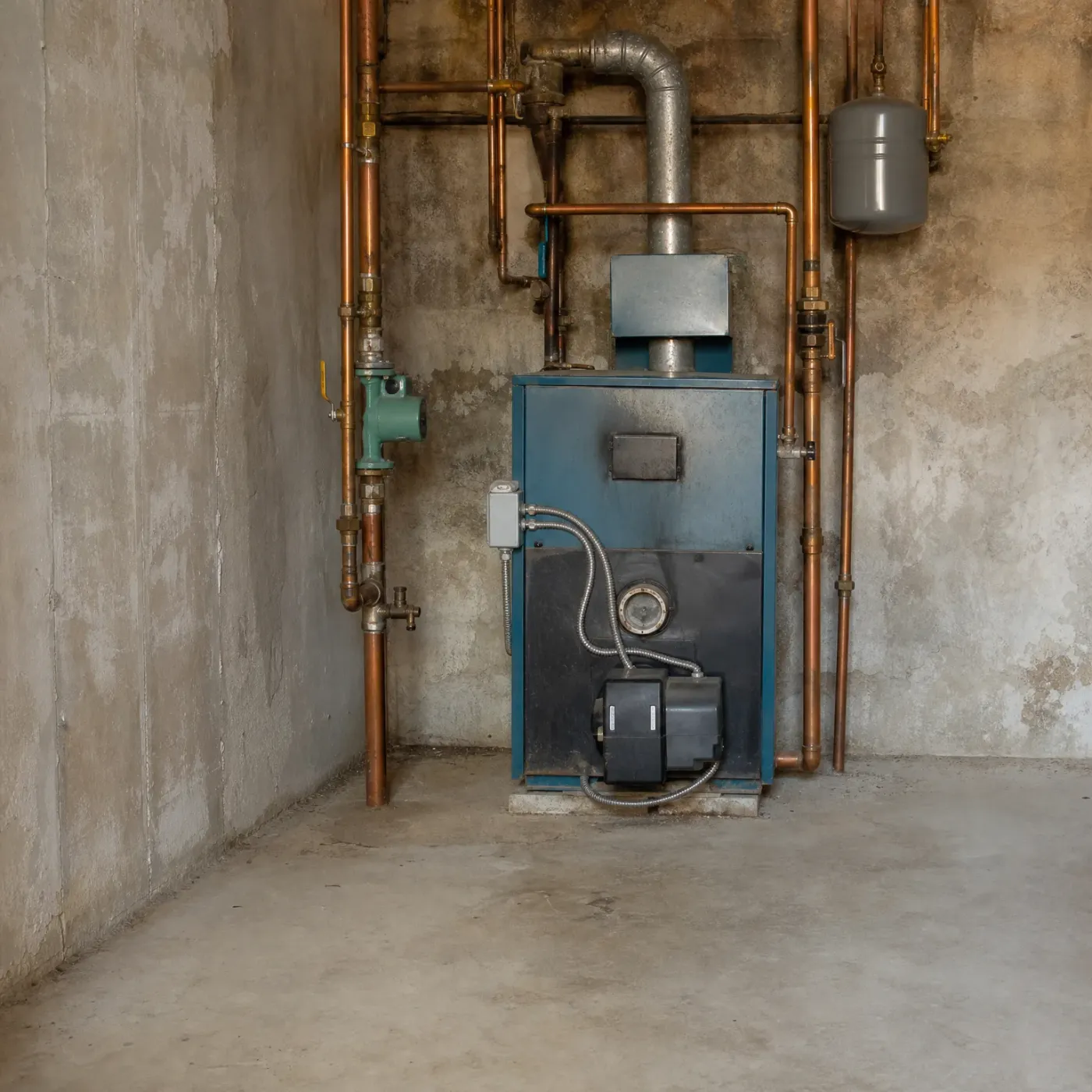
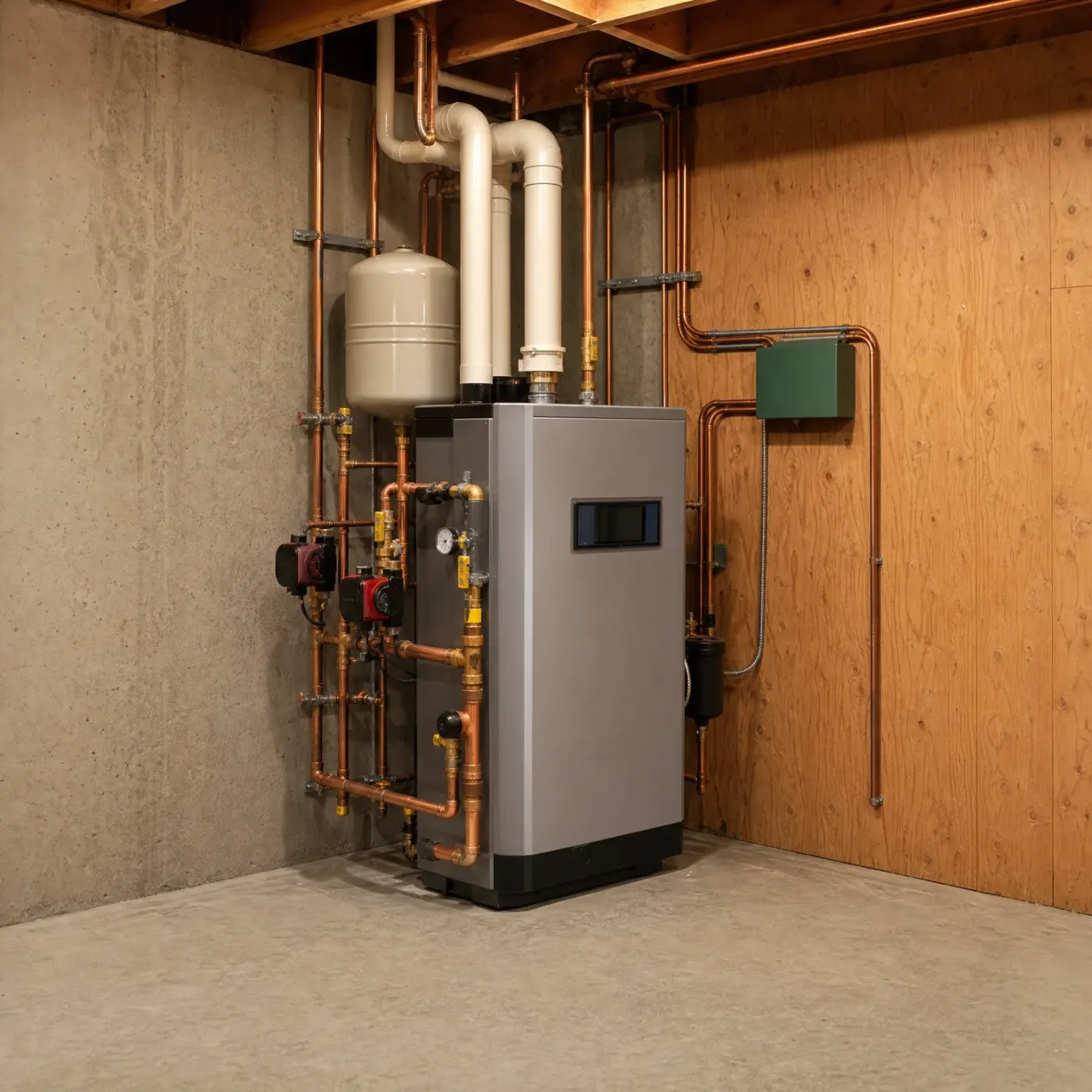
A lot of this comes down to combustion. A contractor watches the flame through the sight glass and tunes it until it burns steady blue, not yellow or orange, and runs flue gas through combustion test equipment to confirm the boiler isn't wasting fuel. The expansion tank gets a look too. If the air charge is off and the tank waterlogs, you get banging pipes or pressure spikes partway through winter. The low water cutoff gets tested along with the electrical connections, because a cutoff that fails can let the boiler run dry and crack the heat exchanger, which is a far bigger repair than a tune-up. Zone valves and circulator pumps get worked to make sure they move freely. A valve that sticks leaves one part of the house cold while the rest heats fine, which is confusing if you don't know to look there. Flue connections get checked for gaps or rust, since that pipe is the only thing keeping exhaust gas out of the living space instead of the chimney.
What the tune-up actually checks
- A contractor checks the flame through the sight glass and adjusts it until it burns a steady blue instead of yellow or orange.
- Combustion test equipment measures the flue gas to confirm the boiler is burning fuel cleanly and not wasting it.
- The expansion tank gets checked for the right air charge, since a waterlogged tank can cause banging pipes or pressure spikes all winter.
- Electrical connections and the low water cutoff get tested, since a bad cutoff can let the boiler run dry and crack the heat exchanger.
- Zone valves and circulator pumps get checked for free movement, since a stuck valve leaves one part of the house cold while the rest heats fine.
- Any flue pipe connections get inspected for gaps or rust, since exhaust gas has to leave the house and not the living space.




Finding a pro stops being your job

Fill out one form instead of calling around for a boiler tune-up.
Sending the form costs nothing.
Why the pressure gets checked first
A boiler runs on water held at a set pressure, usually somewhere around 12 to 15 psi when it's cold. If it drops too low, the pump can't move water through the system and parts of your home stay cold. If it climbs too high, the pressure relief valve opens and dumps water to keep the boiler from being damaged. A contractor checks this gauge early in the visit because it tells them right away whether the system has a leak somewhere, or whether the expansion tank isn't doing its job. Either one left alone turns into a bigger repair once the weather turns cold and the boiler is running most days.
What bled radiators fix
Air gets into the system over the months the boiler sits mostly idle, and it collects at the high points of the radiators. That trapped air keeps hot water from filling the radiator all the way, so you get a cold spot at the top while the bottom heats fine. Bleeding each radiator lets that air out and lets water take its place. It's a small step, but it's the difference between a room that heats evenly and one where you keep turning the thermostat up because the air near the ceiling never warms.
Winter nights average 38°F statewide
38°F is a average night in Mississippi once winter sets in, not a cold snap. That's the temperature your boiler has to answer to for weeks at a stretch, night after night, not just once or twice.
NOAA nClimDiv 1991-2020 county normals weighted by homes

The contractor shuts down the boiler and lets it cool before opening anything.
The burner and heat exchanger get cleaned of soot and scale buildup.
The flue and venting get checked for a clear, safe path outside.
Water and pressure levels get checked and adjusted to the right range.


Where Your Boiler Stands Now
- A tune-up before the cold nights set in catches a weak igniter or a dropping pressure while it's still a small fix.
- Skipping it means finding out what's wrong on the night it's 38 degrees and the boiler won't answer.
- Once the form is sent, you're done calling around, comparing quotes, and explaining the same problem twice.
- A boiler that's been cleaned, tested, and checked holds its pressure and burns clean through the Mississippi winter ahead.
- The checks covered above are the same ones that keep a small repair from turning into a cold house in January.
- You don't have to track down who's available or sort through estimates yourself once you send the request.
A boiler tune-up before winter comes down to one question: will it hold pressure and burn clean when the nights turn cold. The checks above, the burner, the heat exchanger, the flue, the pressure relief valve, the water level, all answer that question while there's still time to fix what's wrong. A weak igniter or a slow pressure drop found in October is a small job. The same problem found on a 38 degree night in January is a cold house and an emergency call.
That's the difference a tune-up makes. It doesn't change what the boiler has to do all winter. It changes whether the boiler is ready to do it.
Finding someone to do this work usually means calling a few contractors, explaining the boiler, its age, what it's doing or not doing, to each one, then waiting on quotes and sorting through them before you even get a date on the calendar. Sending the form once ends that part. You're not tracking down who's free or repeating yourself to the next person on the list. The boiler still needs the same checks either way. What changes is whether you spend an evening on the phone first or just get to the part where someone shows up and does the work.





Let someone else find the pro
Skip calling around to set up a boiler tune-up.
You're not committing to anything by asking.