
Is a high-efficiency boiler worth it in Mississippi

Describe the project once instead of to every installer.

Fill out one form

Probably not. Most homes in Mississippi heat with electricity, not a boiler, so the question doesn't come up for most people here. If you do have a boiler, a high-efficiency model saves gas by capturing heat older boilers vent outside, but Mississippi winters are short and mild, so there are only a few months a year to earn that back. A high-efficiency boiler makes the most sense where winters run long and cold enough to run the system hard for months at a time. Here, with power priced about the same as anywhere else and a short heating stretch, the math usually favors a standard boiler or electric heat over paying more upfront for high-efficiency gas equipment. The exception is if your current boiler is failing and you're replacing it anyway, or if you already run and prefer gas heat. In that case, the choice comes down to the installation itself: a boiler, high-efficiency or not, has to be sized and vented correctly to work and to last.

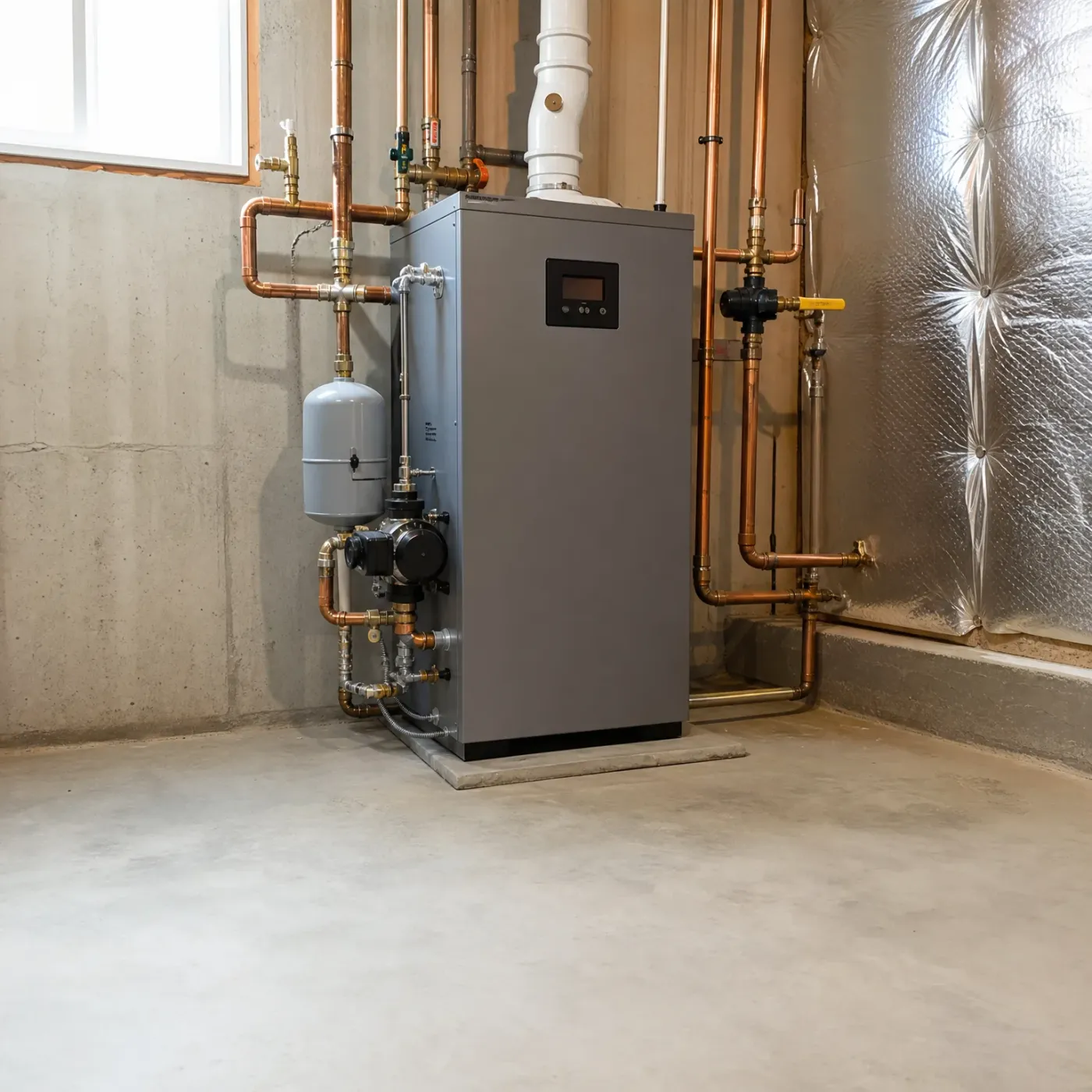
A gray boiler unit with a digital display stands on a concrete basement floor, connected to copper piping, a gas valve, a circulator pump and an expansion tank, beside a concrete wall and foil-faced insulation.

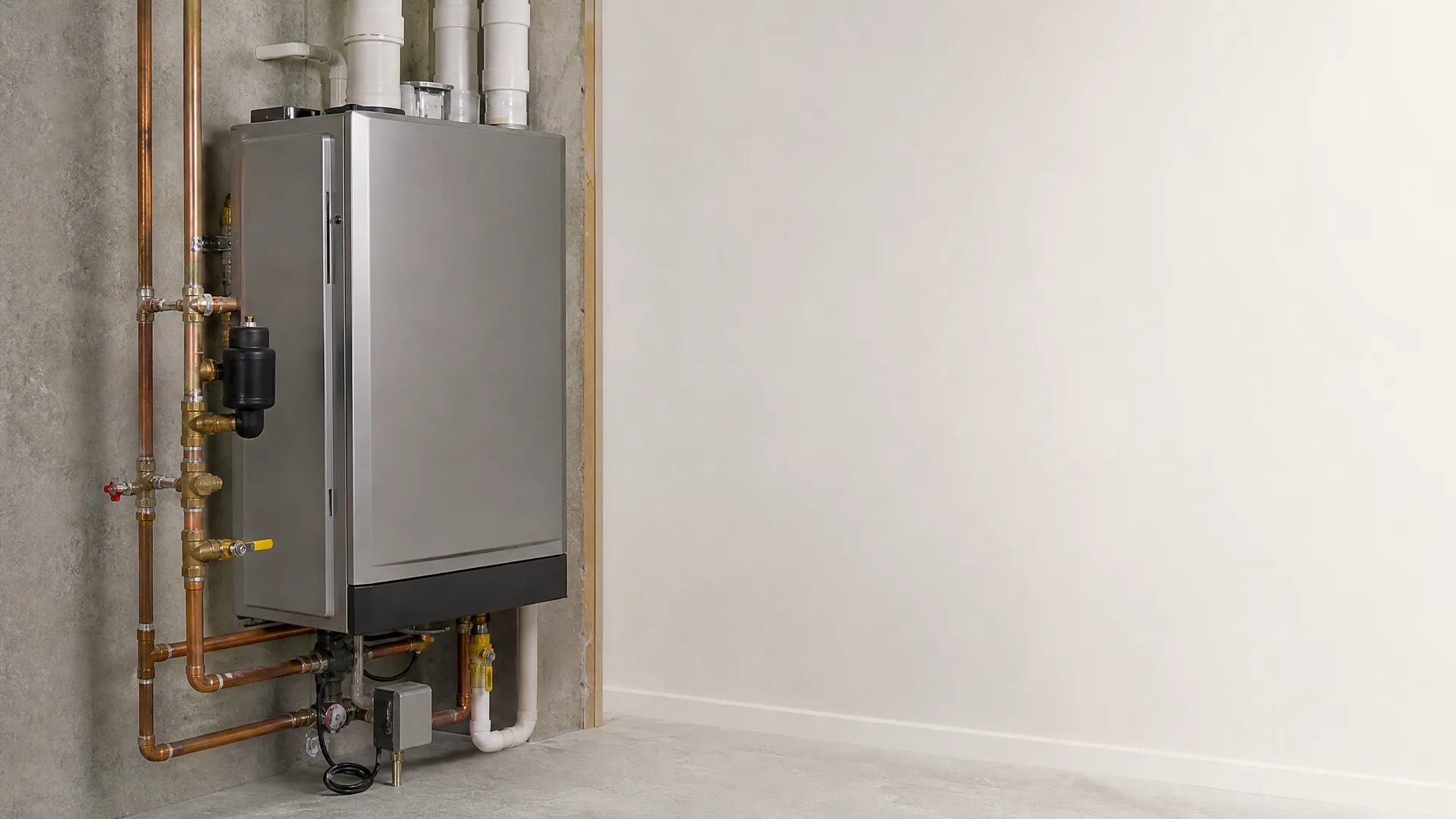
A condensing boiler, installed right

This kind of boiler pulls extra heat out of the exhaust before it leaves through the PVC vent, instead of sending it straight outside. That takes a condensate line, the right venting, and piping sized to the home. Get that wrong and you lose the gain the unit is built for.
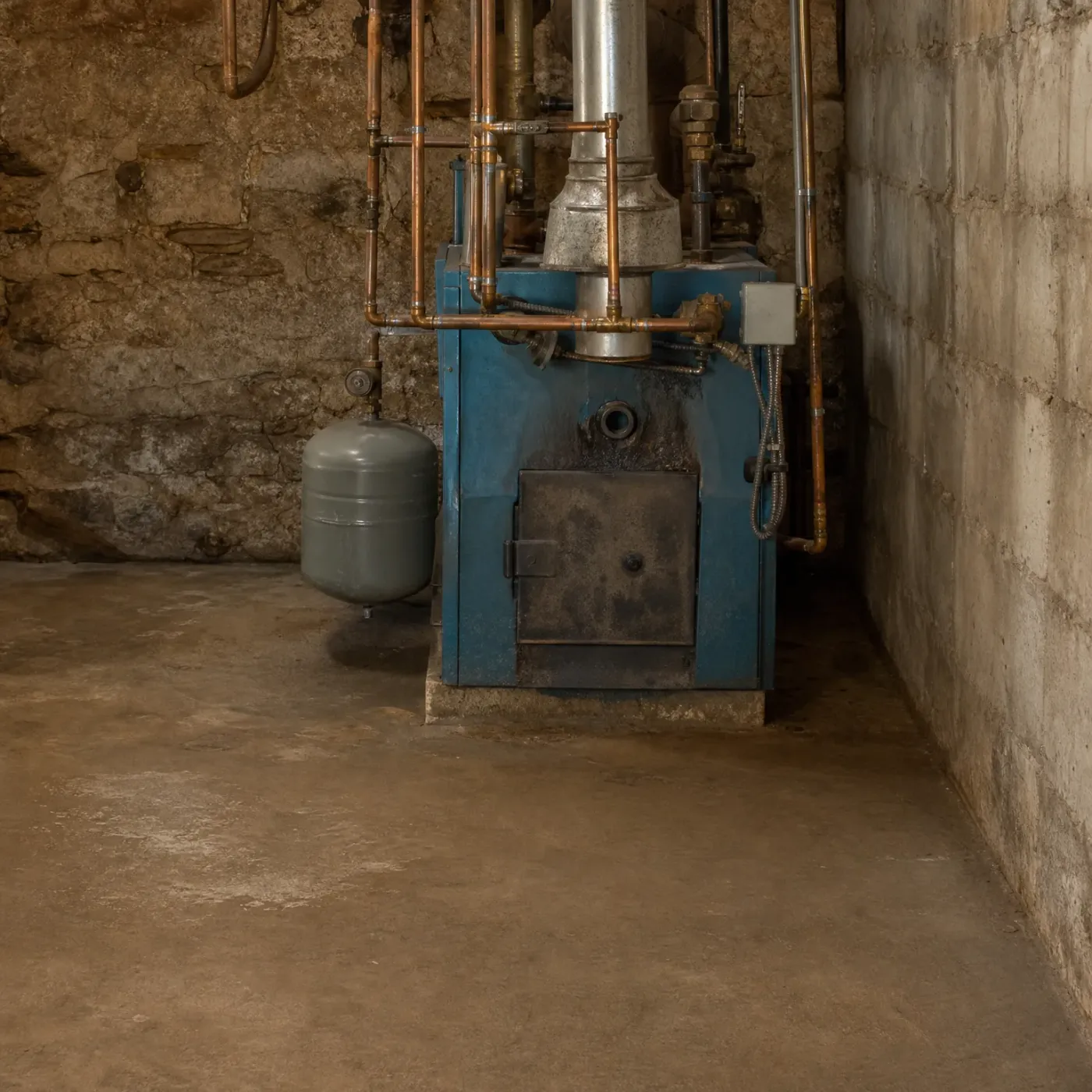
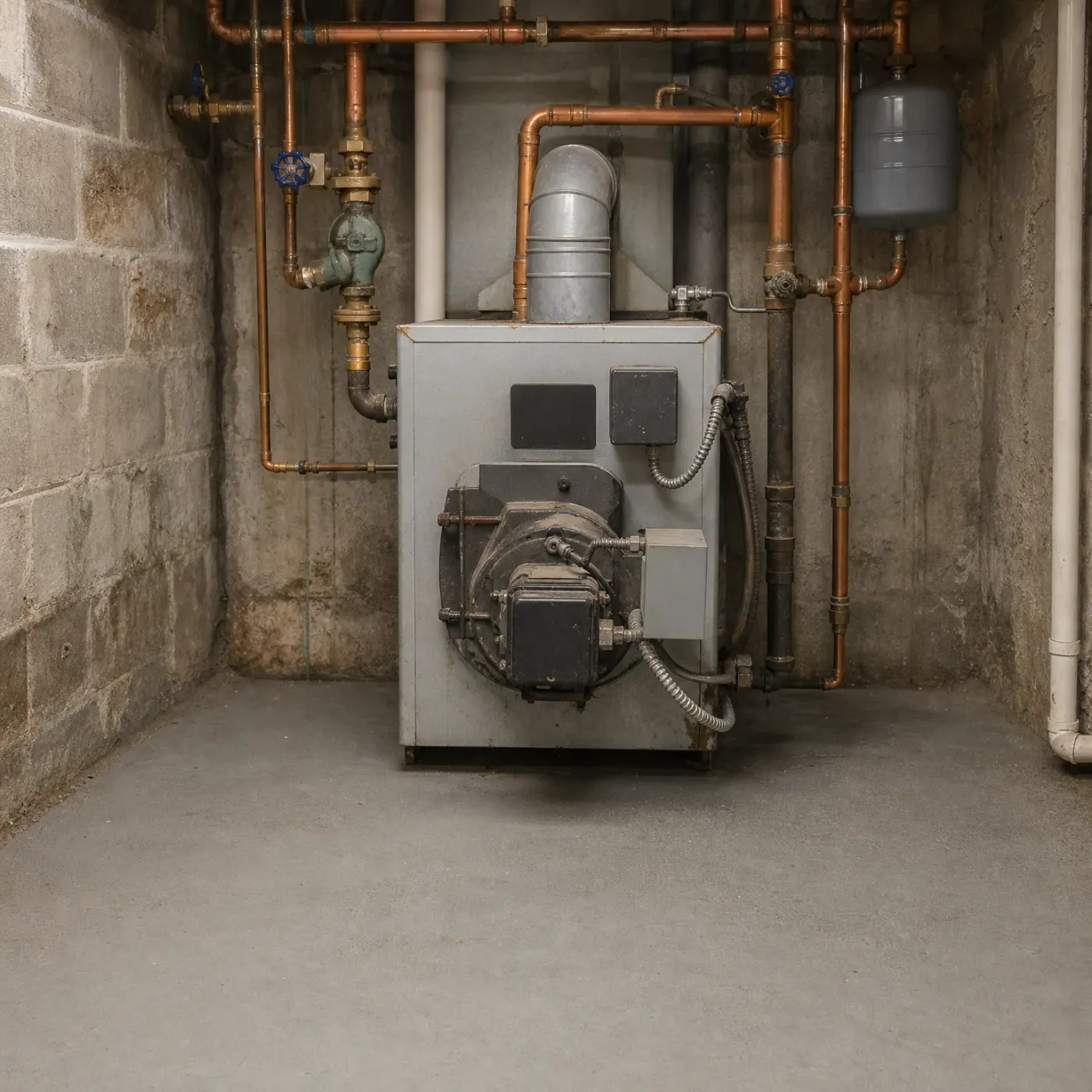
A blue cast-iron boiler with a metal flue pipe and copper piping stands against a stone and concrete block basement wall beside a gray expansion tank on a bare concrete floor.

An old boiler past its working life

Cast iron like this can run a long time, but the corrosion on the access door and the worn expansion tank are signs of age catching up to it. A unit in this shape is losing efficiency and getting closer to a repair that costs more than it's worth.

Is my boiler costing me more than it should

You're probably not thinking about the boiler much. It runs for a stretch in the colder months and otherwise sits in the basement or the closet doing its job. What you might notice instead is a gas bill that climbs faster than the weather seems to justify, or a boiler that short-cycles, kicking on and off in quick bursts instead of running a steady stretch. You might hear a kettle-like rumbling from the heat exchanger, or see rust or a drip near the base. None of that is really an efficiency problem. It's a sign the unit needs a look before it fails outright, and running it that way for another winter risks a breakdown on the night you need it most.

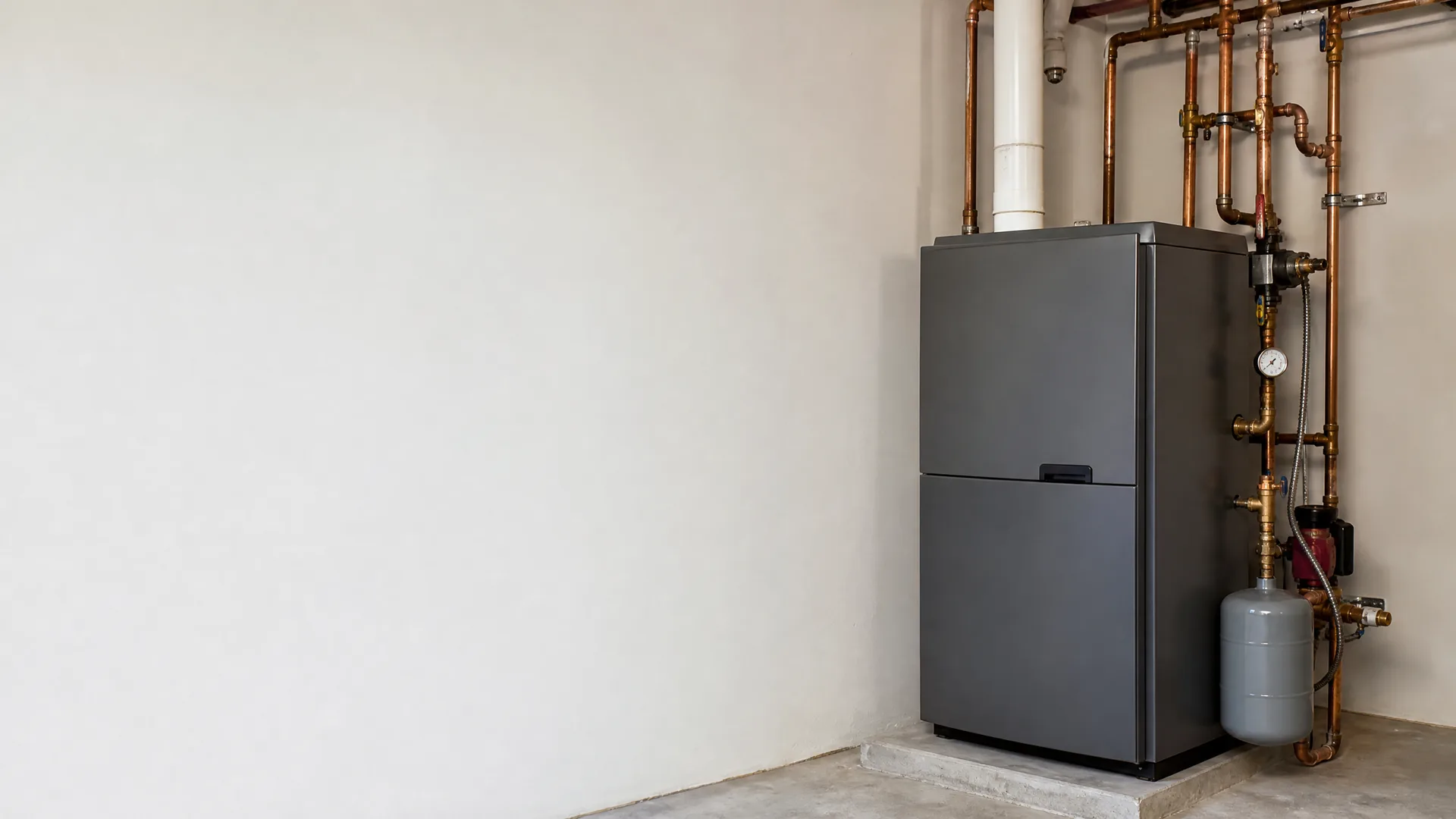
A wall-mounted grey boiler with copper pipework and white flue pipes installed against a concrete wall in an empty room with a plain pale wall to the right.

Why the exhaust runs cooler

A standard boiler sends exhaust out hot, often over 300 degrees, because it has to stay above the point where water vapor condenses inside the flue. A condensing boiler does the opposite on purpose. It cools the exhaust low enough that vapor turns to liquid, pulls the heat out of that process, and sends the leftover gas out around 100 to 140 degrees through PVC pipe instead of metal venting.

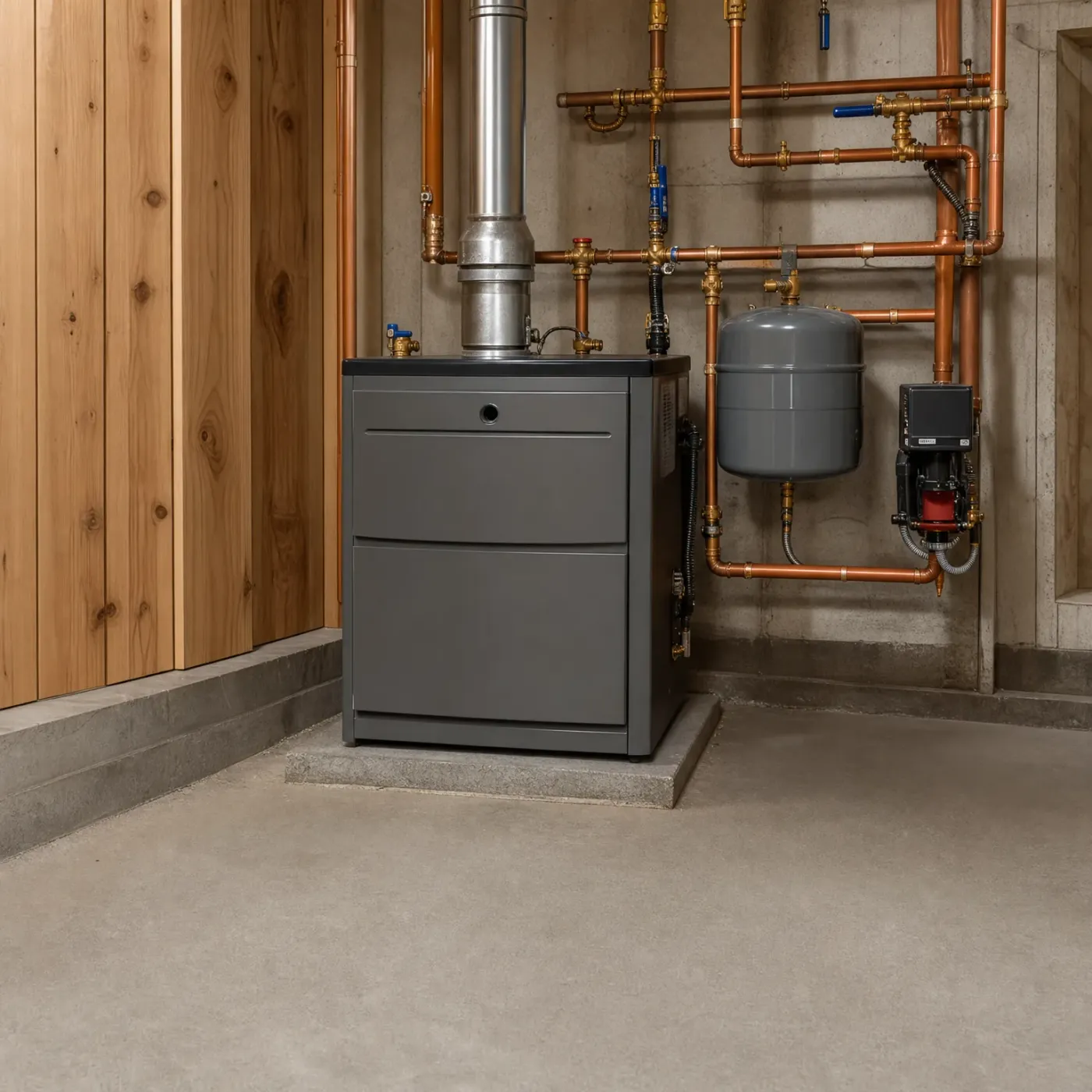
A dark grey boiler unit stands on a concrete pad against a plain light wall, connected to copper pipes, a pressure gauge, a pump and a grey expansion tank.

What the condensate has to do

That condensation is mildly acidic, so it needs somewhere to go. A condensing boiler drains it through a dedicated line to a floor drain, a condensate pump, or another approved spot, and the line has to hold up to that acidity over years of use. Skip this detail during installation and the drain corrodes or backs up, which is one reason this isn't a swap a homeowner does alone.

How do I know if my boiler is even a candidate for high-efficiency?

A boiler swap in Mississippi is rare enough that most installers haven't quoted one in months, and you want to know before you even call anyone whether your setup can actually take a high-efficiency unit or whether you'd be paying for venting changes you didn't expect. The honest answer depends on a few things in your house, not on wanting the lower bill badly enough.

It comes down to venting, not the boiler itself

A standard boiler vents through a metal flue or a chimney, because the exhaust leaves hot. A condensing boiler vents through PVC pipe, because the exhaust leaves cool enough for plastic to handle, and it needs a new path to the outside wall along with a condensate line to drain the water it pulls out of the exhaust. If your boiler currently vents through a chimney, that chimney can't be reused for the new unit. None of this rules a house out. It just means the installer has to look at where the PVC can run and where the condensate can drain before giving you a number, rather than guessing from the model of your old boiler alone.

A gray-haired man in a dark sweater sits on a light gray sofa in a living room, looking toward a sunlit window with trees outside.
A gray-haired man in a dark blue sweater sits on a light gray sofa in a sunlit living room, looking off to the side, with a potted plant, shelving unit, and large glass doors behind him.
A bearded man with graying hair in a dark green sweater sits on a sofa in a living room, looking off to the side, with a sliding glass door and a dim kitchen doorway behind him.
A gray-haired man in a dark knit sweater sits on a light gray sofa in a living room, looking toward a sunlit window, with houseplants, a lamp, and framed art in the background.

One form, no calling around

If a swap makes sense for your house, the next part is finding someone who actually knows condensing boilers, since so few homes here have one. Most installers in Mississippi spend their winters on furnaces and heat pumps and might see a boiler job once or twice a season. Calling around means explaining your setup, your venting, where the unit sits, over and over to companies that may or may not have done one. Submit the request here and it goes to one licensed local contractor, not five, someone who works on this kind of equipment regularly enough to know what trips up a condensing boiler install in a house that wasn't built with one in mind. You explain it once. They already know the questions to ask about your venting and your gas line before they walk in.

Keeping the boiler you have

If your boiler is still running fine and the gas bill isn't climbing, there may be nothing to fix. A standard boiler that's sized right and vented right can run for years without trouble. Replacing it early means paying for equipment before you've gotten the use out of what you already have. The case for waiting is simple: nothing is broken, and Mississippi winters don't ask much of a boiler. If yours is already running well, the honest answer is to leave it alone until it tells you otherwise.

Switching to condensing now

If the boiler is old enough that parts are getting hard to find, or the gas bill has been creeping up winter over winter, replacing it now means doing it on your schedule instead of in an emergency when the old one quits in January. A condensing boiler installed correctly will use less gas to do the same job, winter after winter. You'd want a local installer who's actually put one in before, since so few homes here have one, rather than someone learning on your house.

Winter nights average 38°F statewide

38°F is a mild low as winter nights go. Your boiler is cycling on and off to cover that gap, not fighting single-digit cold for weeks straight. That's part of why the fuel savings from a high-efficiency model take longer to add up here than they would somewhere colder.

NOAA nClimDiv 1991-2020 county normals weighted by homes

A gray boiler with a flue pipe and burner unit stands against a concrete block basement wall, surrounded by copper and steel piping, valves, and a gray expansion tank, on a bare concrete floor.
Before you get your boiler installation
A gray boiler on a concrete pad in a basement, with a metal flue pipe and copper piping, brass valves, a gray expansion tank and a circulator pump mounted on the concrete wall beside wood paneling.
After you get your boiler installation

Replacing an old boiler as is

Same type of unit, same venting, same spot in the house. Faster install, but you keep whatever inefficiency came with the original setup.

Find a licensed boiler pro

Switching to condensing

New venting and a condensate line go in alongside the boiler. More work up front, but it's built to actually use the fuel savings a condensing unit offers.

Find a licensed boiler pro
A closed silver laptop and a ceramic mug of dark coffee sit on a wooden table in front of two chair backs, with a kitchen counter, tiled backsplash, wooden cutting boards, a vase of greenery and a potted plant by a window behind.

Where that leaves you

A high-efficiency boiler makes sense for a short list of houses in Mississippi, and whether yours is on that list depends on your venting, your gas line, and how your current unit is actually running, not on the question in general. If the facts above describe your setup, a condensing boiler will save you gas over the years you own it. If they don't, keeping what you have and fixing it as needed is the sounder call.

Either way, the next step is a boiler installer who's done this work before in a place where almost nobody has one. That's not a search you want to run yourself, calling around to installers who mostly quote furnaces and heat pumps, describing your setup over and over, then sitting with a stack of bids trying to tell which one actually understood the job. A local, licensed installer who knows condensing systems can look at your house and tell you where you stand, and you'd hear back from one contractor, not a handful.

A gray upholstered sofa with a matching cushion sits beside a potted plant and a wooden table holding a small green plant in a stone pot, near a curtained window.
A middle-aged woman with shoulder-length dark hair, wearing a gray cardigan over a cream top, sits in an upholstered armchair and looks toward a sunlit window, with a shelf holding framed pictures and a plant behind her.
A woman with her hair in a bun holds a sleeping young child against her chest, both wrapped in a textured beige knit blanket on a sofa in a dimly lit room with a lamp, framed picture, and bookshelf behind them.

Boiler Installation

Explain it one time

Your request stays with one local pro.

A black-framed smartphone standing upright against a plain white background, its screen filled with solid green.
Step 1 of 3: Equipment