


You bleed them yourself
You save the cost of a visit, but a stuck valve, a key that won't fit, or water that won't stop can turn a ten minute job into a bigger problem.
One request and finding someone for the tune-up is handled.
Hand it offBleeding a radiator means opening the small valve at its end to let trapped air escape, so the valve runs steady with water instead of hissing air. Air gets in over the months the boiler sits idle, and it collects at the top of each radiator, which is why the top stays cool while the bottom heats fine. Do this before you turn the heat on for the season, not after. In Mississippi, that idle stretch runs long, since the boiler sits unused most of the year and only gets called on for a handful of cold spells. All that time off gives air plenty of chance to work its way in. A radiator with trapped air heats unevenly or barely heats at all, and the boiler runs longer trying to compensate. Bleed each radiator in the house, starting with the one farthest from the boiler, before the first cold night arrives.
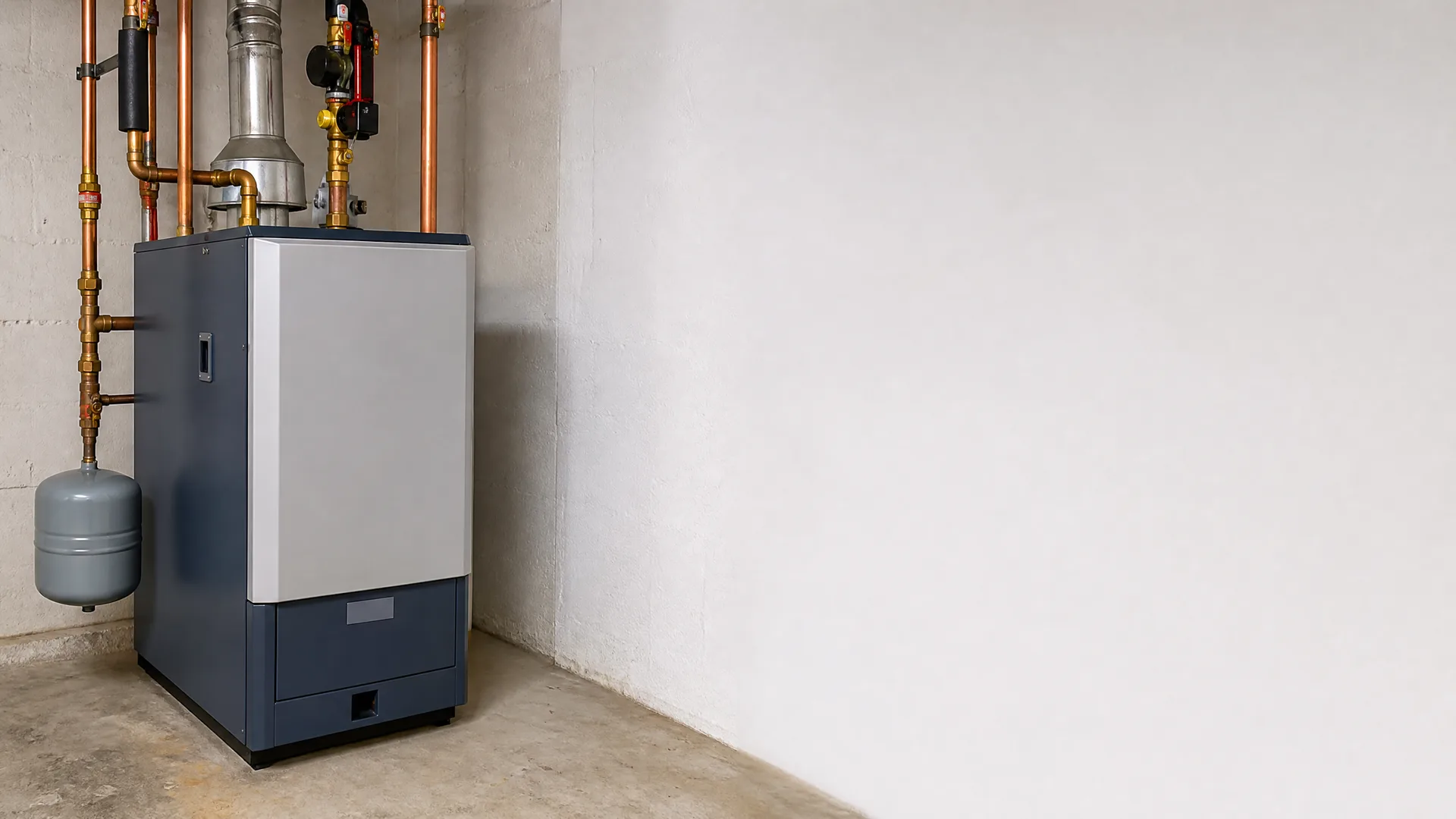
A boiler loses a little water to evaporation over a year, and whatever fills that space is air, not water. It settles at the highest point it can reach, which is the top of each radiator. A rarely used radiator in a back room collects more than one that runs daily, so if the whole house runs uneven, start there.
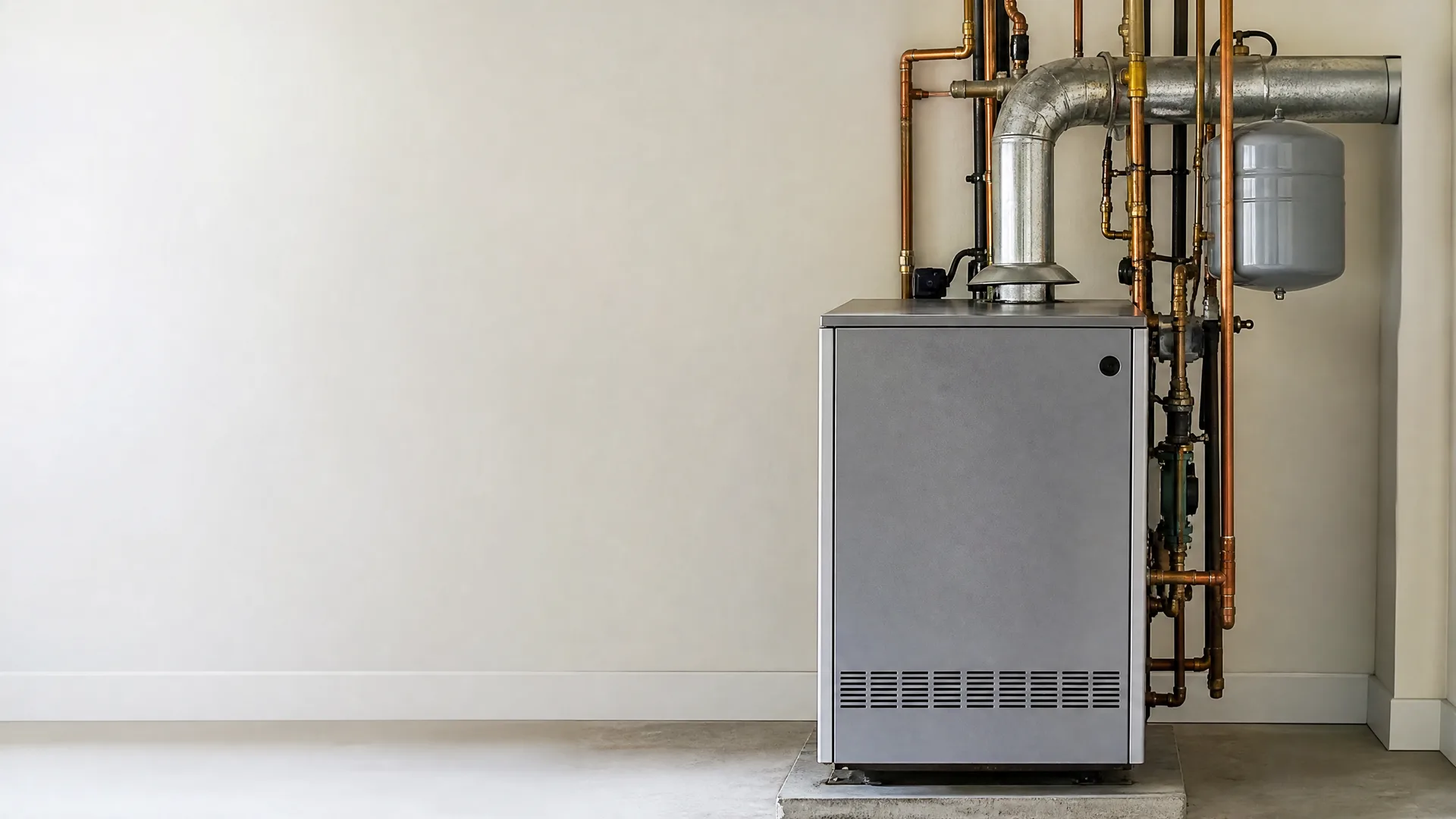
Feel the radiator with your hand, top and bottom, while the boiler is running. If the bottom is hot and the top stays cool, that's trapped air sitting above the water line. The radiator isn't broken. Once the air is out through the bleed valve, water fills that space and the whole surface should heat the same.
Put your hand flat across the radiator face. If the bottom is warm and the top stays cool, air is sitting up there and water can't reach it. You might also hear a faint gurgle or hissing from inside the radiator, or notice one room never gets as warm as the rest of the house no matter how long the boiler runs. Left alone, the boiler works harder to push heat through that trapped air, and it can let the metal inside start to rust where air sits against it instead of water. That means more strain on the boiler and a radiator that costs you comfort every day it's ignored.
Shut the boiler off and let radiators cool completely.
Fit the bleed key onto the valve square at the top.
Hold a cloth under the valve to catch water.
Turn the key slowly until air hisses out.




You save the cost of a visit, but a stuck valve, a key that won't fit, or water that won't stop can turn a ten minute job into a bigger problem.
Someone who works on boilers all season checks every radiator, bleeds each one, and catches a valve or seal that's starting to fail before winter sets in.
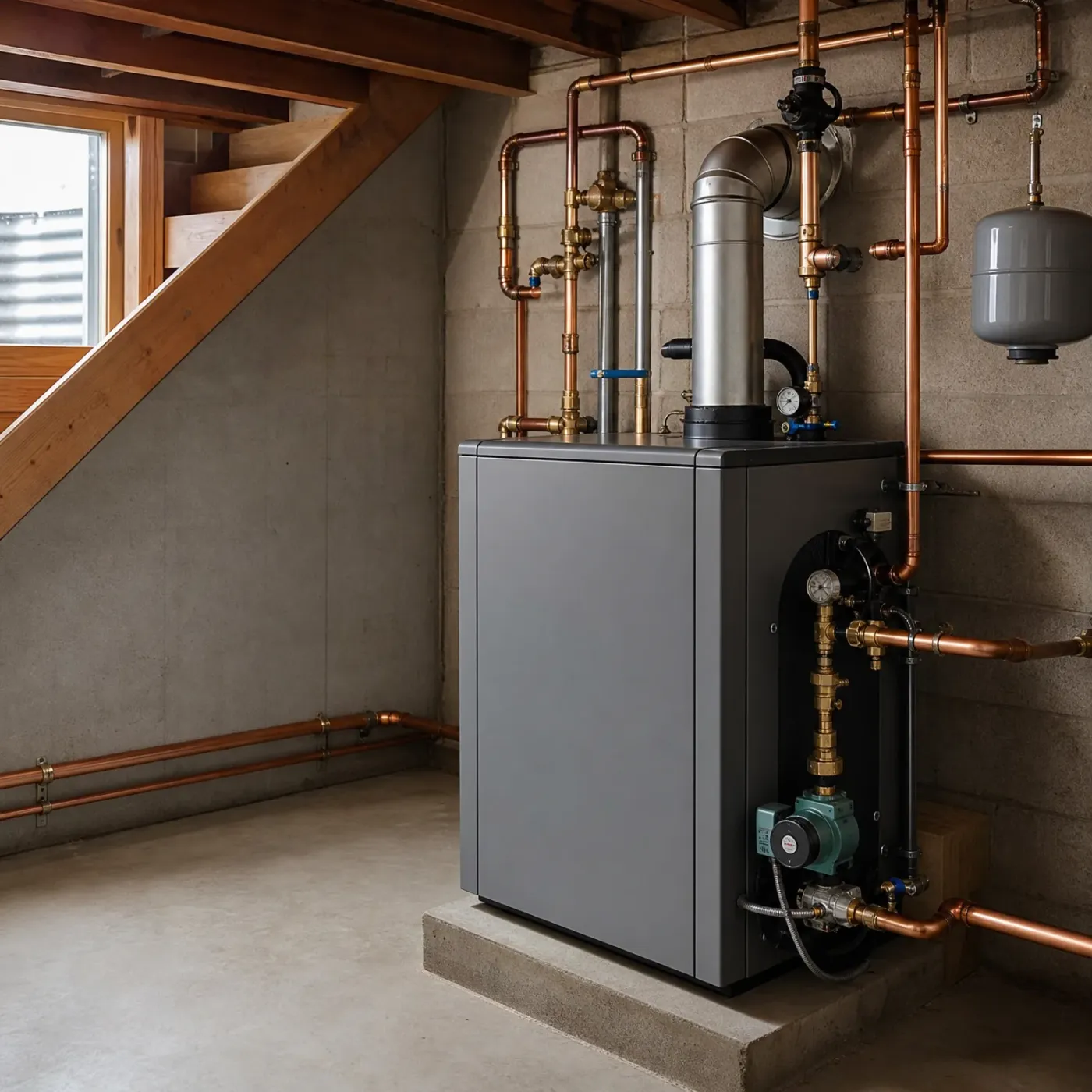
Only one pro gets your request, so you hear from one company.
Send the form and the boiler tune-up stops being something to remember.
No charge to send it. You decide if you hire them.
You're looking at the radiator and you see more than one fitting, and you don't want to loosen the wrong one and end up with water running somewhere it shouldn't. You want to know exactly which valve lets air out without touching the ones that control water flow or shut the radiator off.
Look at the top corner of the radiator, opposite the pipe that feeds in. You'll see a small fitting with a square pin in the center, usually brass. That's the bleed valve, and it's separate from the larger valve at the bottom that controls how much water flows through. The bleed key fits onto that square pin. Turn it a quarter turn counterclockwise and air starts to hiss out. The valve at the bottom stays alone the whole time. If you turn that one instead, you're changing how the radiator heats, not releasing air, and it can be hard to get it balanced back to where it was.
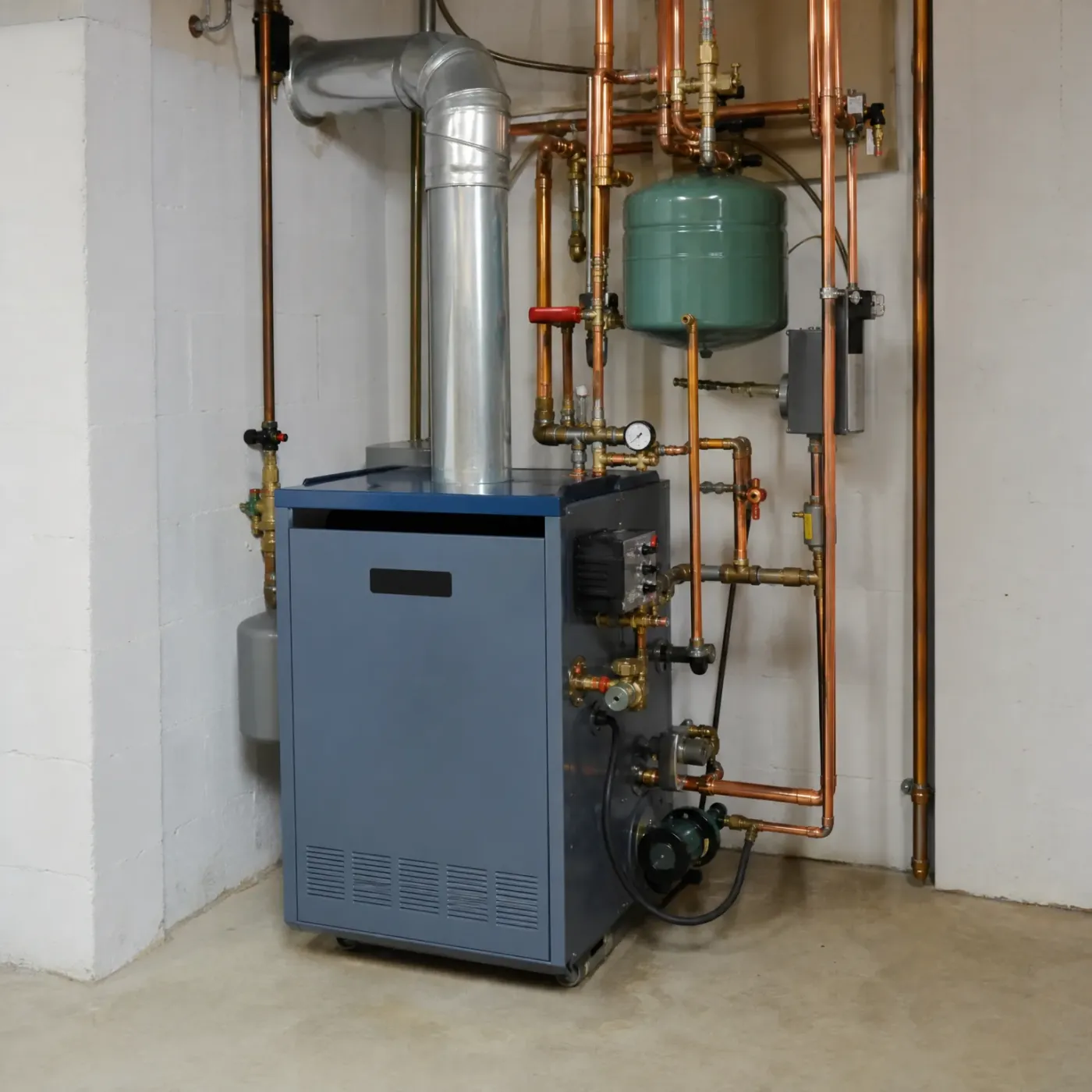
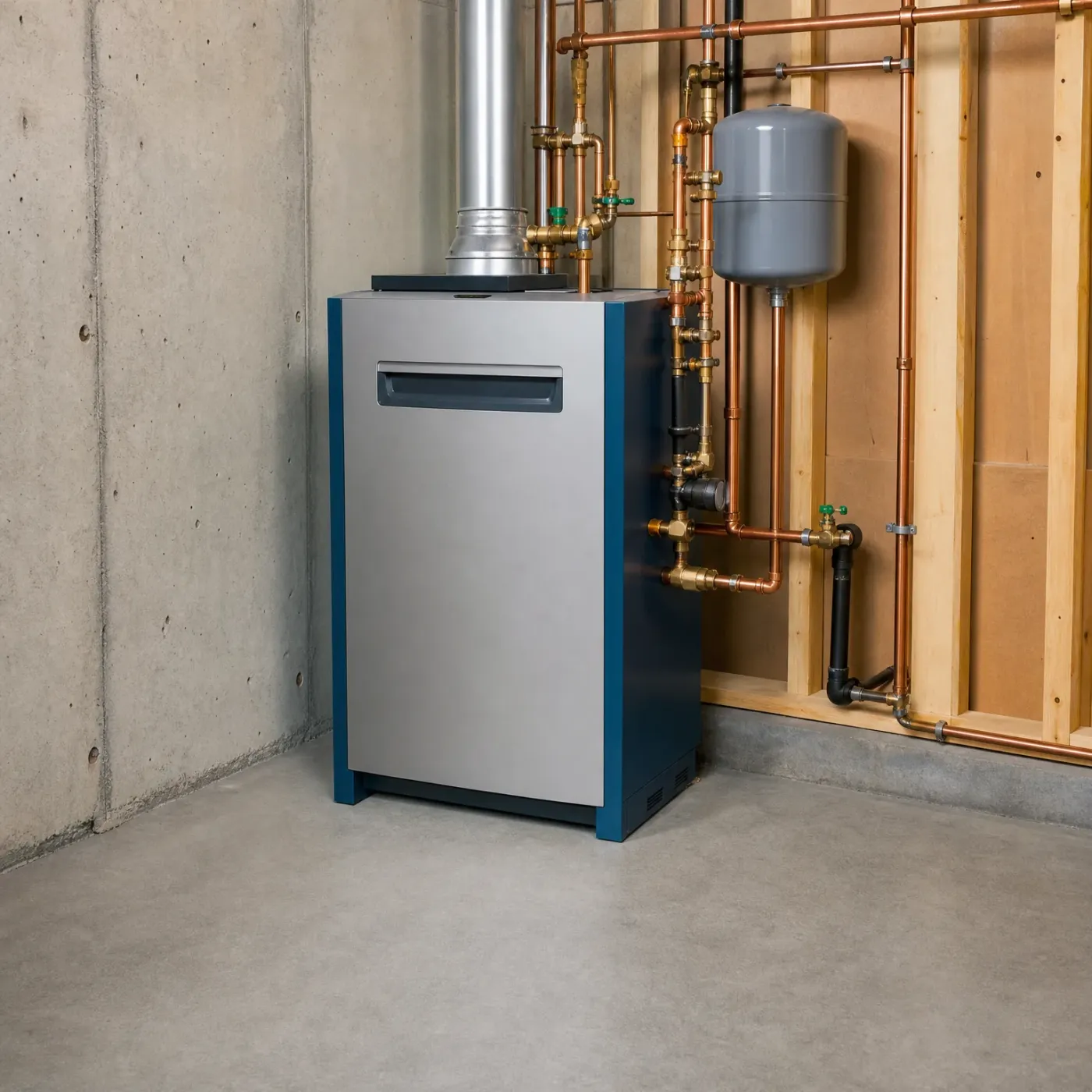
Water fills every pipe and the system runs quiet. The gauge holds steady pressure, the pump moves water without strain, and heat reaches the top of every radiator in the house. Nothing hisses, nothing gurgles. This is what a bled system looks like once the air is gone.
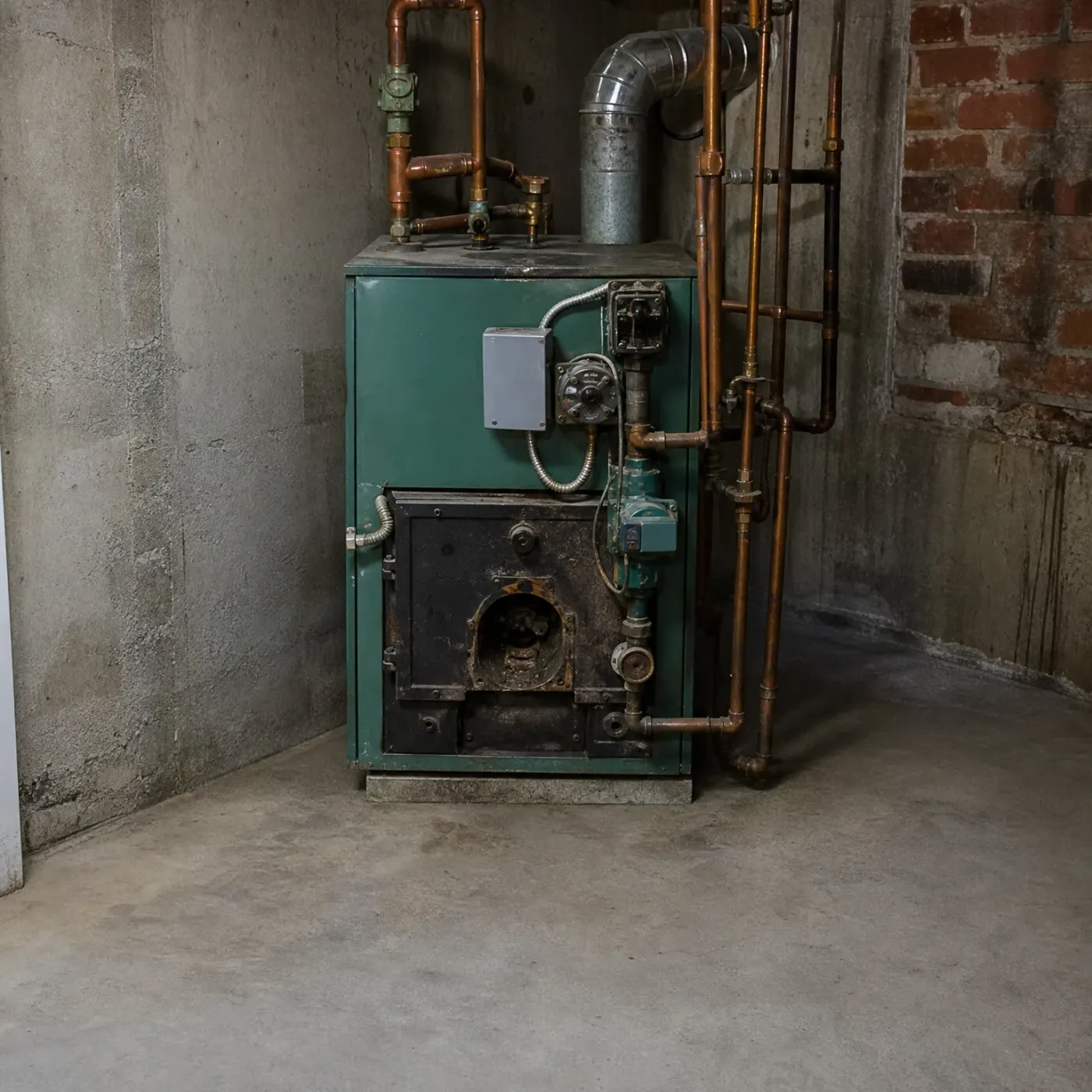
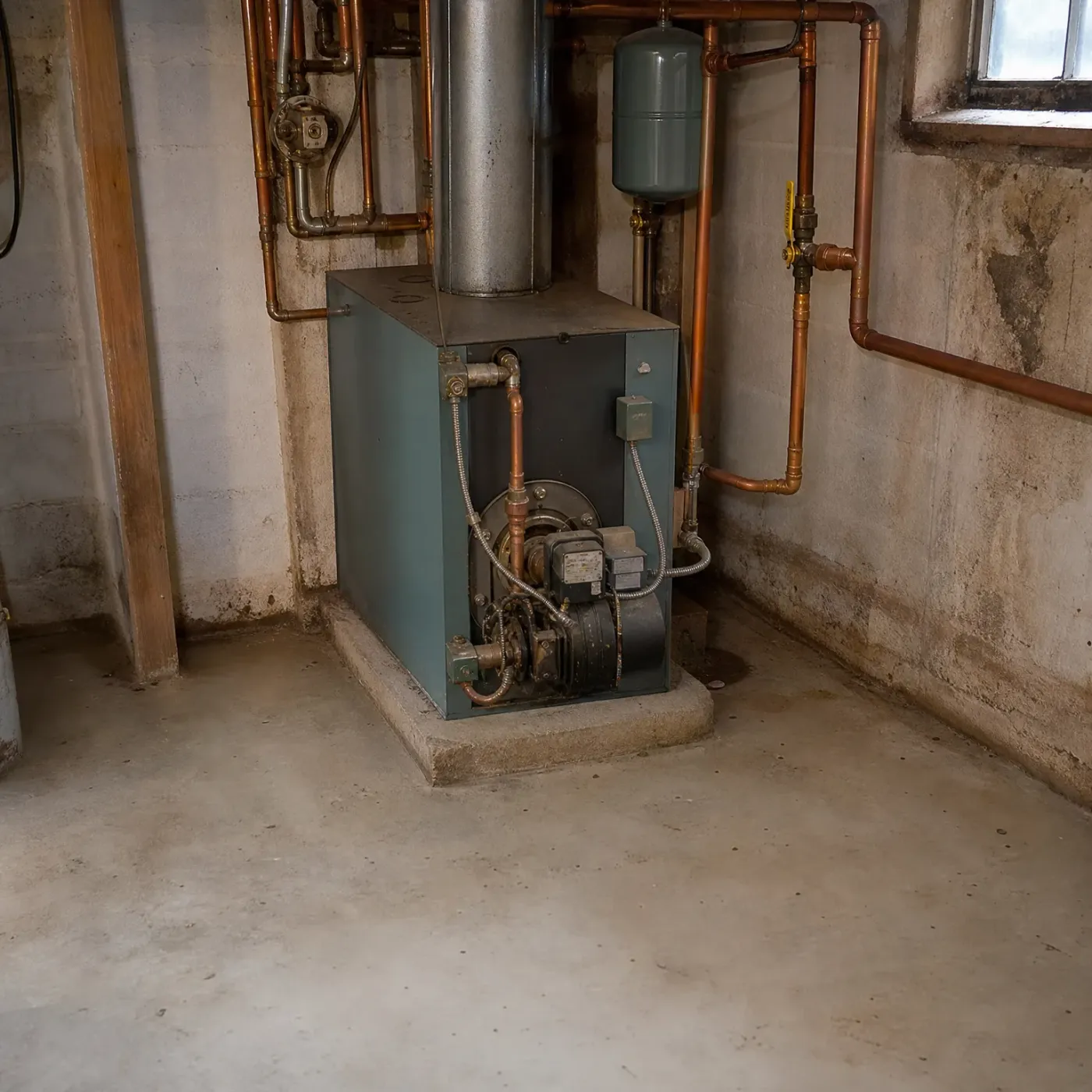
Rust has eaten through the firebox door and the metal around it. This is what years of skipped checks turn into, not something a bleed key fixes. Catching a problem before a Mississippi winter starts means someone is looking at the whole unit, not just the radiators.
Nights average 38°F across Mississippi in December, January and February. That's cool enough for your boiler to run most nights all winter, not just the odd cold snap, so any air sitting in a radiator keeps that room short of heat for months, not just a week or two.
NOAA nClimDiv 1991-2020 county normals weighted by homes
Every radiator in the house should run quiet, with heat reaching the top as easily as the bottom. That's what bleeding fixes. Air works its way into the system while the boiler sits idle through a long Mississippi summer, and it settles at the highest point it can find, which is the top of each radiator. You find it by hand: warm low, cool high, same radiator. Sometimes a hiss or a faint gurgle from inside the pipe gives it away before you even touch it.
The fix itself is small. A bleed key on the valve square, a cloth to catch what comes out, a slow turn until the hiss of air gives way to a thin stream of water, then the valve closed. Done right, it takes a few minutes per radiator and nothing more than that. Done wrong, a valve that won't turn or won't stop running turns a small job into a call you didn't plan on making.
With nights averaging 38°F through December, January and February, a radiator left short on heat doesn't just run cold for a night. It runs cold most of the winter, in whichever room that radiator heats. A contractor who handles boilers all season knows which valves tend to stick and which radiators in a given layout collect the most air, and checks all of them while it's one visit instead of several.


Send one request and you're done looking
Your request stays with one local pro.
