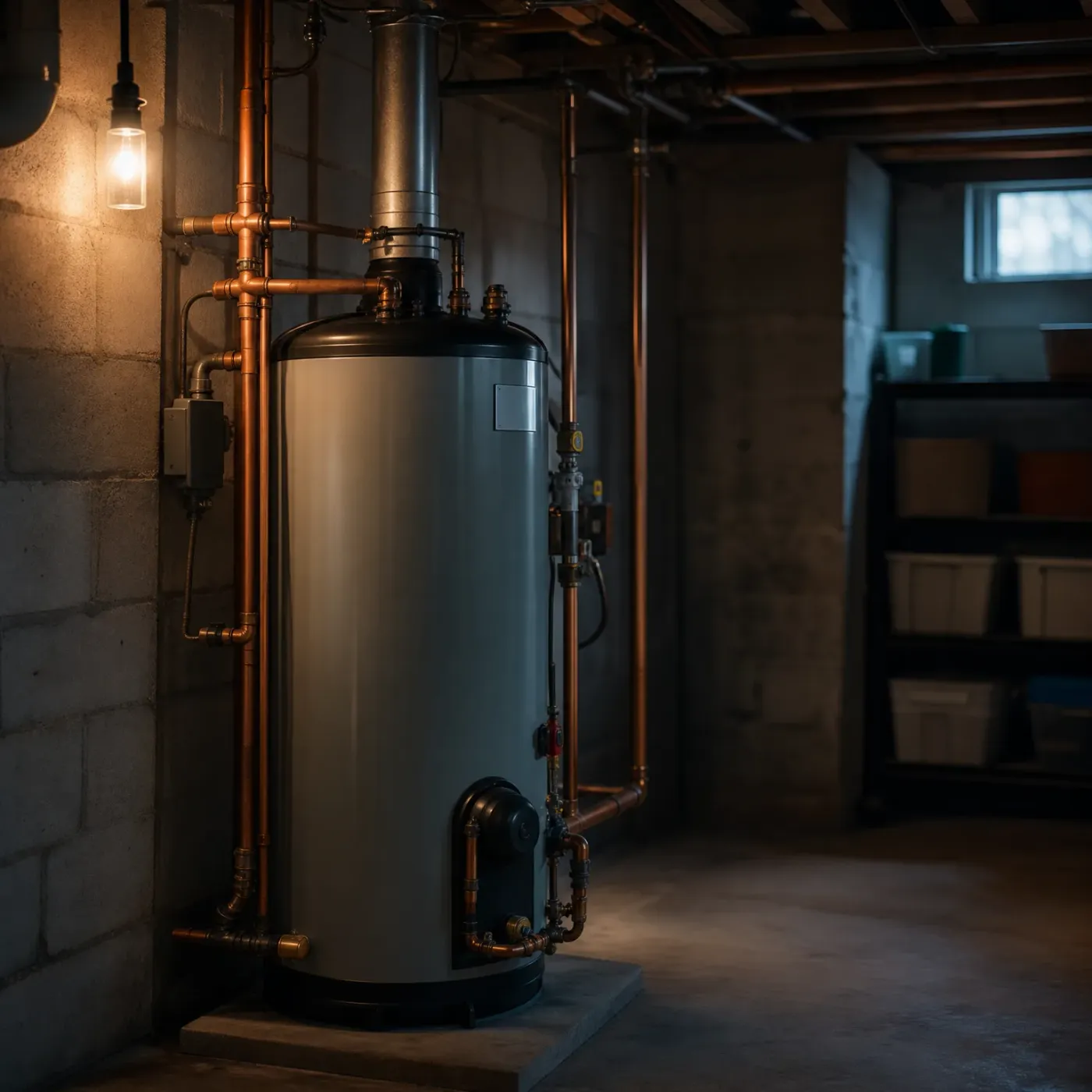
A cylindrical water heater or boiler with a flue pipe and copper piping stands on a concrete pad in a dim basement with concrete block walls, a hanging bulb at left and a shelving unit with bins at right.

Let someone else find the pro

Boiler carbon monoxide signs in Mississippi

A boiler with a cracked heat exchanger or a bad flue can leak carbon monoxide without any smell at all. This page covers what to watch for, from soot near the vent to a pilot light burning yellow instead of blue, and what the signs mean for your system. If something here matches what you're seeing, send the details and let someone qualified take it from here.

I'm done searching

A boiler gives off carbon monoxide when the fuel isn't burning clean, usually because the heat exchanger has cracked or the flue isn't venting properly. Watch for soot staining around the flue connection, a pilot light that burns yellow or orange instead of steady blue, and excess moisture on nearby windows. Headaches, nausea, or drowsiness that ease when you leave the house are a sign too, and they matter more than anything you can see. Carbon monoxide has no smell on its own, so by the time you notice physical symptoms, the gas has already been building. Most boilers here run from fall through spring, which is exactly when a cracked exchanger or blocked flue does the most damage, since the unit is firing for hours at a stretch. If you notice any of these signs, shut the boiler off and have it looked at before running it again. A working carbon monoxide detector near the unit is the most reliable way to catch what you can't see or smell yourself.

A gray-haired bearded man in a dark knit sweater sits on a light gray sofa in a sunlit living room, looking to his left, with a framed artwork, a potted palm, and a curtained glass door behind him.
A middle-aged man in a dark green sweater sits on a light grey sofa looking toward a sunlit window, with a wooden shelving unit, lamp and potted plants in the background.
A man in a dark green sweater sits on a light grey sofa in a sunlit living room, looking to his left, with a shelving unit, houseplants, framed art and a large window behind him.
A gray-haired bearded man in a dark green sweater sits on a light gray sofa in a sunlit living room with a potted plant, framed picture, and dark shelving in the background.

All of this traces back to combustion and venting. A boiler burns fuel to make heat, and that process needs two things to go right: the fuel has to burn clean, and the exhaust has to leave the building. When either one fails, carbon monoxide is the result. A cracked heat exchanger lets exhaust mix with intake air before it ever reaches the flue. A blocked or rusted flue connection traps that exhaust in the mechanical room instead of carrying it outside. You can often catch the problem before a detector does, because incomplete combustion leaves marks. Soot near the burner, staining on the flue pipe, a pilot flame that's burned orange instead of blue. These aren't separate issues so much as different points along the same failure. Condensation on nearby windows or a stale smell near the unit is the same gas finding its way into the room instead of the chimney. A boiler technician checks the heat exchanger and the flue together, because fixing one without the other leaves the real problem in place.

How These Signs Connect

  • A cracked heat exchanger lets flue gas mix with the air the boiler draws in to burn, which is why carbon monoxide can build up with no change in how the unit sounds or runs.
  • A blocked or disconnected flue pipe sends exhaust back into the mechanical room instead of outside, so check where the pipe meets the wall or chimney for gaps or rust.
  • Condensation stains or streaking on the flue pipe often mean gases are cooling and pooling instead of venting straight out, a sign the draft isn't working as it should.
  • A yellow or orange pilot flame instead of a steady blue one means the fuel isn't burning fully, and incomplete combustion is what produces carbon monoxide in the first place.
  • Soot around the burner or flue connection is unburned fuel residue, and it tends to show up before carbon monoxide levels get dangerous.
  • A sudden rise in condensation on nearby windows, paired with a musty or stale smell near the boiler, can point to exhaust gas escaping instead of venting outdoors.
A dark gray floor-standing boiler in a concrete-walled basement, connected to copper piping, circulator pumps, a gray expansion tank, and a cream-colored storage tank to the left.
The flue is tight, the pipes run clean, and the connections show no staining anywhere near the fittings.
A gray residential boiler with a metal flue pipe stands in a concrete-block basement corner, surrounded by copper piping, valves and a gray expansion tank.
Soot streaks the galvanized flue pipe where it meets the unit, a sign exhaust isn't leaving the way it should.

What would you actually notice in your own house

Most of it shows up in the room with the boiler. A smudge of soot on the wall behind the flue pipe. Streaks of black or brown around the draft hood. The pilot burning orange instead of blue, or the flame looking like it's lifting off the burner instead of sitting steady on it. Sometimes it's a smell, a little like something scorched, right near the unit. Sometimes there's nothing to see at all, just a headache that shows up when the boiler's been running and clears when you're outside or away from the house for a while. That last one is the one people miss, because carbon monoxide doesn't always announce itself with soot or smell. Left alone, a cracked heat exchanger or a bad flue keeps putting it into the air your household breathes every time the boiler fires.

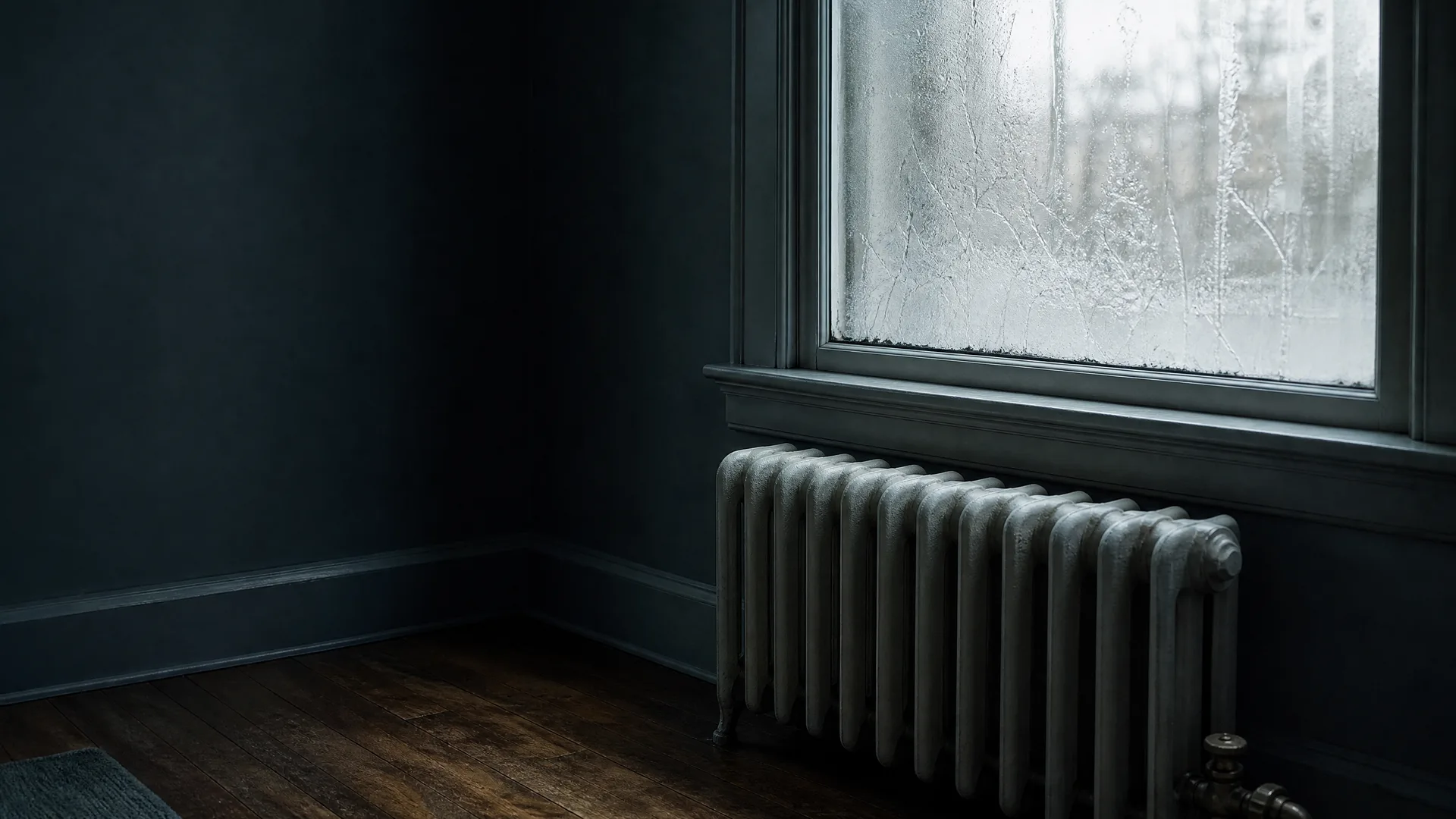
A cast iron column radiator under a condensation-covered window in a dim room with dark walls, dark baseboard trim and a worn wood floor.

Ice crusts the inside of the window glass above the radiator, and the room still won't warm past a chill. It's a January morning and the cast-iron radiator under the window ticks as it heats, but the air near it smells faintly off, almost sharp. You notice the wall behind the flue pipe has a thin gray smudge that wasn't there last winter. The pilot light, when you check it, burns a dull orange instead of blue. You crack the window anyway, even with the cold pushing back, and call to get someone out who knows boilers, not just furnaces, because most houses around here don't have one.

One request and it's handed off

A boiler that's venting wrong doesn't fix itself, and most of Mississippi heats with electricity, so a technician who services gas boilers here isn't working on ten of these a week the way they would somewhere colder. That's exactly why it matters who shows up. The request that comes from this page goes to one contractor, someone local who still sees enough of these units every winter to know a cracked heat exchanger from a flue that's just loose at the connection, and to check for either one without guessing. You don't have to sort through quotes or figure out who actually works on boilers around here. Send the form and that part of the problem is handled for you. What's left is the part you can already see: soot on the wall, a pilot burning the wrong color, a smell that shouldn't be there. That's worth acting on today, not after another cold morning in the room with the boiler.

A furnace with a cracked heat exchanger can run for a full winter without tripping a smoke alarm, because carbon monoxide has no smell and no color for a person to catch on their own.

That's why a carbon monoxide detector near the boiler matters more than your nose, and why the stains, the flame color, and the soot are the signs you have to actually go look for.

Winter nights average 38°F statewide

On a 38°F night, your boiler is running long stretches to keep up, not just kicking on for a few minutes here and there. The longer it runs, the longer a cracked heat exchanger or a bad flue has to push carbon monoxide into the house. A cold run of nights is when a venting problem shows itself.

NOAA nClimDiv 1991-2020 county normals weighted by homes

A gray boiler with a metal flue pipe stands in a basement against concrete and concrete-block walls, connected to copper piping, a circulator pump, and two gray expansion tanks.

Venting clean

The flue pipe runs straight to the outside with tight joints and no staining anywhere along it. The pressure gauge sits where it should, the expansion tanks show no rust at the fittings, and the pilot or burner flame holds a steady blue. Nothing in the room smells off.

A gray boiler on a concrete pad in a basement with painted concrete block walls, copper piping, a metal flue, and electrical control boxes.

Venting wrong

Soot marks the galvanized flue where it meets the unit, and the electrical control box sits close enough to catch the staining too. A boiler this old on a raised pad is worth a closer look at the flue connection and the burner flame before another cold night runs it hard.

A woman with shoulder-length graying brown hair in a cream knit cardigan sits in a dark armchair indoors, looking off to the side with a slight smile, with a shelf, window and houseplant blurred behind her.
A woman with dark hair in a bun sits wrapped in a chunky knit blanket on a couch with a child resting his head on her shoulder, eyes closed, beside a lit lamp and bookshelf indoors.

Where That Leaves You

  • Soot near the flue, a yellow or orange pilot, and extra moisture on the windows near the boiler are the signs worth acting on.
  • None of those signs come with a smell, so a carbon monoxide detector near the boiler catches what a person can't.
  • A boiler running long stretches on a cold Mississippi night gives a cracked heat exchanger or bad flue more time to push gas into the house.
  • Because gas boilers are less common here than in colder states, finding someone who still works on this equipment every winter takes some of the guesswork out of the repair.
  • A local technician who sees this unit every season knows which part usually fails first and checks there before anywhere else.
  • Once you send the request, you're matched with one licensed local contractor instead of fielding calls from several.

The signs are physical, not something you smell. Soot on the wall behind the flue, a pilot burning orange instead of blue, extra condensation on the windows near the boiler, these are what to check tonight, especially if it's been cold and the unit has been running long stretches to keep up. None of it announces itself the way a gas smell would, which is the whole problem, and it's also why a carbon monoxide detector near the boiler earns its keep in a house that heats this way.

Gas boilers aren't the common setup in Mississippi, where most homes run on electric heat, so when something's wrong with the venting or the heat exchanger, it matters that the person looking at it has actually serviced one before and recently. A technician who sees this equipment every winter has a short list of what usually fails first and checks that before anywhere else, instead of working it out from scratch.

Once you send the request, that search is handled. You're connected with one licensed contractor local to you, not a handful of companies calling to compete for the job. Someone who knows the equipment, knows the signs, and can tell you plainly what's going on in your mechanical room and what it takes to fix it.

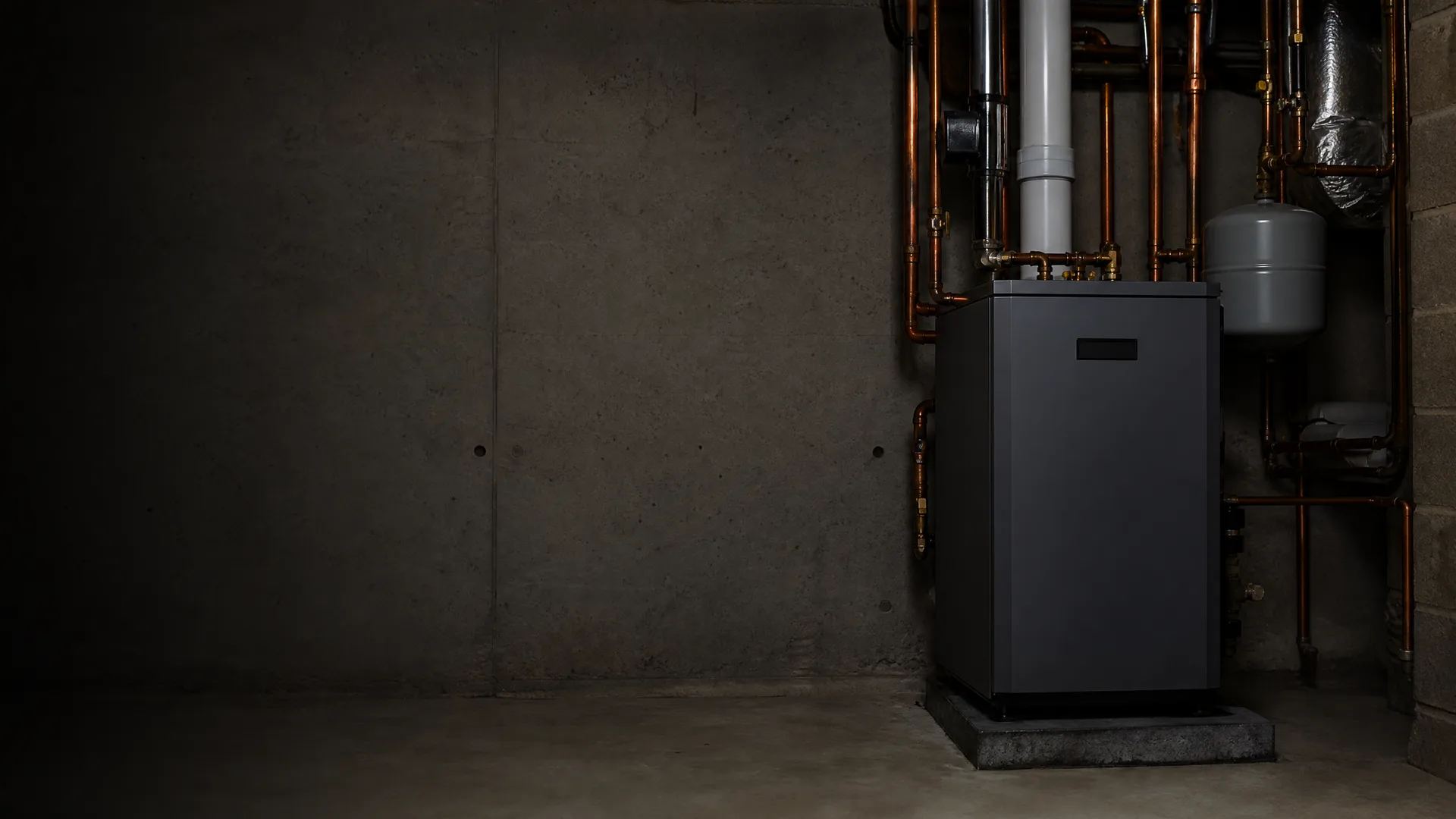
A dark gray boiler unit on a concrete pad in a basement, with copper piping, a metal flue pipe, and an expansion tank against a bare concrete wall.

Done looking for a boiler pro

Your request stays with one local pro.

Step 1 of 3: Equipment